


There is a moment, somewhere around the third chapter of this extraordinary book, when you put it down, look out of the window at your lawn, and feel a pang of something between guilt and excitement. The guilt passes quickly. The excitement does not.
The Nature Reserve Next Door is the garden rewilding book this movement has been waiting for. Not another coffee-table fantasy of rolling meadows and ancient oaks, but a genuine, rigorous, beautiful-in-its-practicality handbook for the millions of people who tend an ordinary outside space and have begun to suspect they could be doing something more meaningful with it. Which is to say: almost everyone.
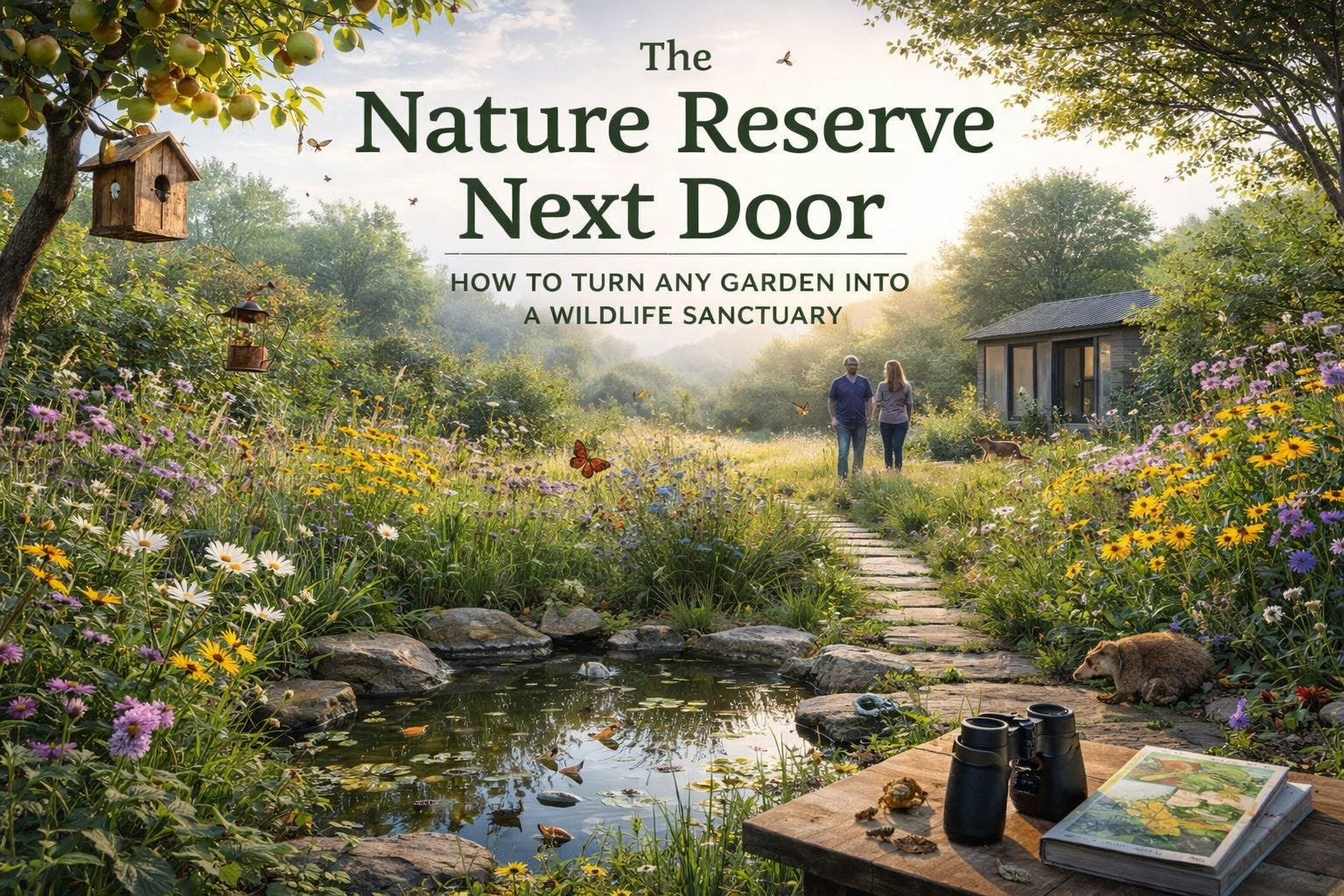
What LettsSafari has achieved here is the rarest thing in nature writing — the successful translation of ecological urgency into personal, achievable action, without ever losing the wonder that makes you want to act in the first place. The science is here in abundance: the statistic that 25.8 million British gardens collectively cover nearly a million hectares — nine times the area of all our National Nature Reserves — lands like a thunderclap and does not leave you. Neither does the finding that allowing lawn to become meadow can triple the diversity of plants, spiders, and bugs on that same patch of ground. These are not distant facts about distant places. They are about the rectangle behind your house.
But what separates this book from the worthy-but-dry ecological primers that have come before it is the writing’s consistent insistence on joy. The ‘safari’ framing — your rewilded garden as a place of daily encounter, of small astonishing sightings, of watching ecological complexity reassemble itself around you — never feels like marketing. It feels like the truest possible description of what actually happens when you stop fighting your outside space and start listening to it.
The plant palettes alone are worth the cover price. Organised by habitat, by region — Britain, Northern Europe, and North-East North America all given their full due — and by specific wildlife value, they are the most usable, most intelligently curated planting references I have encountered in a decade of reviewing books in this field. You will dog-ear these pages. You will photograph them in garden centres. You will send photos to friends.
LettsSafari's New Book on Garden Rewilding to be Serialised at LettsSafari+

Four years ago we published a long-form article to help you design your very own LettsSafari rewilded garden. It has been incredibly popular, with many of you telling us that it inspired you to start rewilding your back yard, terrace garden, community space and even the odd village green.
The seasonal calendar is equally indispensable — a month-by-month guide that replaces the conventional gardening calendar’s obsession with performance and appearance with a new rhythm entirely: when to cut and when to leave, when to plant and when to observe, when the bats will appear over the meadow and why. Combine it with your journal and you have a powerful system.
This is not a book that asks you to sacrifice your garden on the altar of ecological correctness. It asks, rather more persuasively, whether a garden alive with marbled white butterflies and pipistrelle bats and the sound of grasshoppers might not be considerably more satisfying than one without them. The answer, after a hundred pages of compelling argument, demonstration, and beautifully specific practical guidance, feels obvious.
The Nature Reserve Next Door is the most important gardening book published in years. Read it, then go outside.
We start publishing ‘The Nature Reserve Next Door’ section by section, chapter by chapter, exclusively for LettsSafari subscribers at LettsSafari+ starting next week.
Get more LettsSafari updates and wildlife photos on our twitter/X. And read the latest posts at the LettsSafari + website.