


We are publishing LettsSafari’s latest book exclusively at LettsSafari+ — week by week, chapter by chapter, for our members. This week you get Chapter 3: The LettsSafari Design Method.
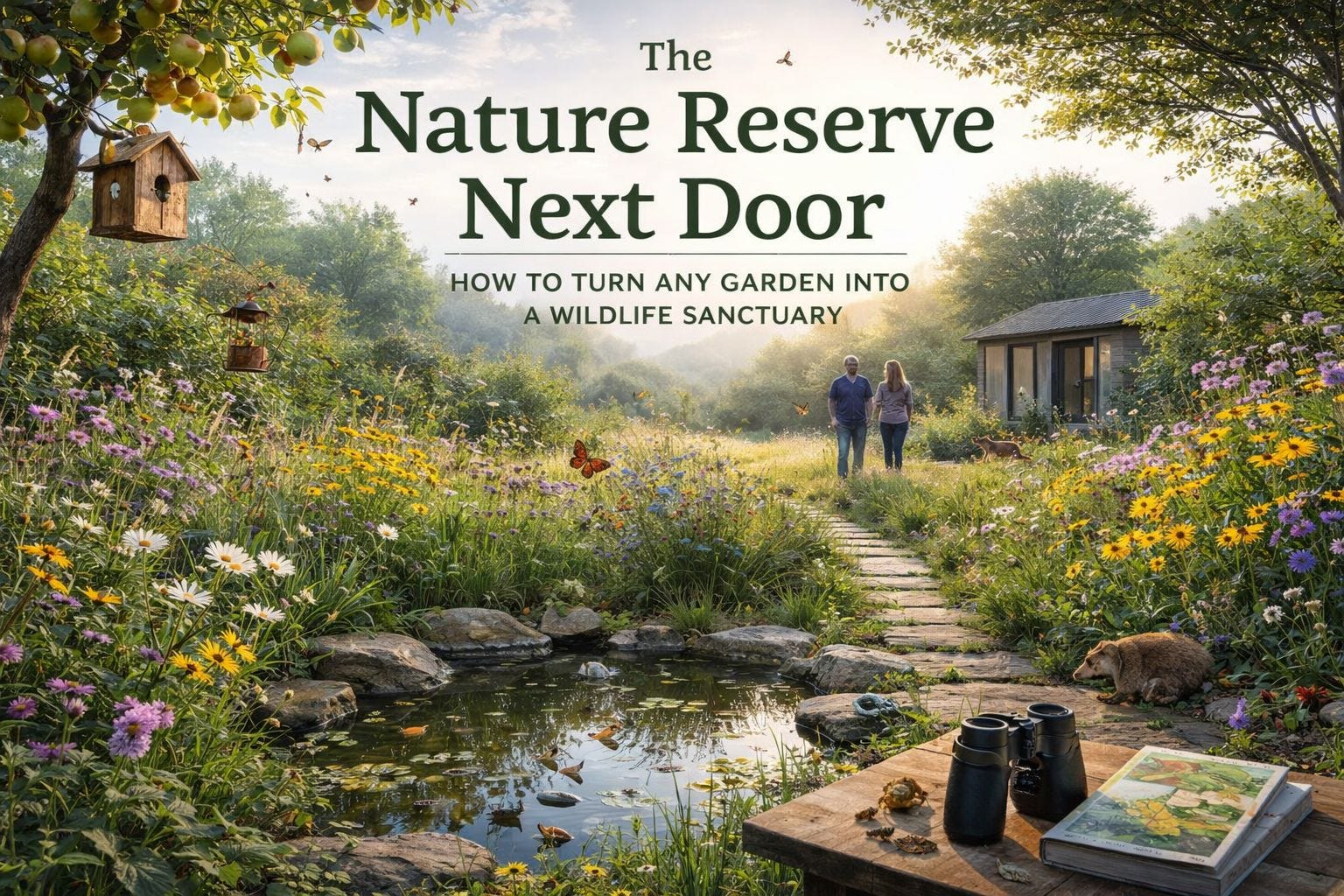
Garden rewilding is a journey. We’re excited to share our journey with you through “The Nature Reserve Next Door: How to Turn Any Garden Into a Wildlife Sanctuary”.
Chapter Three: The LettsSafari Design Method
Start with Purpose, Then Design for Processes
A rewilded garden is not untidy gardening with better PR. It is intentional habitat design that makes room for natural processes: flowering-and-seeding cycles, decomposition, soil recovery, water movement, predation, and seasonal refuge. The distinction matters, because a garden that merely stops being mown is not rewilded — it is abandoned. Abandonment can produce ecological value over very long timescales, but it is not the same as design. Rewilding by design produces ecological value faster, more reliably, and in a form that humans find meaningful and can sustain.
The LettsSafari blueprint begins by reframing the garden’s purpose: from ‘outdoor living extension’ to nature restoration and wildlife support. It then suggests dedicating roughly a third of your garden area to this wild space — not as a one-off gesture but as a lasting structural commitment. That rewilded zone is then divided into three connected habitat types — wild grassland, open scrub, and trees — with water threading through them and microhabitat features distributed across all zones.
How to Design Your LettsSafari Garden

Safari gardens are the future. A future that embraces rewilding and wildlife gardening - creating places that restore our depleted biodiversity. Spaces that remove carbon and clean the air. Havens for wildlife and nature. Here’s a simple blueprint for designing your very own LettsSafari garden.
The Three-Zone Architecture and Why It Works
The three-zone structure is powerful because it creates what ecologists call ‘structural diversity at multiple vertical scales’:
Ground layer: grasses, wildflowers, leaf litter, bare soil patches, moss
Mid layer: scrub, shrubs, bramble zones, hedge bases, deadwood, climbing plants
Upper layer: trees, climbers, tall shrubs, canopy and sub-canopy structure
Horizontal water thread: pond, bog, wet swale, damp grass margin
Structural diversity is a reliable predictor of wildlife diversity in small landscapes, because different species need different shelter, feeding, and breeding niches. A robin needs a dense low hedge for nesting and a short-grass edge for foraging. A bumblebee queen needs early-flowering shrubs and a dry, south-facing bank for nesting. A stag beetle larva needs a substantial log buried in contact with moist soil. A common darter dragonfly needs open water with emergent vegetation. A pipistrelle bat needs a meadow edge over which to hunt. No single habitat element provides all of these. Only a mosaic does.
Your First Design Drawing: A Habitat Map, Not a Planting Plan
Most gardeners begin with plant lists. Rewilding designers begin with habitat geometry. Before you buy a single plant or order a packet of seed, you need to understand the physical geography of your site:
Sun and shade patterns — in summer and winter (these can differ dramatically in British gardens where a deciduous tree casts full summer shade but lets in winter sun)
Wetness patterns — where water collects after rain, where the soil drains fast, where there is a naturally damp hollow
Existing assets to retain — mature trees, old hedges, unmown corners, old walls, stone paths, established climbers
Movement corridors — how wildlife currently enters and crosses the site; where there are fence gaps, hedge bases, or connections to neighbouring green spaces
Human use patterns — where people sit, walk, play, store tools, and grow food
Only after those elements are sketched do you decide what you are building. The habitat map is your masterplan; everything else — planting lists, build schedules, material orders — follows from it.
Design for Humans as Well as Wildlife: The ‘Orderly Frame’ Principle
One of the most common obstacles to garden rewilding in urban and suburban contexts is social: the fear that wildness will look neglected, invite complaints from neighbours or local authorities, or simply feel unusable and anxiety-inducing to the household. This is a legitimate concern that deserves a practical answer rather than a lecture on ecological values.
Landscape research on what is sometimes called ‘cues to care’ suggests that people’s responses to wild or semi-wild spaces are heavily influenced by contextual signals of intentionality. A meadow patch with clean mown edges and a small sign explaining it is a wildflower area reads as intentional and cared-for. The same meadow with ragged edges and no context reads as neglect. The ecological content is identical. The social reception is entirely different.
The solution is to frame wild patches with clear signs of human intention:
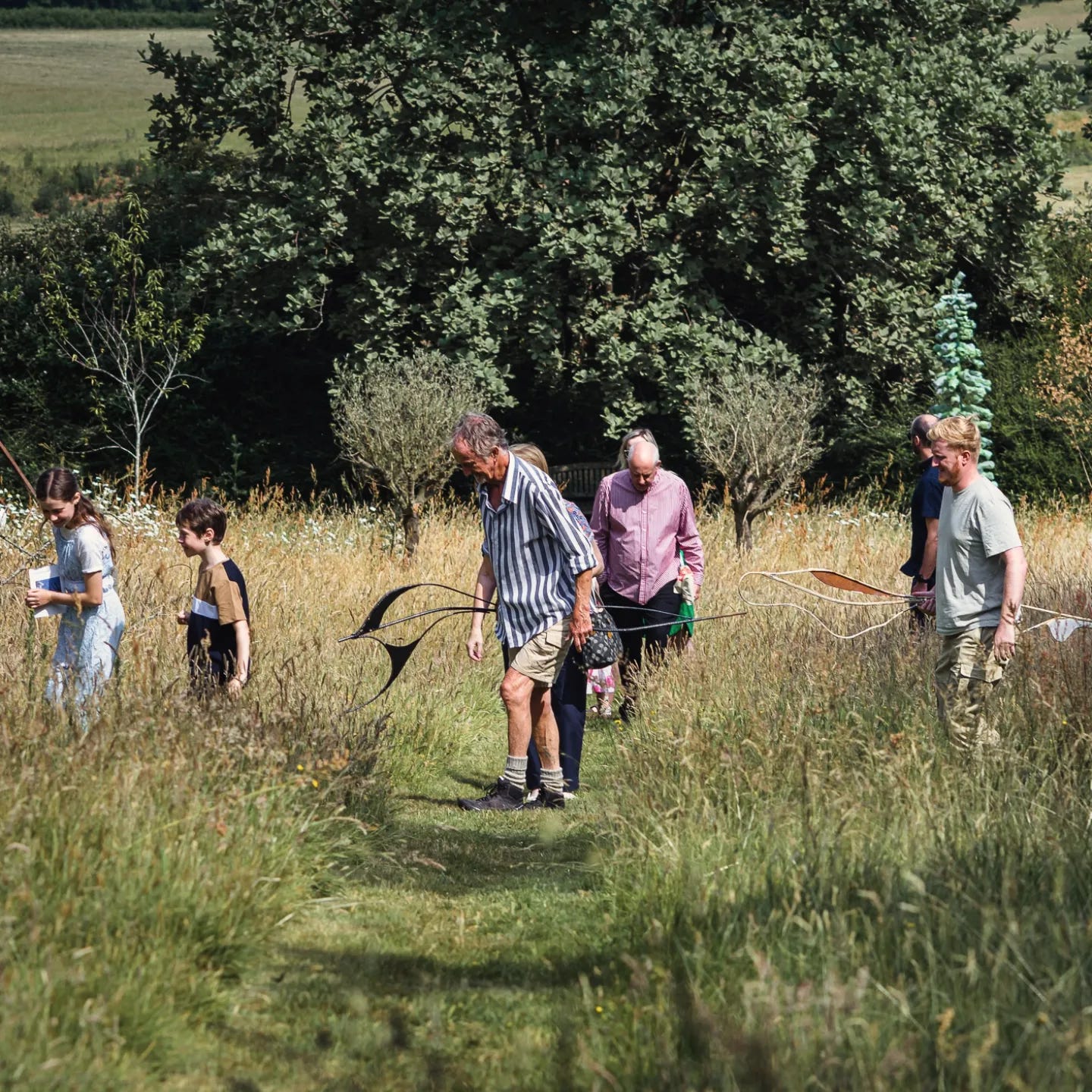
Mown paths cutting through meadow or long grass, allowing people to walk through and observe rather than feeling excluded
Crisp boundary edges between rewilded and maintained zones (a sharp lawn edge against a meadow patch reads as design, not neglect)
A maintained seating area adjacent to the wild zone, so the habitat is observed and enjoyed rather than merely tolerated
Simple, legible signage if the garden is visible to the public or shared with neighbours
Feature planting at ‘front-of-stage’ positions — a beautiful native rose or hawthorn in flower at the garden boundary — that signals intentionality to passers-by
The King’s College Cambridge meadow project explicitly used cut paths through its meadow so people could enter and experience it — an approach that simultaneously enabled human enjoyment, reduced trampling across the whole habitat, and concentrated foot traffic where it was planned. LettsSafari applies the same logic to private gardens: mow your paths, carve your routes through scrub, and make the wildness walkable.
