


We are publishing LettsSafari’s latest book exclusively at LettsSafari+ — week by week, chapter by chapter, for our members. This week you get Chapter 4.1: Building the Mosaic: Wild Grasses and Mini-Meadows.
Garden rewilding is a journey. We’re excited to share our journey with you through “The Nature Reserve Next Door: How to Turn Any Garden Into a Wildlife Sanctuary”.
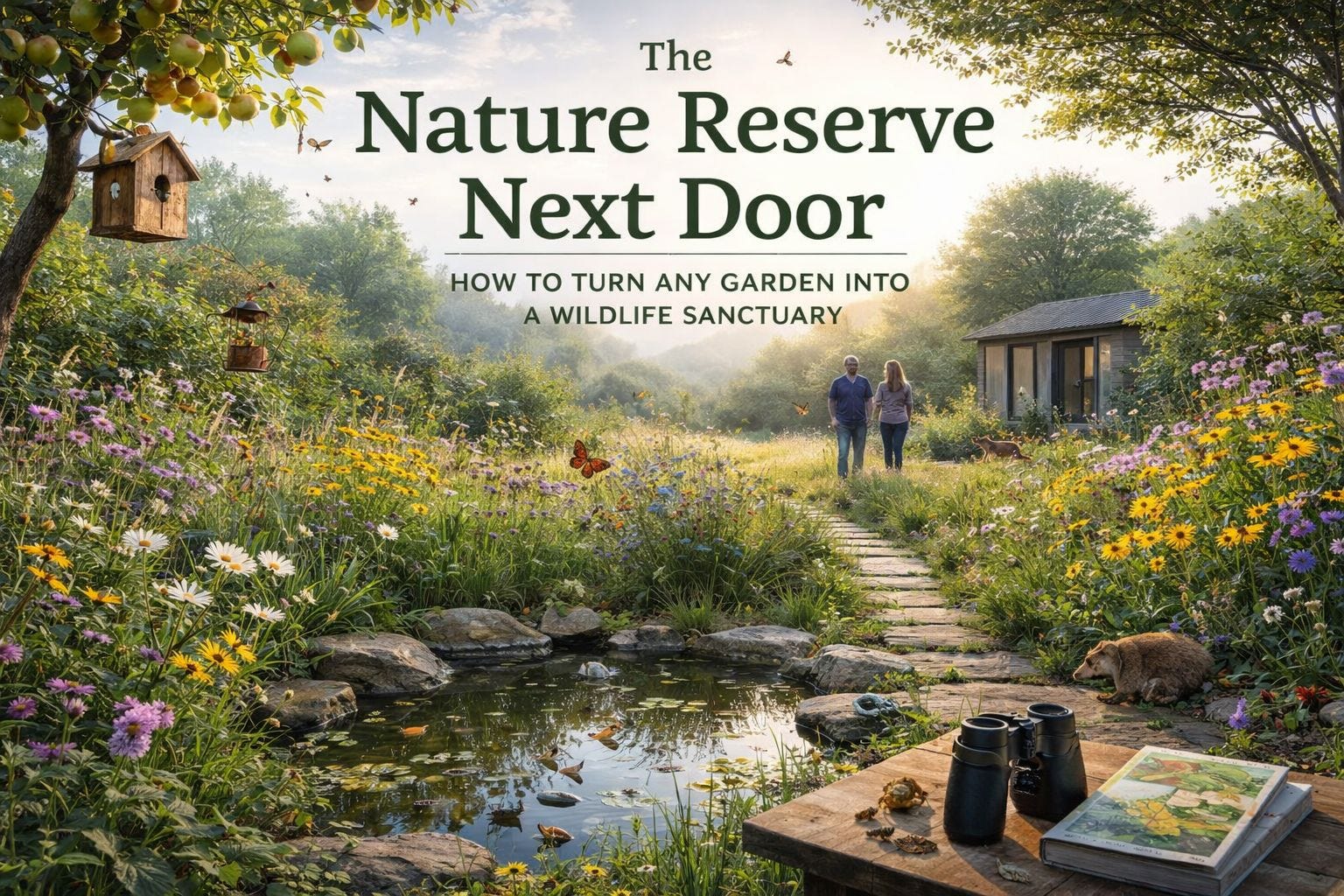
Chapter Four: Habitat Modules — Building the Mosaic
The ‘perfect’ rewilded garden is not one habitat done perfectly; it is a mosaic of interlocking habitat types, each providing resources and structure that the others cannot. This chapter describes each core habitat module in detail: what it is, why it matters ecologically, how to build it, what to plant, and what wildlife you should expect. Read each module not in isolation, but in the context of the mosaic — because the value of each habitat is amplified by what sits next to it.
4.1 Wild Grasses and Mini-Meadows
What It Is
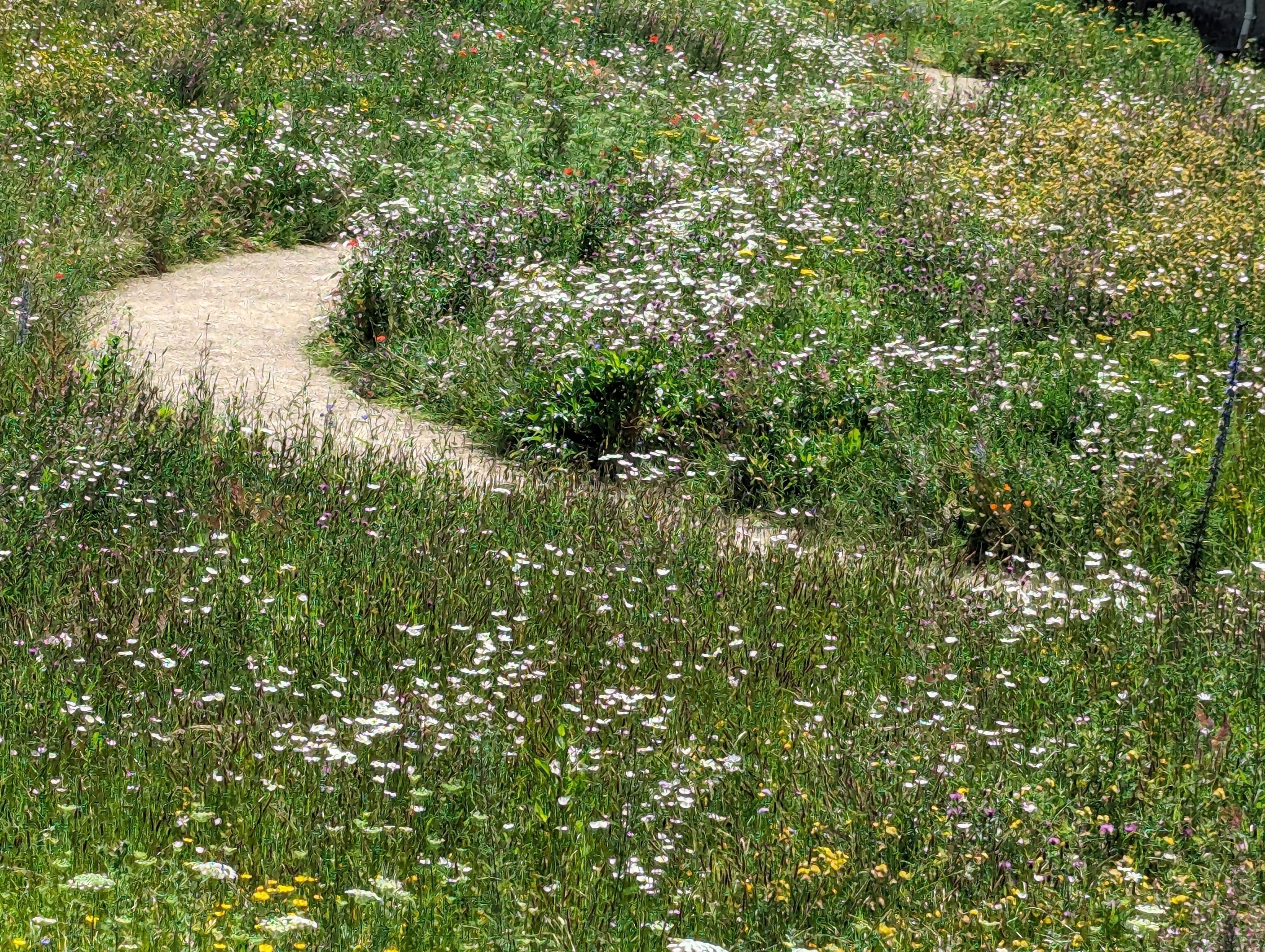
A garden meadow is not simply a lawn that has not been mown. It is a managed, species-rich grassland community in which fine-leaved native grasses, wildflowers, and associated invertebrates coexist in a dynamic, self-sustaining balance. In practice, a garden meadow system is usually a mosaic of:
Short-use grass — small areas for walking, playing, or sitting, kept accessible
Longer grass strips — transitional zones between functional lawn and meadow, providing immediate habitat value with minimal investment
Mini-meadow patches — the heart of the system: areas where wildflowers and grasses cycle through flowering, seeding, and cutting, with fertility deliberately kept low
Why It Matters
Longer grass is habitat, not mess. For many of Britain’s most threatened butterfly and moth species, grass is the single most critical resource at the larval stage. Meadow brown, ringlet, gatekeeper, and small skipper butterflies all lay their eggs on grass blades; their caterpillars feed exclusively on grasses through summer and autumn and overwinter in grass tussocks. Without long grass, these species cannot breed. Without breeding populations, garden sightings will always be ephemeral visitors rather than residents.
The King’s College Cambridge meadow research demonstrated that even a relatively modest reduction in mowing frequency, converting maintained lawn to a species-rich meadow, produced a threefold increase in plant, spider, and bug diversity, and measurably increased bat foraging over the meadow. The mechanism is compound: more plant species → more flower resources → more nectar/pollen feeders → more predators of those feeders → more bats and birds. One habitat change, cascading through the food web.
How to Build a Mini-Meadow: Best Practice
Step 1: Decide Your Zones
Before removing any turf, mark out the paths and functional areas that must remain (the ‘orderly frame’). These can be surprisingly small — a path of 60–90 cm width is enough for comfortable walking — but they are non-negotiable from the outset. Everything outside those marked paths is potential meadow.
Step 2: Reduce Fertility
This is the single most important and most counterintuitive step in meadow creation. Wildflowers are overwhelmingly plants of low-nutrient soils. The fine-leaved native grasses that make up a beautiful meadow — fescues, bents, crested dog’s-tail — are also low-fertility plants. On a nutrient-rich garden soil (which most lawn soils are, after years of fertiliser and decomposing lawn clippings), aggressive rye-grasses and coarse dock-relatives will overwhelm both. To reduce fertility:
Stop applying any fertiliser to the meadow zone immediately and permanently
Cut the existing grass and remove all arisings — do not mulch or leave clippings in situ
If converting from a rich lawn, consider a ‘turf stripping’ approach in severe cases: remove the top 5–10 cm of topsoil and start from the subsoil layer, which is naturally lower in fertility
Continue cutting and removing arisings at least twice annually for the first two years before sowing, to deplete nutrient reserves progressively
Step 3: Create Germination Gaps
Meadow wildflower seeds need contact with bare mineral soil to germinate. On a closed grass sward, they will sit on the surface, fail to establish, and be outcompeted before they emerge. Plantlife guidance suggests aiming for substantial bare-ground coverage within the sowing area — often discussed in the 30–50% range — to give seeds the best chance. Methods include:
Raking vigorously with a spring-tine rake to create soil gaps
Scarifying with a mechanical scarifier on a hire basis
In extreme cases, carefully rotovating and then raking to a fine tilth
Step 4: Sow with Care
Timing depends on your region and soil type. In Britain:
Late summer/early autumn (August–September) is ideal for most meadow seed mixes — seeds experience natural winter chilling and germinate in spring
Spring sowing (March–April) is an alternative but may require cold stratification for some species
Mix seed with dry silver sand at approximately 1:4 ratio (seed:sand) for even distribution across the area
Firm the surface gently after sowing — do not cover seed with soil, but ensure seed-to-soil contact
Creating a Wildflower Area in Your Safari Garden

Many of you will want to add a mini wildflower meadow to your LettsSafari garden. Wild flower and wild grasses remove carbon, attract wildlife, naturally regenerate and look amazing. Plus, it will bring a bit of the ‘wild’ into your life!
Step 5: Introduce Yellow Rattle
Yellow rattle (Rhinanthus minor) is the most powerful single tool available to British meadow makers. It is a native, annual, semi-parasitic plant that attaches its roots to adjacent grass roots and extracts water and nutrients, weakening grass vigour by 40–70% in established populations. This ‘biological fertility reduction’ creates space for wildflowers to establish without the expensive and laborious turf-stripping approach. Important notes:
Yellow rattle seed must be sown fresh — it loses viability quickly and should be sown immediately after harvest or purchased from reliable specialist suppliers
Sow in late summer/early autumn (August–November) so seed receives the winter chilling it needs
In the first year, yellow rattle will appear as a modest, sparse plant; in Year 2 and 3 it will build population and noticeably weaken grass
Do not sow into a freshly created bare-soil seedbed — it establishes best into an existing grass sward
Plant Palette: Britain and Northern Europe
The table below includes species suitable for meadow and grassland habitats in Britain and Northern Europe. Always purchase seed of known British or regional provenance — Plantlife explicitly warns against using imported seed, which may contain species not native to your region and can introduce genetic contamination of native populations.
Oxeye daisy
Leucanthemum vulgare
UK/N. Europe
Key nectar source; long flowering season; host for many moth spp.
Yellow rattle
Rhinanthus minor
UK/N. Europe
Semi-parasitic grass suppressor; essential meadow tool; bee-visited
Field scabious
Knautia arvensis
UK/N. Europe
Long-season nectar source; specialist bee spp.; butterfly favourite
Meadow cranesbill
Geranium pratense
UK/N. Europe
Long-flowering; bee-visited; larval host for various moth species
Common knapweed
Centaurea nigra
UK/N. Europe
Major nectar provider; butterfly and bumblebee magnet
Greater knapweed
Centaurea scabiosa
UK/N. Europe
Taller knapweed
specialist solitary bee value
chalk/limestone best
Meadow buttercup
Ranunculus acris
UK/N. Europe
Early nectar source; part of classic meadow aesthetic
Lady’s bedstraw
Galium verum
UK/N. Europe
Fragrant; nectar source; larval host for elephant hawk-moth
Ragged robin
Lychnis flos-cuculi
UK/N. Europe
Damp grassland; specialist bee value; striking flower
Selfheal
Prunella vulgaris
UK/N. Europe
Short sward; bumblebee-visited; tolerates some shade
Bird’s-foot trefoil
Lotus corniculatus
UK/N. Europe
Common blue and other butterfly larval host; abundant bee nectar
Common vetch
Vicia sativa
UK/N. Europe
Nitrogen-fixer; legume for soil health; bee-visited; butterfly host
Crested dog’s-tail
Cynosurus cristatus
UK/N. Europe
Fine, low-fertility meadow grass; does not dominate over wildflowers
Sheep’s fescue
Festuca ovina
UK/N. Europe
Fine grass for dry meadow; caterpillar food plant; non-invasive
Sweet vernal grass
Anthoxanthum odoratum
UK/N. Europe
Gives meadows their ‘new-mown hay’ scent; old meadow indicator
Common bent
Agrostis capillaris
UK/N. Europe
Low-growing fine grass; good meadow base grass
Quaking grass
Briza media
UK/N. Europe
Beautiful ornamental native grass; indicator of ancient meadow
The Bee Crisis and What You Can Do About It

The world is experiencing an unprecedented decline in pollinator populations, particularly bees, with devastating consequences for ecosystems and our food supply. Over the past few decades, scientists have documented alarming decreases in bee populations across the globe, whether they're in the wild or the protection of beekepers.
Plant Palette: North-East North America
In the north-east of North America, from Virginia and North Carolina north through New England, New York, and into Ontario, the meadow ecology is distinct but the principle is identical: prioritise native bunchgrasses and native flowering perennials, and create a long flowering sequence from early spring through late autumn. The Xerces Society for Invertebrate Conservation provides regionally tailored plant lists and emphasises the centrality of native bunchgrasses, which serve as larval foodplants for many specialist grassland butterflies and skippers. See table below.
Little bluestem
Schizachyrium scoparium
NE N. America
Key larval grass for many skippers; stunning autumn colour; drought-tolerant
Big bluestem
Andropogon gerardii
NE N. America
Tall prairie grass; nesting cover; exceptional wildlife value
Sideoats grama
Bouteloua curtipendula
NE N. America
Short bunchgrass; specialist grassland invertebrate value
Purple coneflower
Echinacea purpurea
NE N. America
Major late-season nectar and seed source; goldfinch favourite
Black-eyed Susan
Rudbeckia hirta
NE N. America
Long-flowering; bees and butterflies; winter seed for birds
Wild bergamot
Monarda fistulosa
NE N. America
Major bumblebee and butterfly nectar source; fragrant
New England aster
Symphyotrichum novae-angliae
NE N. America
Critical late-season nectar source for monarchs and bees
Prairie blazing star
Liatris pycnostachya
NE N. America
Tall; monarch nectar; specialist bee spp.; outstanding butterfly plant
Wild columbine
Aquilegia canadensis
NE N. America
Spring nectar for hummingbirds and bumblebees; part shade tolerated
