


We are publishing LettsSafari’s latest book exclusively at LettsSafari+ — week by week, chapter by chapter, for our members. This week you get Chapter 4.2: Wildflower and Pollinator Beds.
Garden rewilding is a journey. We’re excited to share our journey with you through “The Nature Reserve Next Door: How to Turn Any Garden Into a Wildlife Sanctuary”.
4.2 Wildflower and Pollinator Beds
What It Is
A wildflower and pollinator bed is a deliberately planted or sown, flower-rich zone designed to provide nectar and pollen across the entire season, plus larval host plants and nesting substrate. This is emphatically not just ‘flowers for bees’ — it is food and life-cycle infrastructure for a very wide range of invertebrates. The difference between a pretty flower border and a genuinely functional pollinator bed lies in species selection, structural design, and the inclusion of elements beyond flowers: nesting substrate, host plants, and a sequence of bloom that covers early spring through late autumn without significant gaps.
Core Design Rules
Shape Time, Not Just Space
The most common mistake in pollinator planting is visual rather than temporal: gardeners select plants that look good together but flower at the same time, creating a stunning display for six weeks and a nectar desert for the other forty-six. A functional pollinator bed should have something in flower from February (early crocus, lungwort) through to November (ivy, late sedums, Michaelmas daisies). Designing for this requires mapping your planting plan against a twelve-month calendar and deliberately filling any gaps.
Include Larval Host Plants
Many pollinators — particularly butterflies, moths, and specialist solitary bees — are highly selective about where they breed. For these species, nectar is important but host plants are decisive. A garden without appropriate host plants will attract adult insects but will not hold breeding populations. The Xerces Society notes that host plants should be considered foundational, not optional. In Britain, every garden should aim to include at least a few larval host plants alongside the nectar sources.
Provide Nesting Habitat
An often-overlooked aspect of pollinator planting is nesting provision. Approximately 70% of the UK’s 250+ species of native bee nest in the ground — in bare, well-drained mineral soil, often on south-facing banks or level surfaces in sheltered positions. The remaining 30% are cavity nesters, using dead wood, hollow plant stems, or existing cavities in walls and banks. This means that bare-soil patches and dead stems are as ecologically important as flowers, and should be incorporated into the bed design rather than tidied away.
Avoid Pesticides
RHS explicitly advises against pesticide use in wildlife gardens and recommends non-chemical pest management in all circumstances. Even ‘targeted’ applications of insecticide in adjacent garden areas will carry collateral effects on the invertebrate communities a pollinator bed is trying to support. The only effective pesticide policy for a pollinator bed is none.
Plant Palette: Britain and Northern Europe — Pollinator Beds
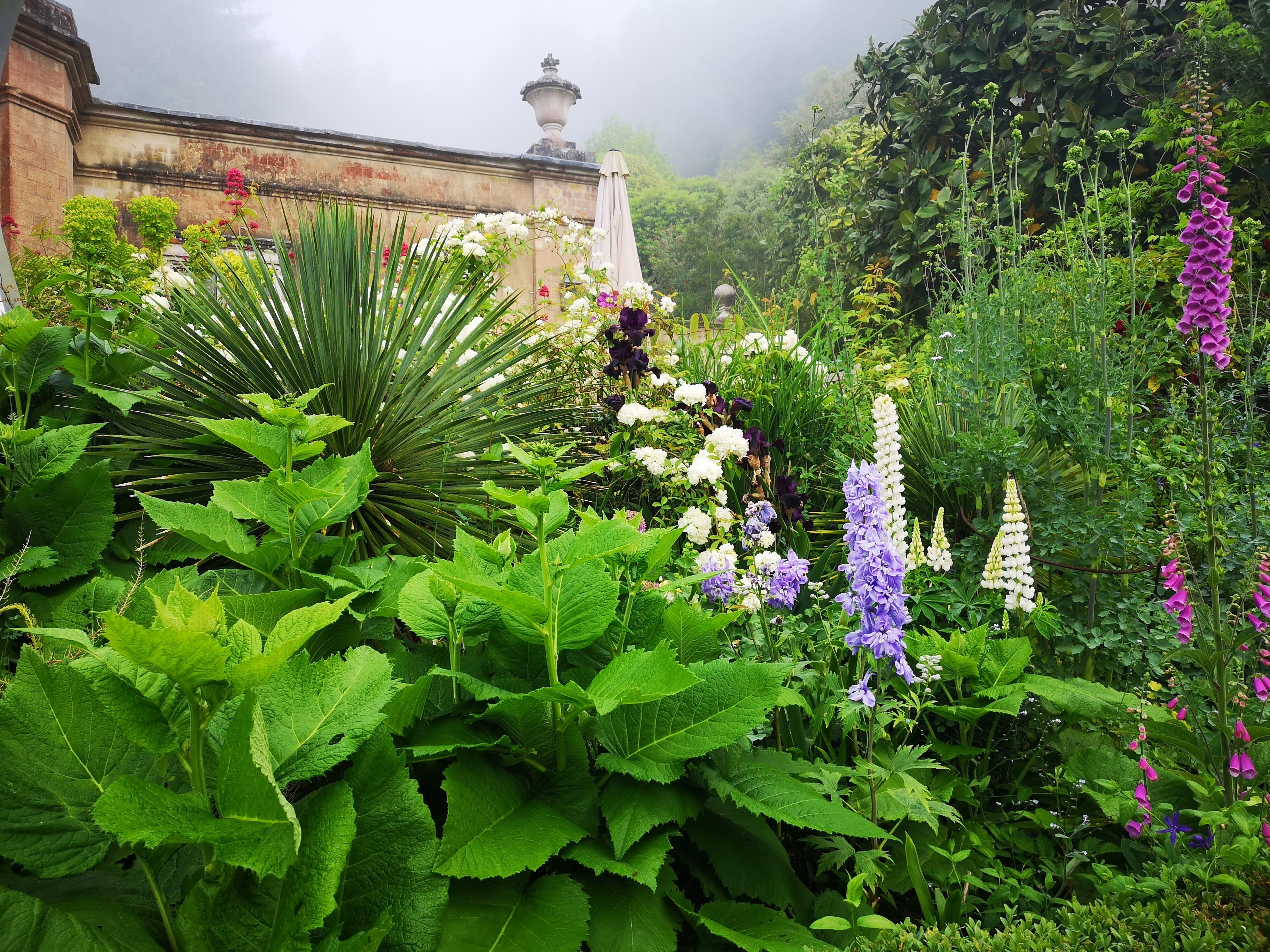
The following species are suitable for pollinator beds in Britain and Northern Europe. They are selected for a combination of native or near-native status, high nectar/pollen value, and seasonal spread. Combine them in drifts of 5–9 plants of the same species to improve foraging efficiency:
Lungwort
Pulmonaria officinalis
UK/N. Europe
Feb–Apr; critical early bee nectar; pollen-rich for queen bumblebees
Primrose
Primula vulgaris
UK/N. Europe
Feb–May; specialist early bee and butterfly nectar
Bugle
Ajuga reptans
UK/N. Europe
Apr–Jun; bumblebee nectar; ground cover; tolerates shade
Comfrey
Symphytum officinale
UK/N. Europe
Apr–Jun; bumblebee specialist; cut-and-come-again feeding
Foxglove
Digitalis purpurea
UK/N. Europe
May–Jul; bumblebee specialist; structural presence; biennial
Viper’s bugloss
Echium vulgare
UK/N. Europe
Jun–Sep; exceptional bee plant; over 100 species recorded feeding
Borage
Borago officinalis
UK/N. Europe
Jun–Oct; very high nectar; honeybee and bumblebee favourite
Wild marjoram
Origanum vulgare
UK/N. Europe
Jul–Sep; arguably the single best insect plant for UK gardens
Common knapweed
Centaurea nigra
UK/N. Europe
Jun–Sep; butterfly favourite; specialist bees; structural seed heads
Red clover
Trifolium pratense
UK/N. Europe
May–Sep; nitrogen-fixer; specialist long-tongued bee resource
Teasel
Dipsacus fullonum
UK/N. Europe
Jul–Sep; bee-visited; exceptional winter seed source for goldfinches
Michaelmas daisy
Aster amellus / Symphyotrichum
UK/N. Europe
Aug–Oct; critical late-season nectar for hoverflies and bees
Ivy
Hedera helix
UK/N. Europe
Sep–Nov; the single most important late nectar source in Britain
Hemp agrimony
Eupatorium cannabinum
UK/N. Europe
Jul–Sep; outstanding butterfly plant; red admiral favourite
Fennel
Foeniculum vulgare
UK/N. Europe
Jul–Sep; specialist hoverfly plant; structural presence
Wild carrot
Daucus carota
UK/N. Europe
Jun–Aug; excellent hoverfly umbellifer; biennial; dry soils
Cowslip
Primula veris
UK/N. Europe
Apr–May; specialist bumblebee and butterfly plant; meadow edge
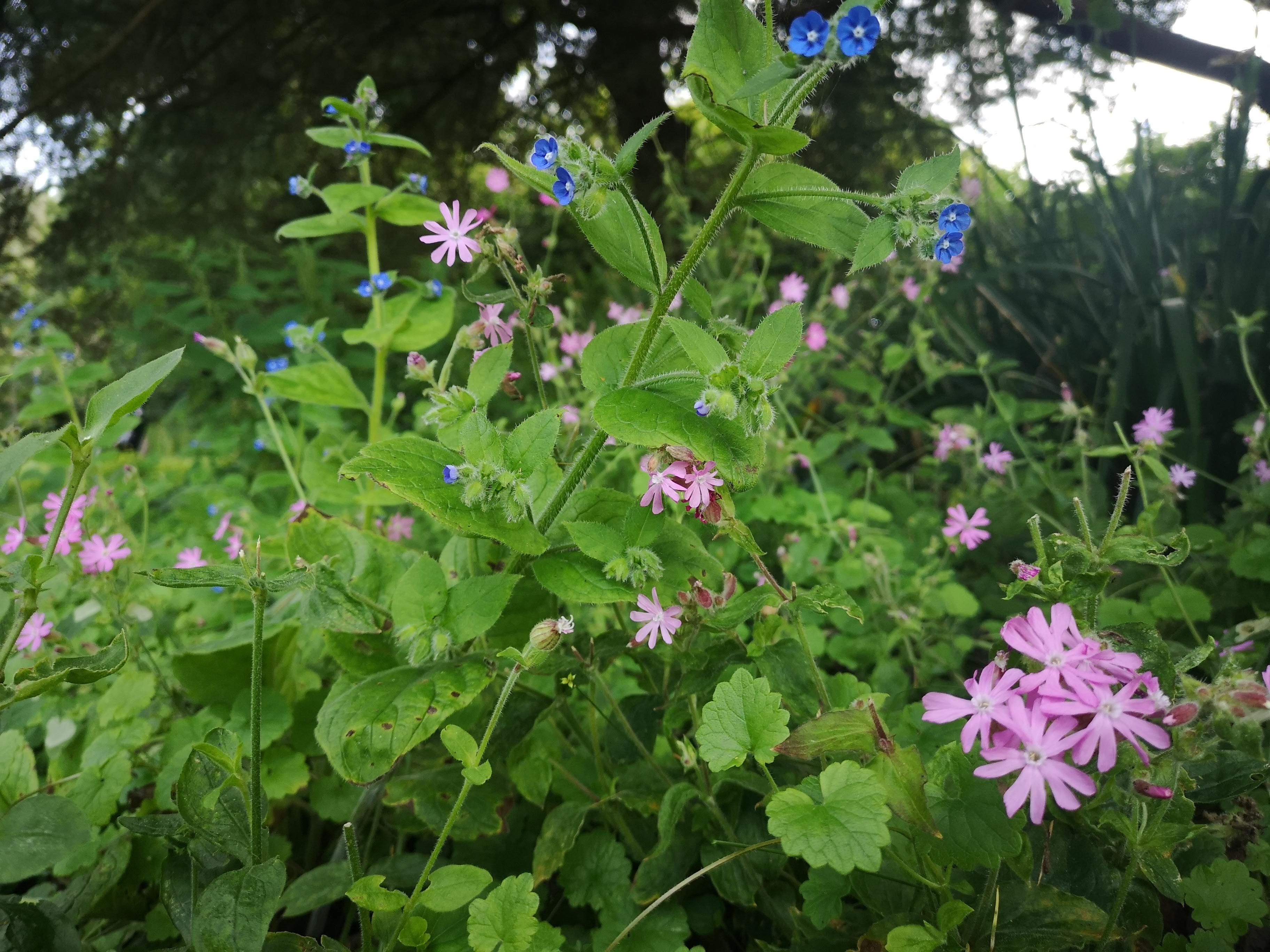
Red campion
Silene dioica
UK/N. Europe
Apr–Jun; pollen-rich; early bumblebee resource; partly shade-tolerant
Plant Palette: North-East North America — Pollinator Beds
Virginia bluebells
Mertensia virginica
NE N. America
Mar–May; critical spring ephemeral; bee and hummingbird resource
Golden Alexanders
Zizia aurea
NE N. America
Apr–Jun; specialist early bee value; black swallowtail host
Butterfly weed
Asclepias tuberosa
NE N. America
Jun–Aug; monarch larval host; major bee/butterfly nectar plant
Swamp milkweed
Asclepias incarnata
NE N. America
Jun–Aug; monarch host; fragrant; tolerates wet margins
Common milkweed
Asclepias syriaca
NE N. America
Jun–Aug; monarch host; fragrant; tallgrass companion
Wild blue indigo
Baptisia australis
NE N. America
May–Jun; structural shrub-like perennial; specialist bee plant
Culver’s root
Veronicastrum virginicum
NE N. America
Jul–Aug; exceptional specialist bee plant; architectural
Rose turtlehead
Chelone obliqua
NE N. America
Aug–Oct; specialist bumblebee plant; wet/moist soil
