


We are publishing LettsSafari’s latest book exclusively at LettsSafari+ — week by week, chapter by chapter, for our members. This week you get Chapter 4.4: Trees, Hedges, and Climbers.
Garden rewilding is a journey. We’re excited to share our journey with you through “The Nature Reserve Next Door: How to Turn Any Garden Into a Wildlife Sanctuary”.
4.4 Trees, Hedges, and Climbers
Trees: Disproportionate in Their Impact
In British ecology, a mature native oak (Quercus robur) is documented as supporting approximately 2,300 species of insects, birds, mammals, lichens, and fungi — more than any other native tree. A hawthorn supports over 200 species of insects alone. By comparison, a horse chestnut (introduced) supports around 4 species. The difference is not in the tree’s biomass or complexity, it is in the evolutionary relationships that have developed over thousands of years between a native tree and the organisms that depend on it.
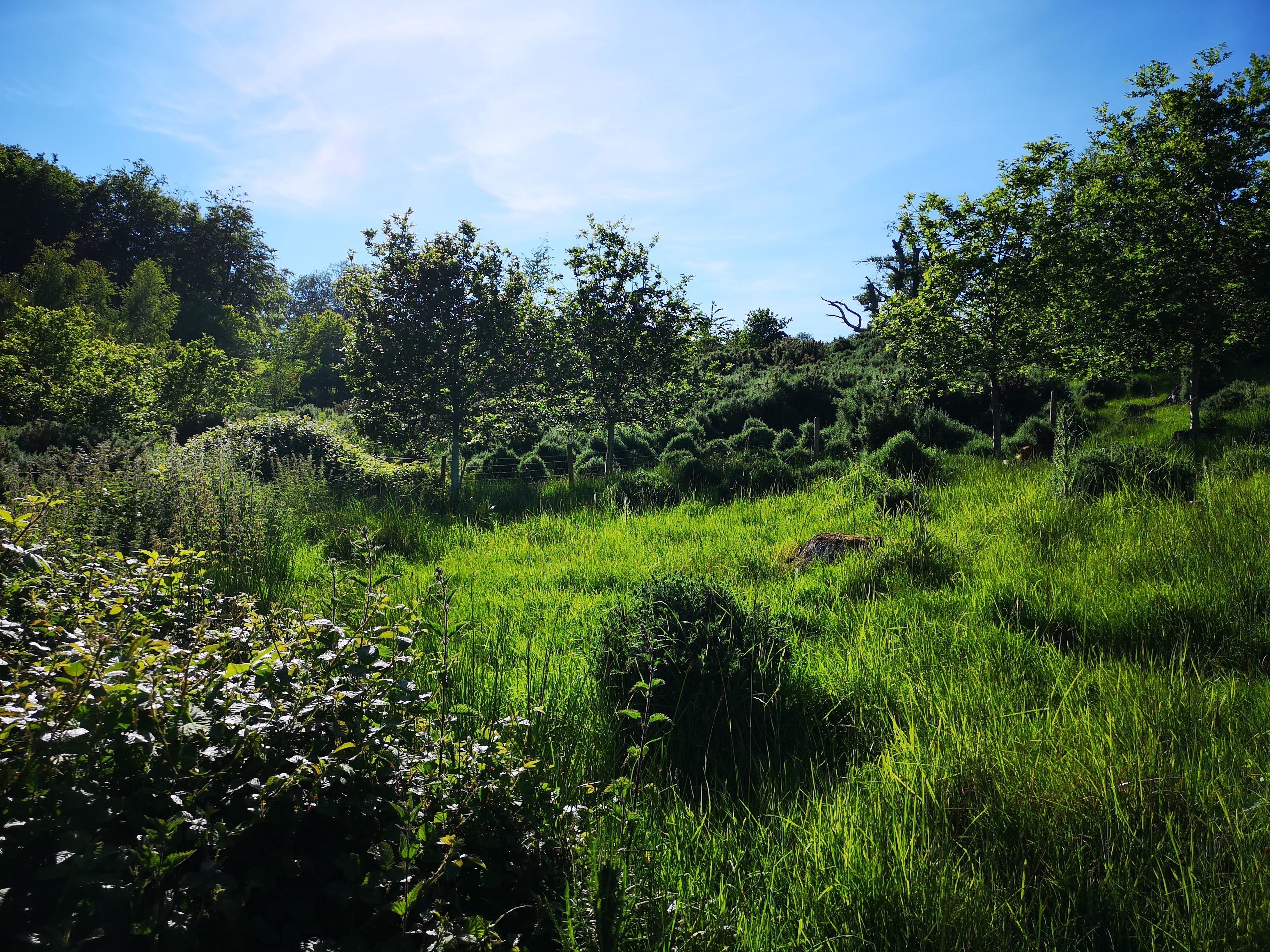
Not every garden can host an oak — though in the long term, even a small garden can accommodate a native oak as a future legacy planting that will outlive its planter by centuries, even if you consider smaller, compact oaks like the Pin Oak ‘Green Dwarf’ or ‘Green Pillar’. But the lesson is transferable to every tree selection decision: native, or near-native species with established ecological relationships, deliver far higher biodiversity return than ornamental or exotic alternatives.
Tree Planting for Britain and Northern Europe
Pedunculate oak
Quercus robur
UK/N. Europe
~2,300 dependent species; caterpillar abundance; deadwood habitat
Sessile oak
Quercus petraea
UK/N. Europe
Upland equivalent of Q. robur; acidic soils; similar wildlife value
Silver birch
Betula pendula
UK/N. Europe
Pioneer; fast-growing; 300+ insect spp.; catkins; light shade
Downy birch
Betula pubescens
UK/N. Europe
Damp/acidic soils; otherwise similar to silver birch
Rowan
Sorbus aucuparia
UK/N. Europe
Outstanding autumn berries; nectar; mountain/urban tolerant
Wild cherry
Prunus avium
UK/N. Europe
Spring blossom; early nectar; cherries for birds; woodland edge
Crab apple
Malus sylvestris
UK/N. Europe
Spring nectar; 93 insect spp.; apples persist through winter for birds
Field maple
Acer campestre
UK/N. Europe
Hedge or tree; 51 insect spp.; autumn colour; winged seeds
Trees That Save Mankind

At our first safari park, in Mamhead Park, we have approaching 10,000 trees. Some ancient, some brand new, some gnarly and twisted, some straight like arrows. They provide habitats for wildlife above the ground with powerful, neural networks below. These trees are our eco warriors.
Wild service tree
Sorbus torminalis
UK/N. Europe
Ancient woodland indicator; berries; specialist invertebrate value
Aspen
Populus tremula
UK/N. Europe
Suckering; 97 insect spp.; aspen hoverfly; poplar hawk-moth host
Hazel
Corylus avellana
UK/N. Europe
Multi-stem shrub/tree; catkins; nuts; dormouse; coppicing tradition
Spindle
Euonymus europaeus
UK/N. Europe
Small tree or shrub; outstanding fruit; specialist wildlife
Whitebeam
Sorbus aria
UK/N. Europe
Chalk/limestone; excellent berries; structural beauty
Alder
Alnus glutinosa
UK/N. Europe
Waterside; nitrogen-fixer; 90+ insect spp.; siskin and redpoll seeds
Tree Planting for North-East North America
White oak
Quercus alba
NE N. America
500+ caterpillar spp.; acorns; longevity; analogous to English oak
Red oak
Quercus rubra
NE N. America
Fast-growing oak; very high caterpillar value; outstanding autumn colour
Pin oak
Quercus palustris
NE N. America
Wet/clay soils; high caterpillar value; persistent winter acorns
American basswood
Tilia americana
NE N. America
Major early-summer bee plant; caterpillar host; fragrant flowers
Eastern redbud
Cercis canadensis
NE N. America
Spring bloom on bare wood; mason bee specialist; light understorey
Flowering dogwood
Cornus florida
NE N. America
Spring bloom; berries; 117 caterpillar spp.
Pagoda dogwood
Cornus alternifolia
NE N. America
Layered structure; berries for migrants; woodland edge
Shadblow serviceberry
Amelanchier canadensis
NE N. America
Early nectar; fruit; larval host; multi-stem grace
Black gum
Nyssa sylvatica
NE N. America
Major bee tree (autumn); superb autumn colour; berries for thrushes
Spicebush
Lindera benzoin
NE N. America
Understorey shrub/small tree; swallowtail host; berries
American hornbeam
Carpinus caroliniana
NE N. America
Dense shade; caterpillar host; nutlets for birds; understorey tree
Hackberry
Celtis occidentalis
NE N. America
Highly tolerant; 42 caterpillar spp.; berries; question mark butterfly host
Hedges as Wildlife Infrastructure
A hedge is not simply a boundary marker or a screen. Ecologically, it is one of the most valuable linear habitats in the temperate landscape: a continuous ribbon of shrub, climber, grass base, root zone, and canopy that concentrates invertebrate life, provides nesting opportunities for a wide range of birds and mammals, acts as a movement corridor for hedgehogs and other ground-dwelling animals, and sequesters carbon in roots, woody stems, and the soil beneath.
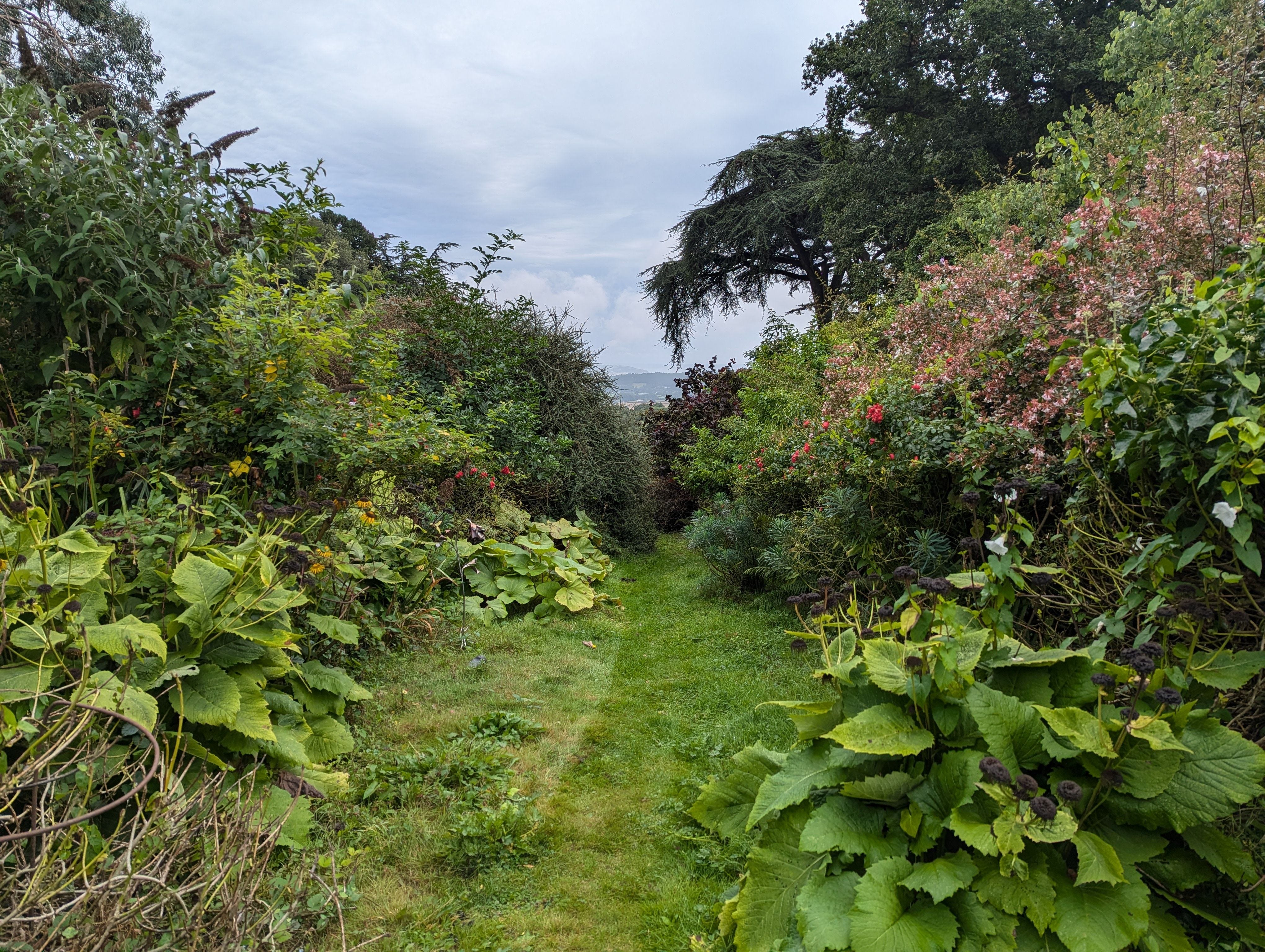
Hedgelink describes hedgerows as providing vital resources for wildlife and functioning as corridors enabling dispersal — a function that is especially important in fragmented urban and suburban landscapes where habitat patches are surrounded by inhospitable surfaces.
The Woodland Trust frames garden hedges as refuges that can simultaneously capture carbon, reduce flood risk through root infiltration, and provide wildlife habitat equivalent to a small woodland edge. Within gardens, hedges also modify microclimate: reducing wind speed, increasing temperature in their lee, and creating damp, sheltered microclimates that support a wider range of invertebrate species than open garden situations.
Hedge Plant Palette: Britain and Northern Europe
A mixed native hedge is vastly superior to a monoculture hedge for wildlife. Aim for a minimum of five native species in any hedge of meaningful length, with hawthorn as the structural backbone and a supporting cast of berry- and pollen-producing species:
Hawthorn
Crataegus monogyna
UK/N. Europe
Structural backbone; thorny nesting cover; berries; 200+ insect spp.
Blackthorn
Prunus spinosa
UK/N. Europe
Dense thorny thicket; earliest blossom; sloe berries; overwinter cover
Field maple
Acer campestre
UK/N. Europe
Autumn colour; insects; seeds for finches; adaptable
Dog rose
Rosa canina
UK/N. Europe
Scrambling habit; nectar; hips; specialist gall invertebrates
Holly
Ilex aquifolium
UK/N. Europe
Year-round cover; winter berries; evergreen structure; dense nesting
Spindle
Euonymus europaeus
UK/N. Europe
Spectacular fruit; specialist invertebrates; chalk/lime soils
