


We are publishing LettsSafari’s latest book exclusively at LettsSafari+ — week by week, chapter by chapter, for our members. This week you get Chapter 4.5 Pond, Bog, and Wetland Edges.
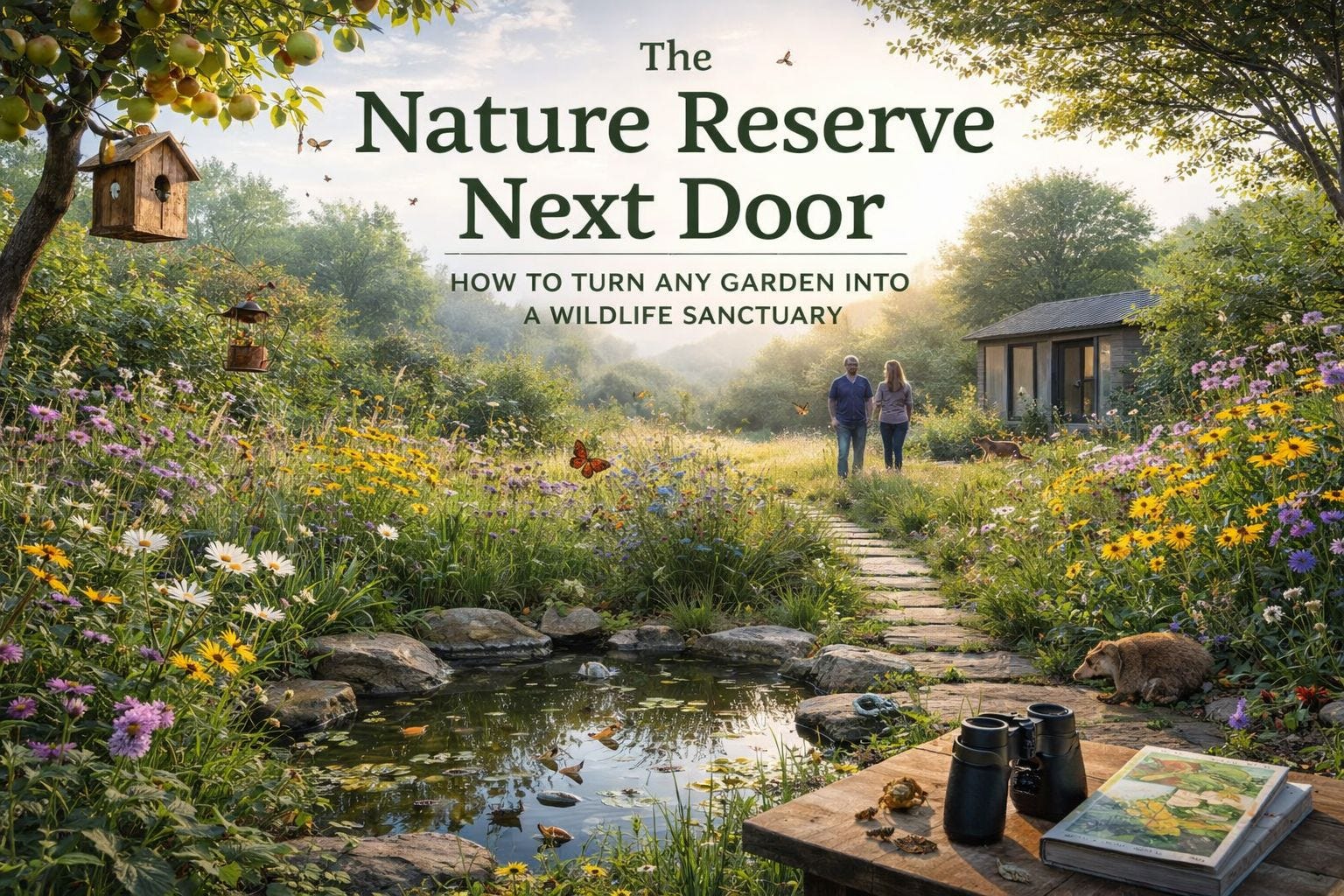
Garden rewilding is a journey. We’re excited to share our journey with you through “The Nature Reserve Next Door: How to Turn Any Garden Into a Wildlife Sanctuary”.
4.5 Pond, Bog, and Wetland Edges
Why Ponds Have Disproportionate Impact
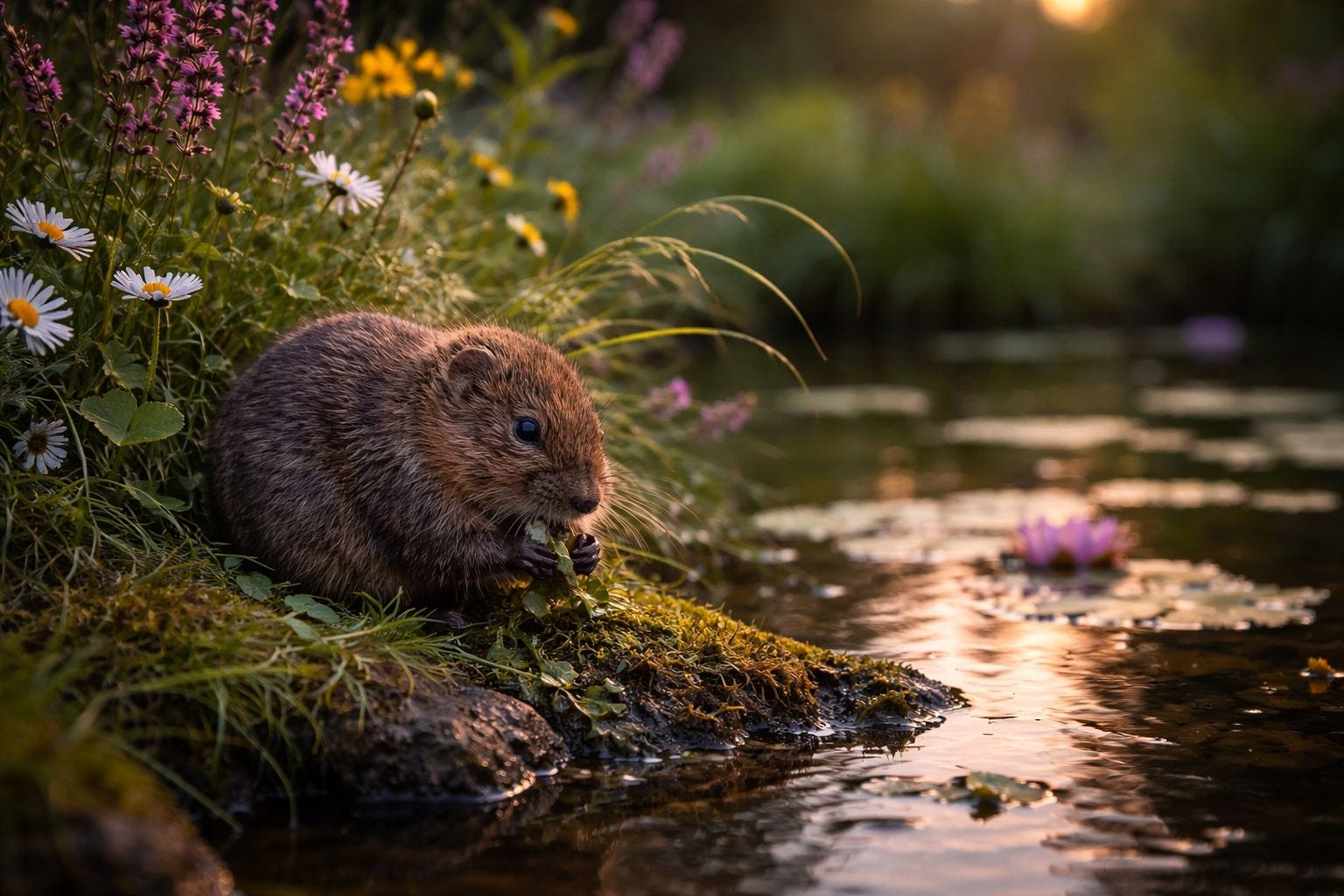
Water is the single habitat addition with the highest biodiversity return per square metre in a garden context. The Freshwater Habitats Trust states that ponds, despite being small by comparison to rivers and lakes, support more biodiversity at the landscape scale than any other freshwater habitat. The reasons are multiple: ponds provide still or slow water with a wide range of depths, temperatures, and oxygen levels; pond margins provide a critical transition zone between aquatic and terrestrial habitats; ponds are isolated ecosystems in which rare and specialist species can persist without being overwhelmed by the generalists that dominate river systems.
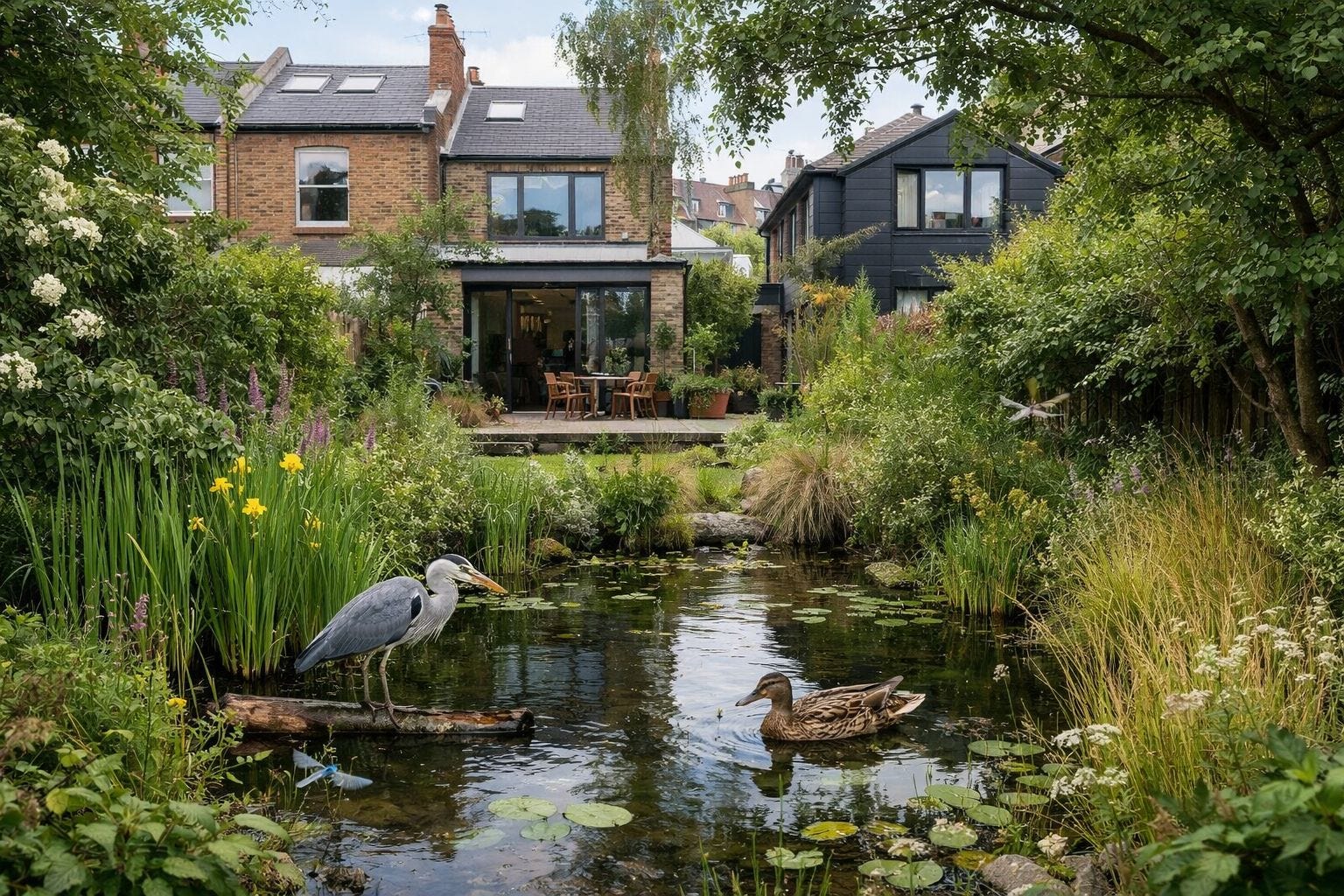
Garden ponds specifically play an extraordinary role in UK freshwater conservation. Government estimates suggest there are approximately 3 million garden ponds in Britain — making the garden pond network the most numerous freshwater habitat type in the country. Many of these ponds are the primary habitat for populations of smooth newts, common frogs, common toads, water boatmen, diving beetles, and numerous dragonfly and damselfly species that have been excluded from intensively managed agricultural or urban landscapes.
The LettsSafari Three-Tier Water System
The LettsSafari blueprint recommends building not just a pond but a connected water system: a pond that overflows into a bog garden, which itself overflows into adjacent damp grassland that can develop into wet meadow or wetland over time. This three-tier approach — pond → bog → wet swale — mirrors the natural hydrology of wetland edges and creates the maximum possible diversity of wetland microhabitats within a small footprint:
Pond: open water for aquatic invertebrates, amphibians, drinking and bathing birds, and emergent aquatic vegetation
Bog garden: permanently saturated soil for bog-specialist plants, and a transition zone for amphibians moving between water and terrestrial habitats
Wet swale/damp grassland: seasonally wet grassland that can support ragged robin, marsh marigold, purple loosestrife, and other moisture-loving wildflowers — and provides hunting and foraging habitat for many invertebrates, birds, and amphibians
Building a Wildlife Pond: Evidence-Based Guidance
Shallow Water Is the Secret
The most common mistake in wildlife pond construction is building too deep. Freshwater Habitats Trust guidance is unambiguous: the most biologically productive part of any wildlife pond is the shallow margin — the 5–30 cm zone where water is warm, well-oxygenated, and sunlit. Deep areas are relatively sterile by comparison. For a garden wildlife pond, a maximum depth of 60–80 cm is usually adequate, and the majority of the pond surface should be shallow: aim for at least half the pond surface being under 30 cm in depth.
Pond Size Guidance
Minimum meaningful wildlife pond: 2 m × 1 m, with at least one shallow margin
Small garden wildlife pond: 3–4 m in longest dimension; supports full amphibian colonisation and damselfly breeding in most locations
Medium wildlife pond: 5–8 m; can support dragonfly breeding, diving beetles, and more diverse aquatic plant communities
Container ponds: even a half-barrel or large glazed pot sunk to its rim and planted with a single water plant will support water boatmen, mosquito predation, and provide a drinking and bathing source for birds and bees
Construction Sequence
Mark out the pond shape with a hosepipe — irregular, naturalistic shapes work better for wildlife than geometric pools
Excavate to the planned depth profile, with at least one gently sloping ‘beach’ edge where frogs, toads, and small mammals can enter and exit safely
Line the excavation with 5–10 cm of damp sand to protect the liner from sharp stones and roots
Lay butyl rubber liner (the most durable option) or heavy-duty pond liner, smoothing out folds into the contours
Fill with rainwater where possible — tap water contains chlorine and phosphates that can stimulate algae growth; connect to a water butt as the primary fill source if feasible
Plant the margins with native aquatic and marginal species; leave the deeper zone to colonise naturally
Do not add soil or turf to the water — this enriches the pond with nutrients and promotes algae rather than aquatic plants
Do Not Add Pond Sludge or Transplant Wildlife
Freshwater Habitats Trust guidance explicitly states that you do not need to add material from an existing pond, whether sludge, water, or wildlife, to ‘start’ your pond. Common frogs, smooth newts, water boatmen, whirligig beetles, backswimmers, and most other garden pond species will colonise naturally within the first year or two, arriving on the feet of birds, on the bodies of insects, and through their own dispersal abilities. Adding material from elsewhere risks introducing disease, invasive species, or non-local genotypes.
Pond Plant Palette: Britain and Northern Europe
Yellow flag iris
Iris pseudacorus
UK/N. Europe
Marginal; structural; bee-visited; frog/newt cover
Purple loosestrife
Lythrum salicaria
UK/N. Europe
Marginal/wet; stunning; exceptional bee plant; butterfly-visited
Ragged robin
Lychnis flos-cuculi
UK/N. Europe
Wet/damp; specialist bee value; meadow edge plant
Marsh marigold
Caltha palustris
UK/N. Europe
Earliest pond marginal; essential spring bee resource
Water mint
Mentha aquatica
UK/N. Europe
Marginal; outstanding late-season nectar; bee magnet; fragrant
Brooklime
Veronica beccabunga
UK/N. Europe
Shallow water/margin; small bee plant; dense marginal cover
Water forget-me-not
Myosotis scorpioides
UK/N. Europe
Shallow margin; nectar; spreads to form marginal mats
Bogbean
Menyanthes trifoliata
UK/N. Europe
Shallow water; spectacular flower; spreads to cover water surface
White water-lily
Nymphaea alba
UK/N. Europe
Deeper water; resting platform for dragonflies; shade to reduce algae
Broad-leaved pondweed
Potamogeton natans
UK/N. Europe
Submerged/floating; oxygenating; invertebrate habitat
Water crowfoot
Ranunculus aquatilis
UK/N. Europe
Submerged/surface flowers; aquatic invertebrate habitat
Lesser spearwort
Ranunculus flammula
UK/N. Europe
Wet margin; compact; yellow flowers; invertebrate value
Great willowherb
Epilobium hirsutum
UK/N. Europe
Tall marginal; bees; elephant hawk-moth larval host
Common reed
Phragmites australis
UK/N. Europe
Larger ponds; nesting for warblers; invertebrate-rich in stems
Pond Plant Palette: North-East North America
Blue flag iris
Iris versicolor
NE N. America
Marginal; structural; bee-visited; native alternative to yellow flag
Cardinal flower
Lobelia cardinalis
NE N. America
Wet margin; hummingbird and bee nectar; vivid red
