


We are publishing LettsSafari’s latest book exclusively at LettsSafari+ — week by week, chapter by chapter, for our members. This week you get Chapter 4.6 Deadwood, Stones, Compost, and Microhabitat Engineering.
Garden rewilding is a journey. We’re excited to share our journey with you through “The Nature Reserve Next Door: How to Turn Any Garden Into a Wildlife Sanctuary”.
4.6 Deadwood, Stones, Compost, and Microhabitat Engineering
Rewilding Is Not Only Planting
One of the most important insights in practical rewilding is that habitat consists of far more than living plants. The structural elements of a rewilded garden, deadwood in all its forms, stone banks, sand patches, compost heaps, leaf litter, are not supplementary features added after the planting is done. They are core habitat infrastructure that many species cannot live without, and they begin providing value the moment they are installed, without any waiting for plants to establish.
Deadwood: The Foundation of a Functioning Soil
The Royal Horticultural Society provides detailed guidance on deadwood habitats, noting that dead and decaying wood supports an enormous community of decomposers including fungi, bacteria, woodlice, millipedes, springtails, and many specialist beetles.
This decomposer community in turn supports higher trophic levels: the ground beetles that eat woodlice, the birds that probe log piles for beetle grubs, and the hedgehogs that forage in the leaf litter layer. The RSPB similarly promotes log piles as habitats supporting insects, amphibians, and small mammals, noting that even a small log pile in a shaded position will attract common toads, slow worms, and a wide range of invertebrates within weeks.
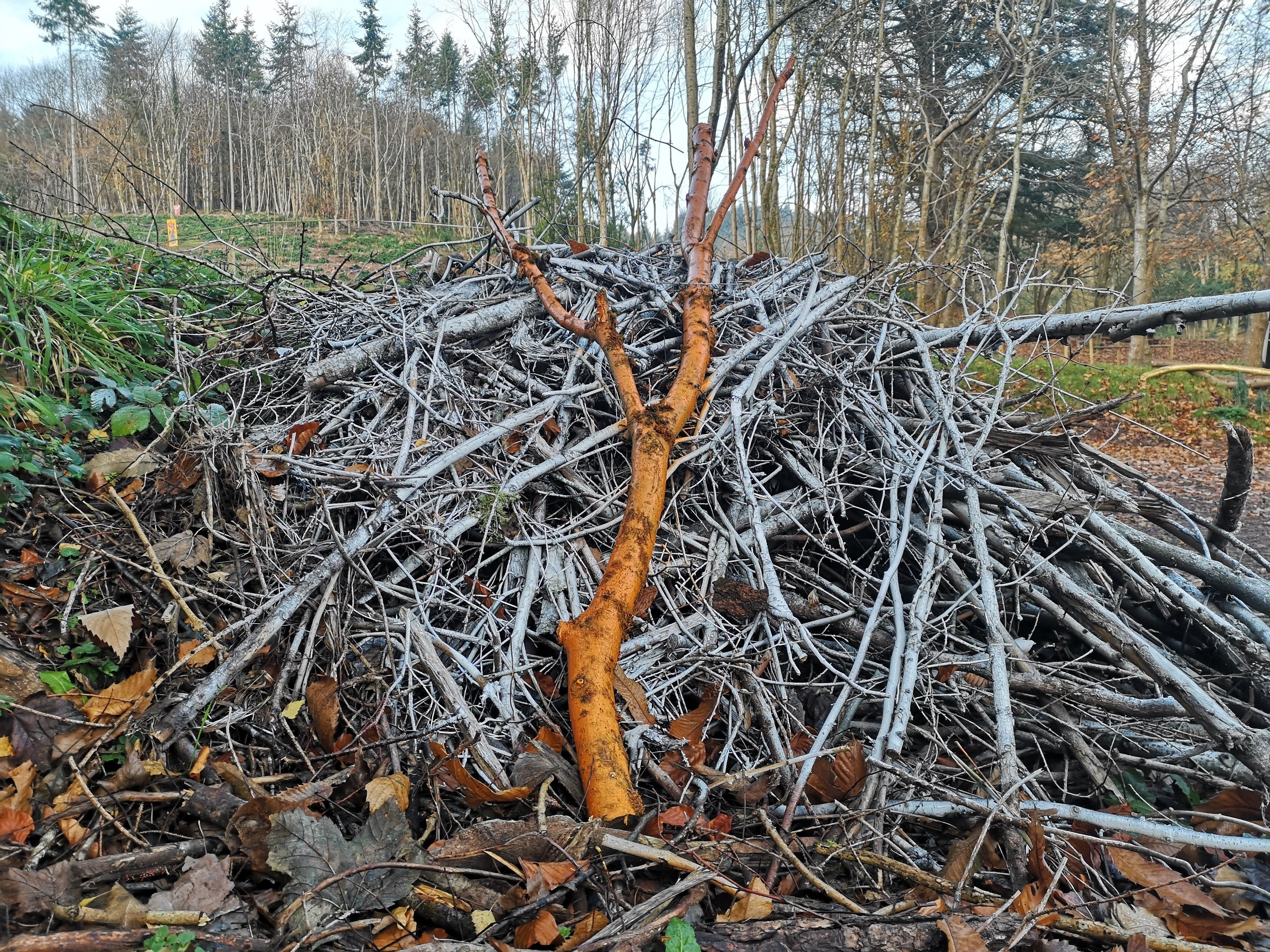
The LettsSafari approach goes further, proposing ‘Wildlife Biodomes’, which are domed structures built from recycled logs and branches designed to accelerate the development of decomposer habitat and provide layered shelter simultaneously.
The Devon Wildland description of LettsSafari’s sites around Mamhead Park describes these biodomes as part of the Sunrise Park rewilding landscape, where they function as self-sustaining homes for insects, bugs, birds, and small mammals whilst improving soil quality through ongoing decomposition. Whether you build an exact biodome or a simpler brush pile with a log base, the ecological mechanism is the same: deadwood structure + air spaces + soil contact = decomposer habitat + refuge.
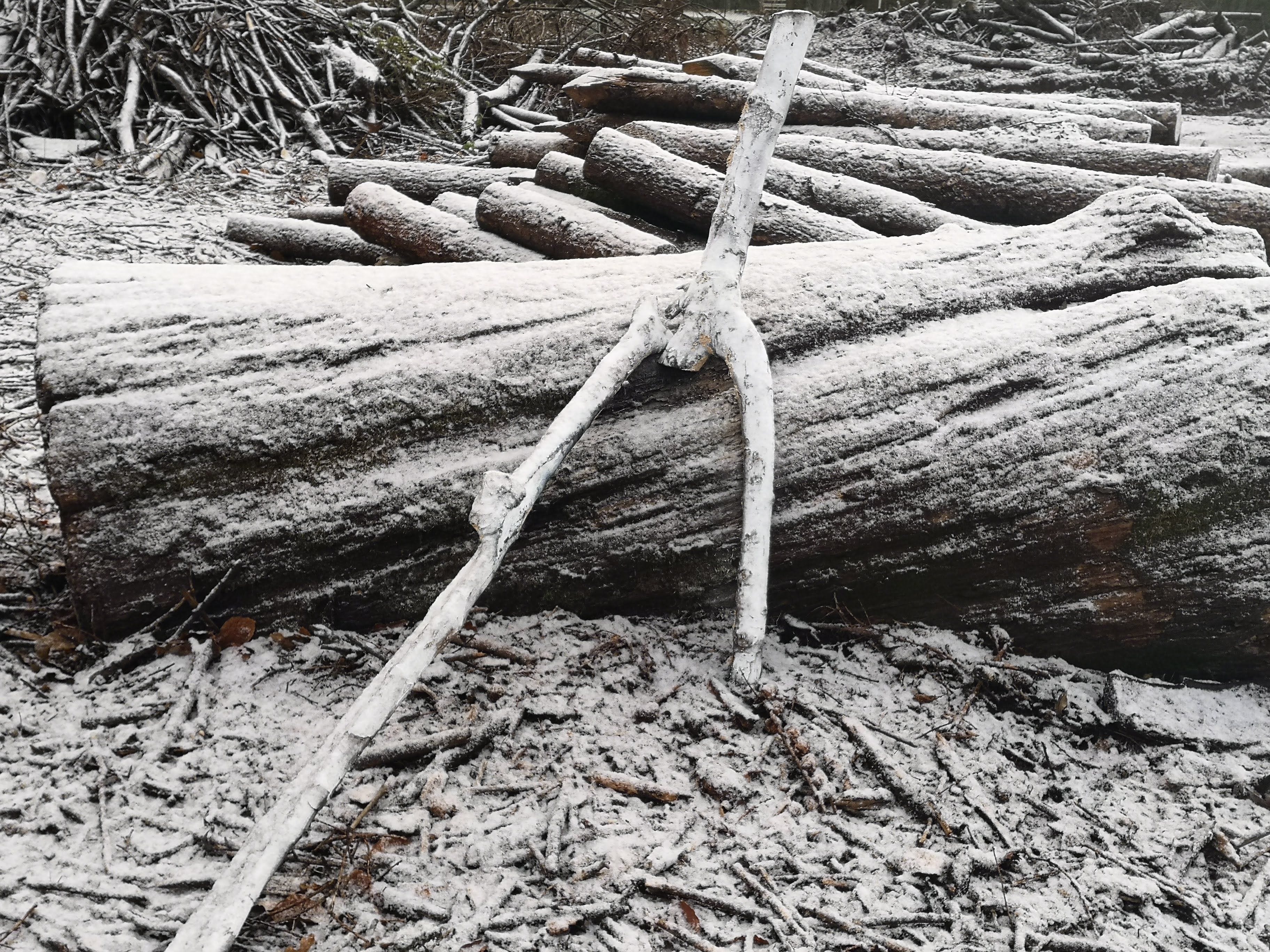
Building a Log Pile or Wildlife Biodome
Choose a position in light shade adjacent to the scrub or hedge zone that is not in full sun (which will dry out the logs too quickly) and not in permanent deep shade, which is too cold for most reptiles
Use a variety of log sizes: large-diameter logs (15 cm+) for saproxylic beetles; medium logs (8cm+) for common toad hibernation; small-diameter branches woven between them for insect overwintering
Bury one or two logs partially into the soil surface — this maintains moisture contact and provides the dampest conditions for slow worms, stag beetles (if present in your area), and fungi
Leave bark on the logs wherever possible — bark harbours specialist invertebrates and slows decomposition, extending the habitat’s lifespan
Allow leaf litter to accumulate at the base of the pile as this is where hedgehog hibernation habitat develops naturally
Build the pile to at least 60–80 cm in height if constructing a biodome-style structure, using larger logs as the base, woven branches as the mid structure, and lighter branches on top
Fallen Trees and Branches Heal our Soil
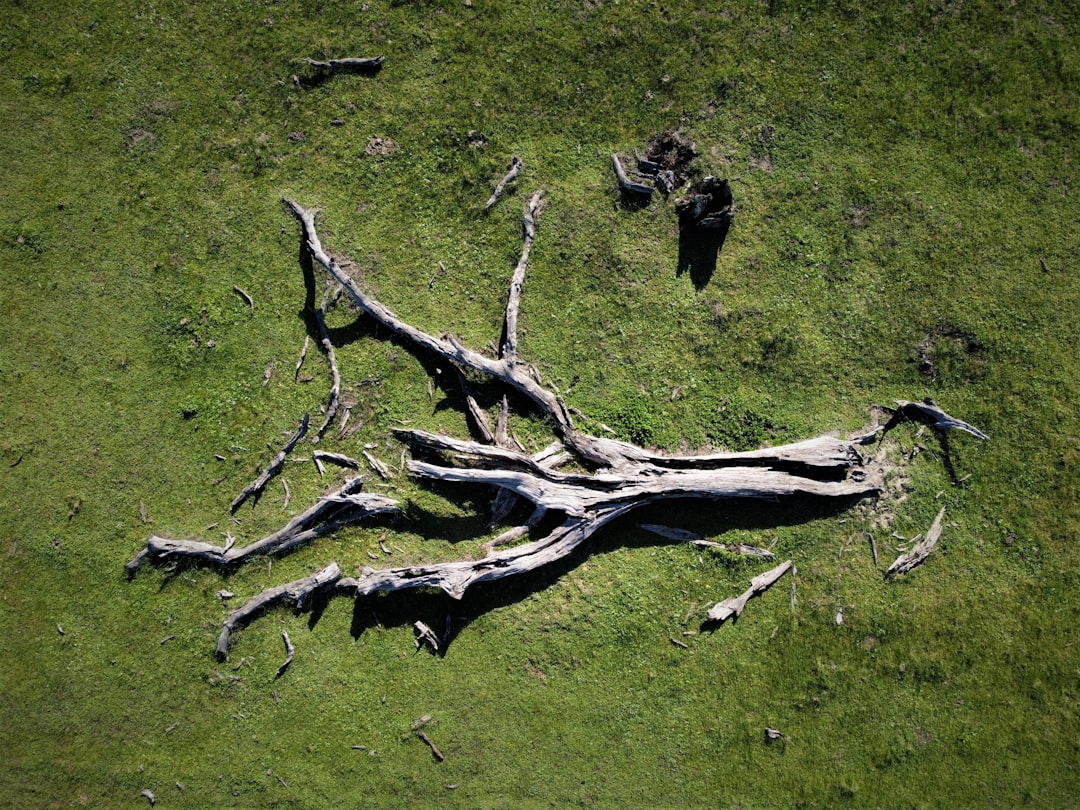
There were some terrifying statistics this week about the rapid destruction of plant life in front gardens across our cities. The reality is that in the endless pursuit of tidiness and efficiency in our gardens, parks and farms we are systematically destroying nature. The irony is that if nature and wildlife returned we would enjoy our green spaces so much more. Through our two decade work building and operating rewilding safari parks and gardens we have learned some amazing nature enhancing lessons. Few more than the power of wood left to rot in the ground.
Compost Heaps: Habitat as Well as Soil Strategy
A compost heap is simultaneously one of the most practical and most overlooked wildlife habitats in a garden. The RHS notes that composting actively supports fungi and micro-organisms, which in turn support the invertebrate communities that feed birds, hedgehogs, and insectivorous mammals.
The internal temperature of an active compost heap, typically 40–60°C, makes it a favoured nesting site for grass snakes in Britain, which use it as a ‘solar incubator’ for their eggs. A compost heap that is used regularly, never turned too violently, and positioned in a partially sheltered spot can become one of the most intensively used wildlife features in the garden.
Stone Banks and Walls: The Reptile and Invertebrate Hotel
Dry stone walls and rubble banks are among the most ecologically rich structures in the temperate garden landscape. The interstices between stones provide a temperature-buffered microclimate which is cool in the summer, and frost-free in winter, with rapid localised warm-up on sunny days.
This thermal profile makes stone structures the preferred basking, overwintering, and egg-laying habitat for common lizards, slow worms, and grass snakes in Britain; and for American five-lined skinks, ring-necked snakes, and various salamanders in North America. The rough surface of stone also supports mosses, lichens, and specialist invertebrates that are absent from smooth hard surfaces.
The Bee Crisis and What You Can Do About It

The world is experiencing an unprecedented decline in pollinator populations, particularly bees, with devastating consequences for ecosystems and our food supply. Over the past few decades, scientists have documented alarming decreases in bee populations across the globe, whether they're in the wild or the protection of beekepers.
Sand and Bare-Soil Patches: The Solitary Bee Nesting Bank
Approximately 70% of the UK’s 250+ native bee species nest in bare, well-drained mineral soil — digging tunnels into south-facing banks, flat patches of sandy or gritty soil, or soft mortar in old walls. These ground-nesting bees are among the most threatened component of the UK’s pollinator fauna, precisely because the bare, low-nutrient, south-facing soil they need has largely disappeared from managed landscapes. In a garden context.
