


We are publishing LettsSafari’s latest book exclusively at LettsSafari+ — week by week, chapter by chapter, for our members. This week you get Chapter 5. Garden Rewilding — Step-by-Step Build Plans.
Garden rewilding is a journey. We’re excited to share our journey with you through “The Nature Reserve Next Door: How to Turn Any Garden Into a Wildlife Sanctuary”.
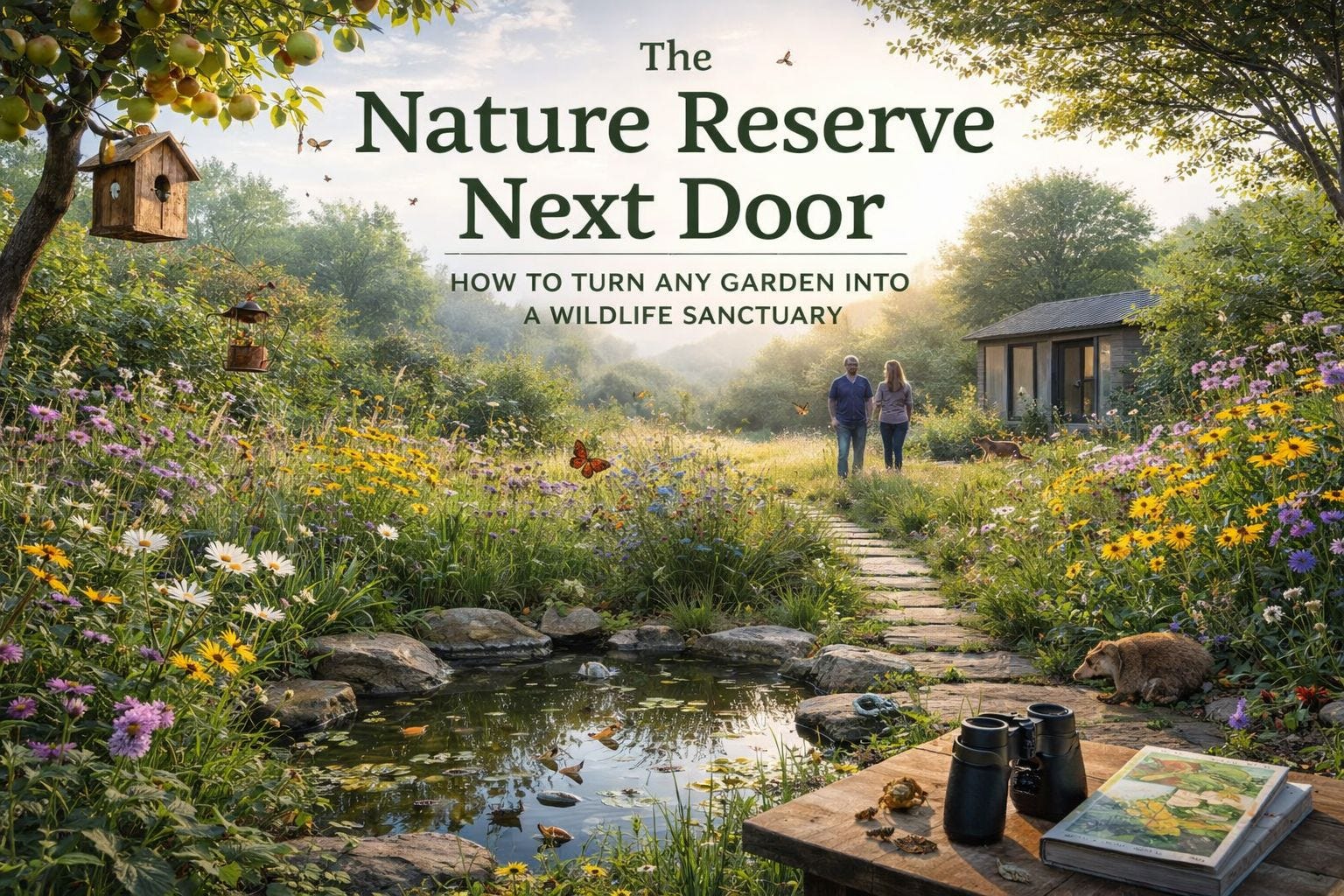
Chapter Five: Garden Rewilding — Step-by-Step Build Plans
Core Tools and Materials
A rewilded garden does not require specialist machinery or a large budget. The tools listed below are mostly standard gardening equipment, with a few additions specific to habitat construction and meadow management:
Core Tools
Spade and digging fork — essential for pond excavation, turf stripping, and planting
Rake (standard) and spring-tine rake — the spring-tine rake is essential for meadow management; removing arisings without it is very hard work
Wheelbarrow — for moving excavated soil, compost, woodchip, and plant material
Hand saw or bow saw; loppers; secateurs — for hedge planting, dead hedge construction, and scrub management
String line and hosepipe — for marking shapes before turf-stripping or pond excavation
Spirit level — especially important for pond construction to ensure level edges and avoid one side flooding
Strimmer or scythe — for meadow management; a scythe is quieter, wildlife-safer, and produces better arisings for composting, but requires practice; a strimmer is faster
Buckets and tubs — for moving materials, soaking bare-root plants before planting, and temporary water holding during pond maintenance
The Best Tools for Rewilding Your Garden

As environmental awareness grows, the rewilding movement is taking the gardening world by storm. Rather than highly manicured, monoculture lawns, more and more people are embracing a return to natural, biodiverse landscapes. In Part 4 of our series on ‘How to create your very own safari garden’ we take a look at some of the tools that will help you get the job done.
Core Materials by Habitat
Meadow: local-provenance native seed mix; dry silver sand (for mixing and broadcasting seed); and yellow rattle seed (UK)
Pond: butyl rubber liner; geotextile underlay; washed sharp sand or fine gravel for liner protection; and a rainwater butt connection; plus native aquatic plants
Deadwood: logs and branches in various diameters (ideally minimum 8 inches in diameter); prunings with bark intact; make sure to make contact with the soil at the base of the structure
