


We are publishing LettsSafari’s latest book exclusively at LettsSafari+ — week by week, chapter by chapter, for our members. This week you get Chapter 5.1: Small Urban Garden Build.
Garden rewilding is a journey. We’re excited to share our journey with you through “The Nature Reserve Next Door: How to Turn Any Garden Into a Wildlife Sanctuary”.
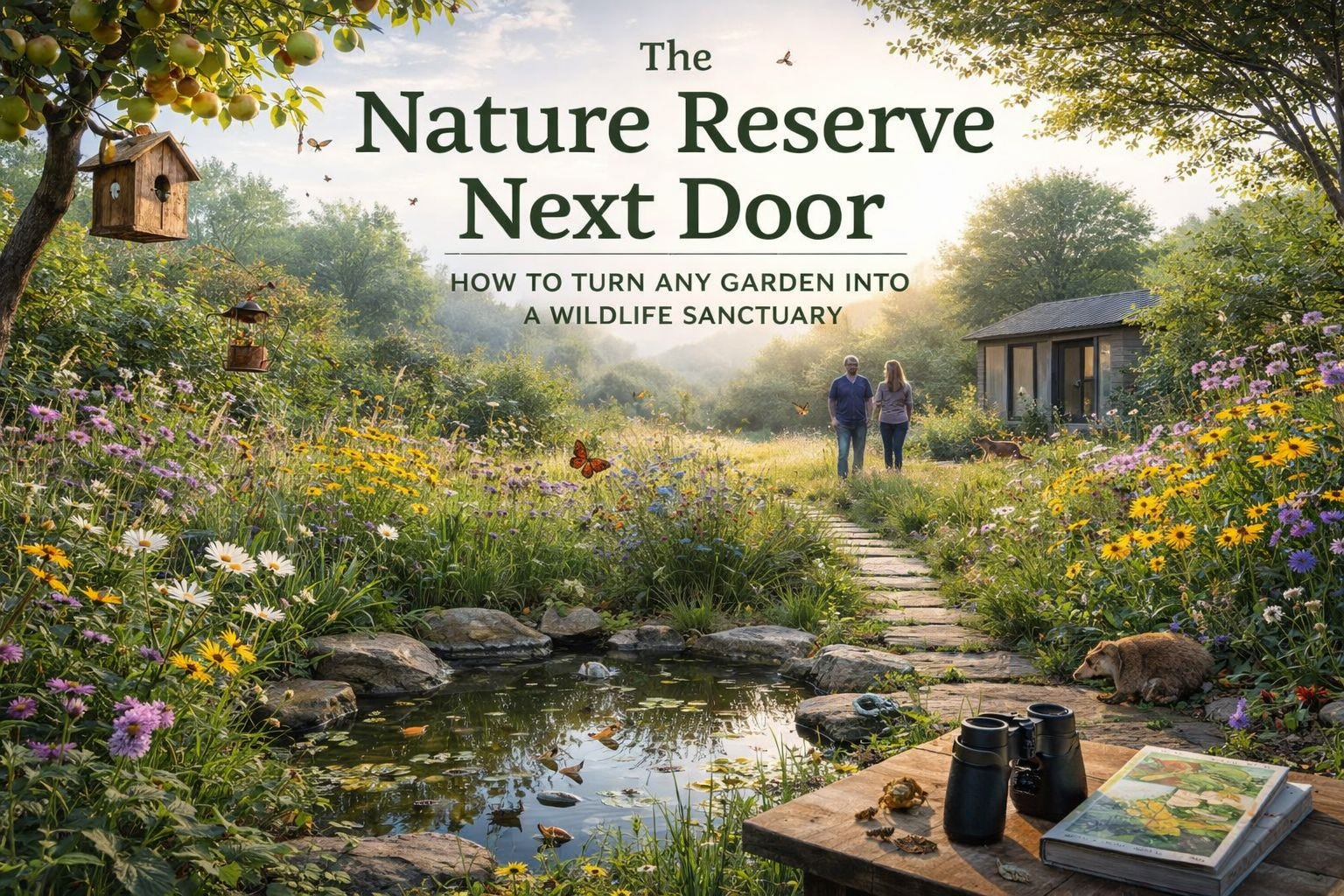
5.1 Small Urban Garden Build
A typical small urban garden in Britain, the terraced or semi-detached plot of 50–120 m², presents specific challenges which often include: high neighbour visibility, compact heavy soils, limited tree height due to light constraints and legal restrictions. On top of this many face a persistent cat pressure, and often limited sunlight.
But it also presents enormous opportunities: urban gardens aggregate into vast networks, and a small rewilded plot in a terrace is visible to more people, and therefore more culturally influential than the same area in a rural setting. It’s well worth the effort.
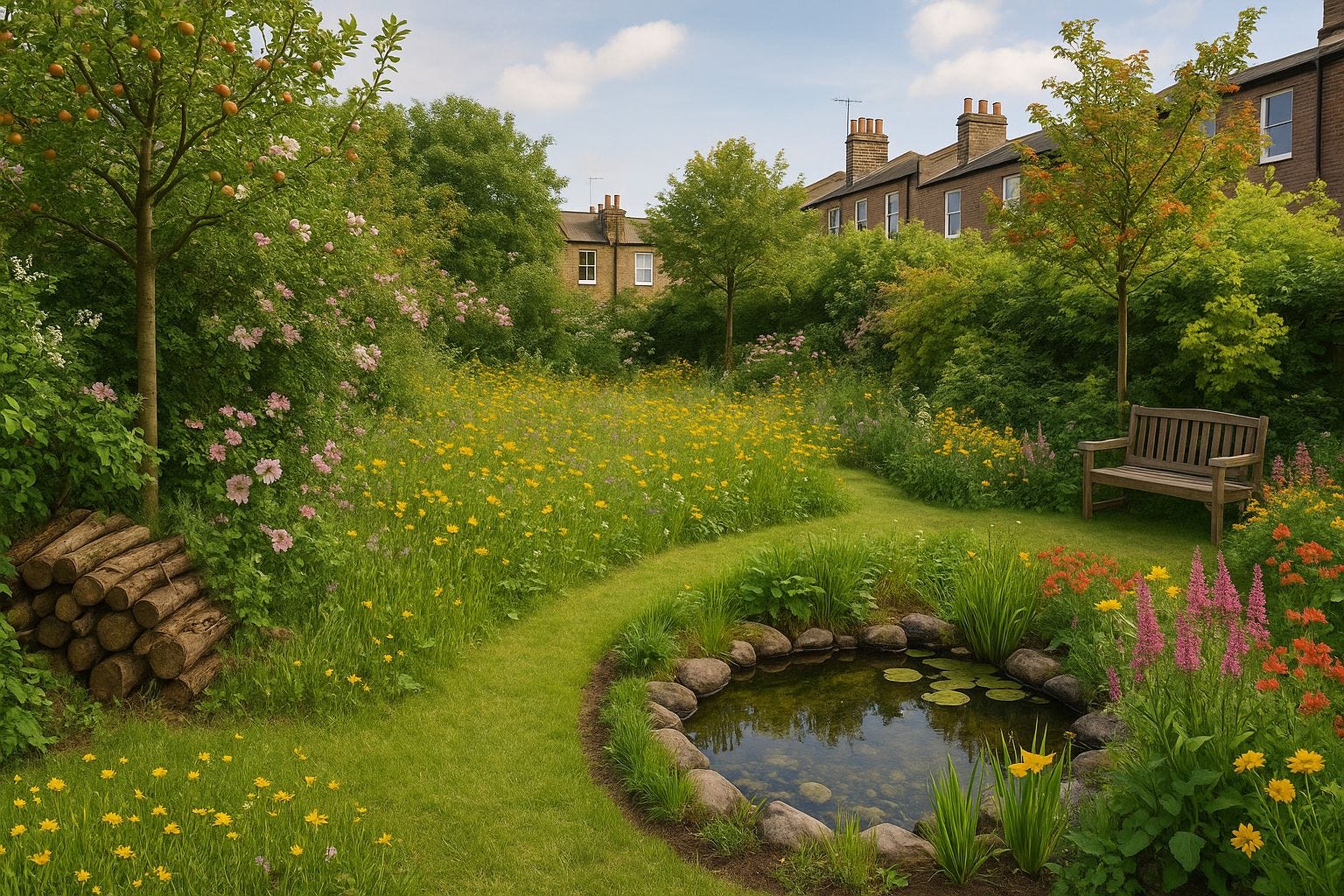
A Rewilded Kit That Fits a Small Urban Garden
Mini-meadow strip (4–8 m²) with a mown path edge creating a clear ‘orderly frame’
One dense shrub thicket of 2–4 m length along the rear or side boundary — hawthorn, blackthorn, and dog rose for UK; serviceberry and arrowwood viburnum for NE N. America
One or two small trees appropriate to the plot — crab apple, rowan, or field maple in UK; Eastern redbud or pagoda dogwood in NE N. America
One wildlife pond (minimum 1.5 × 1 m) or container pond if digging is impossible
One log pile or wildlife brush dome positioned at the base of the scrub zone
One pollinator bed (2–4 m²) near the seating area — the ‘front-of-stage’ feature
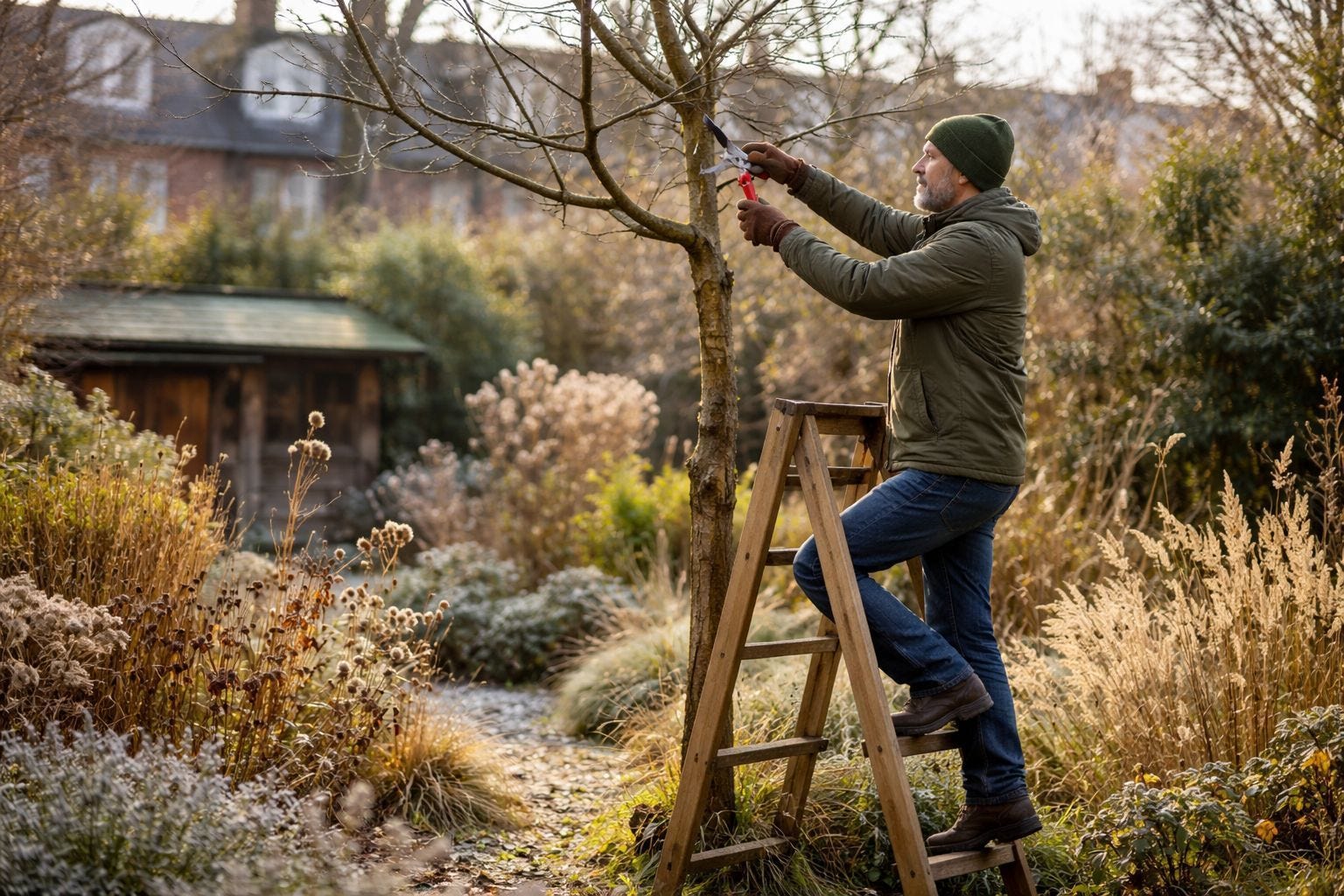
Build in Six Weekends
Weekend One: mark all habitat zones; remove a narrow turf strip for the meadow patch; begin the ‘no mow’ regime in selected lawn areas
