


We are publishing LettsSafari’s latest book exclusively at LettsSafari+ — week by week, chapter by chapter, for our members. This week you get Chapter 5.2: Medium Urban Garden Build.
Garden rewilding is a journey. We’re excited to share our journey with you through “The Nature Reserve Next Door: How to Turn Any Garden Into a Wildlife Sanctuary”.
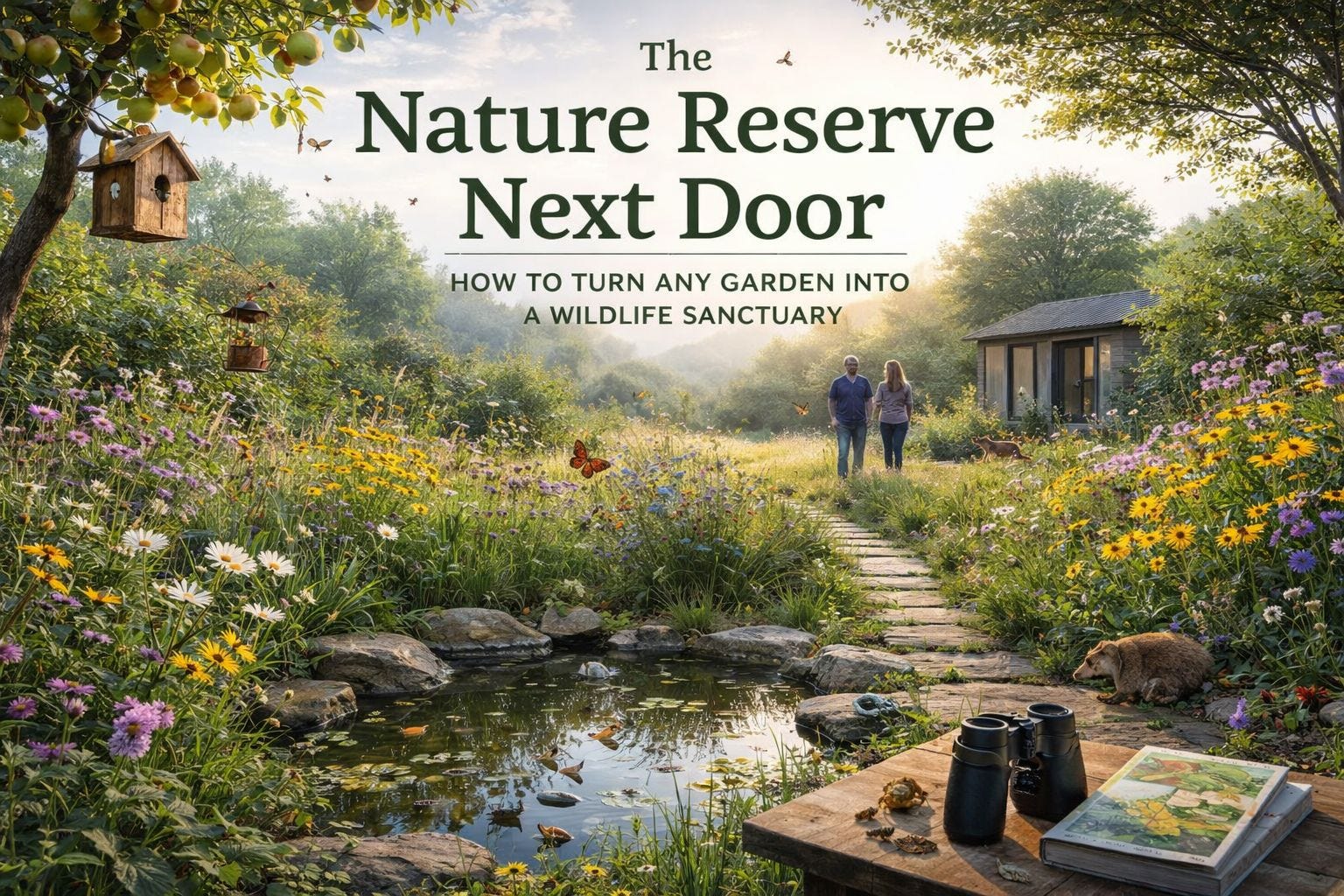
5.2 Medium Urban Garden Build
A medium urban garden of 120–300+ m² offers enough space to implement the LettsSafari three-habitat mosaic as a literal, spatially distinct structure: three interlocking zones of grassland, scrub, and trees, connected by a water thread. The recommended approach is to split the rewilded area (roughly one-third or more of the total garden area) into roughly equal grassland, scrub, and tree-associated zones.
Key Upgrades Versus a Small Garden
A two-meadow system: one ‘spring meadow’ that flowers early and is then managed (cut and arisings removed) in late summer; one ‘summer meadow’ patch left long until the autumn cut, providing overwintering habitat for butterfly larvae in the grass tussocks
A proper wet edge: a wildlife pond of at least 3 m in the longest dimension, feeding into an actual bog garden strip, which in turn spills into a damp grass margin planted with ragged robin, marsh marigold, and water mint
Urban Rewilding: WWT Wetlands in Barnes Part 1

The WWT London Wetland Centre may be one of the most striking visuals and views I have encountered on my many trips to urban rewilding projects reporting for LettsSafari +. Peering out of a specially constructed viewing building, across landscapes intentionally impossible to access for the public, seeing wetlands, marsh, reeds and birds stretch out before me, before finally getting the intermittent visions of city life in the skyline was something like a surreal moment. And the trek through the tour-able sections of WWT London Wetland project really brought the experience of the wetlands up close. A sense that this is a really important place.
A native mixed hedge of around five species, with climbers (ivy and honeysuckle) growing through it and a rough base of leaf litter and bramble below
Hedgehog highway connection: if appropriate and with the support of neighbours, a 13 cm × 13 cm gap at the base of your fence panels allows hedgehogs to follow established nightly routes through the garden network
At least two or three standard or semi-standard native trees providing canopy structure - a field maple or crab apple in a sunny position; an alder or willow in any damp zone
Living in, or having access to a medium sized urban garden is a real privilege, and a wonderful opportunity to extend your traditional garden methods with your own mini, rewilded nature reserve. One that nature and wildlife will constantly thank you for.
Join us next week for “Chapter 5.3 Cottage Garden Rewilding”
Get more LettsSafari updates and wildlife photos on X. And read the latest posts at the LettsSafari + website.