


We are publishing LettsSafari’s latest book exclusively at LettsSafari+ — week by week, chapter by chapter, for our members. This week you get Chapter 2 - Part 2: The ‘Quiet’ Ethical Case for Garden Rewilding: The Reasons Often Overlooked.
Garden rewilding is a journey. We’re excited to share our journey with you through “The Nature Reserve Next Door: How to Turn Any Garden Into a Wildlife Sanctuary”.
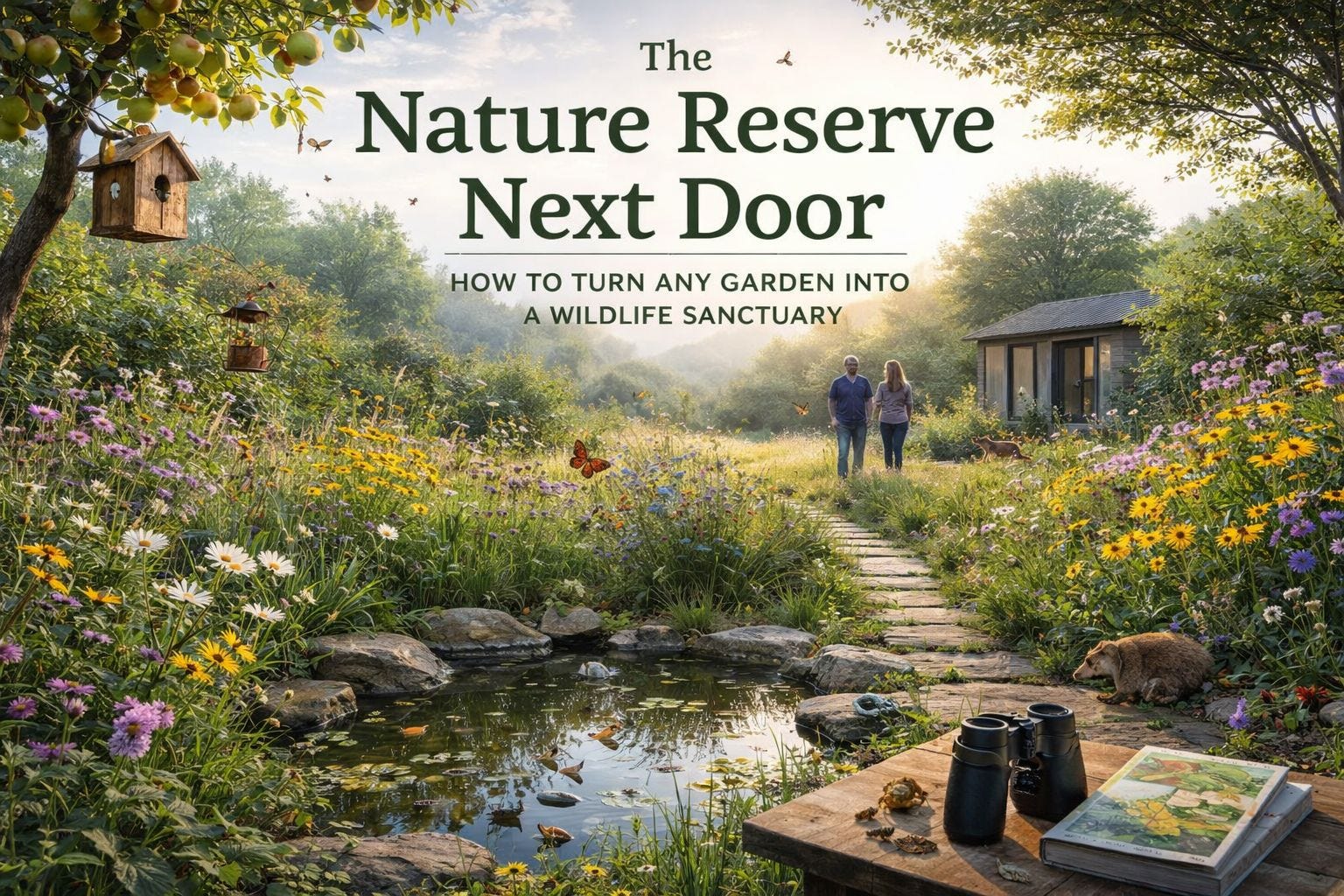
Chapter 2 - Part 2: The ‘Quiet’ Ethical Case for Garden Rewilding: The Reasons Often Overlooked
Beyond the headline biodiversity statistics, there are several quieter but compelling ethical arguments for garden rewilding that are often missing from public discussions:
Reducing Pesticide Harm
Rewilding reduces reliance on pesticides and high-input management practices. The precautionary argument is strong: we do not fully understand the cascading effects of common garden chemicals on soil food webs, aquatic systems, and the invertebrates that underpin ecosystems. A rewilded garden, managed without insecticides and herbicides, becomes a chemical-free refuge in a landscape that is often saturated with agrochemical inputs from adjacent farmland. The Royal Horticultural Society explicitly advises against pesticide use and recommends non-chemical alternatives wherever possible.
Freshwater Restoration
Rewilding typically increases water infiltration, reduces surface run-off, and creates small wetland features that support freshwater biodiversity, which is an especially important contribution in heavily modified landscapes where ponds have been lost or degraded at scale. Many UK urban ponds receive nutrient-rich run-off from roads and gardens, and the addition of a clean-water garden pond in a favourable catchment can provide critically important spawning or foraging habitat for species such as great crested newts, common toads, smooth newts, and a wide range of specialist aquatic invertebrates.
Reducing Biodiversity Homelessness
Urban wildlife often faces a ‘habitat fragmentation’ problem: patches of suitable habitat are separated by distances or barriers that individual animals cannot cross. Hedgehogs, for example, are highly mobile creatures that need to range over 1–2 km in a single night to meet their foraging needs, yet they are routinely stopped by solid fence lines, walls, and paved surfaces. Rewilded gardens that connect, even informally, to neighbouring green spaces can reduce this fragmentation, providing movement corridors that allow hedgehogs, slow worms, frogs, toads, and even species of ground beetle to navigate the urban landscape. Small holes in the bottom of fences can make all the difference.

The Rewilding Trend: Why It Is Accelerating
Garden rewilding is no longer a niche interest of committed naturalists. It sits at the intersection of biodiversity policy, visible wildlife decline, public wellbeing research, and a surge in accessible, example-driven gardening culture. Several converging forces are making it mainstream:
Global Targets Are Reshaping the Narrative
The Convention on Biological Diversity’s Kunming-Montréal Global Biodiversity Framework includes a commitment to conserve 30% of land, inland waters, and seas by 2030 (the ‘30×30’ target) and to restore 30% of degraded ecosystems by 2030. While most private gardens are not formally ‘protected areas’ and cannot be counted directly towards these targets, they can function as connective tissue and stepping-stone habitat that makes formally protected landscapes actually work — because wildlife does not recognise the boundaries of a nature reserve.
The No-Mow Movement Has Become Mainstream
Plantlife launched No Mow May in 2018, and it has since become a cultural touchstone that reaches millions of gardeners annually. The ecological logic is sound: longer grass provides not only nectar opportunities when wildflowers appear, but also breeding and larval habitat for grassland butterflies and moths. Research publicised by Butterfly Conservation indicates that allowing long grass can increase butterfly numbers substantially — in some monitored contexts, by as much as 93%. Crucially, Butterfly Conservation also argues for retaining long grass beyond May, pointing out that many moth and butterfly life cycles require long grass through summer and into autumn.
Institutions Are Demonstrating Meadow Conversion at Scale
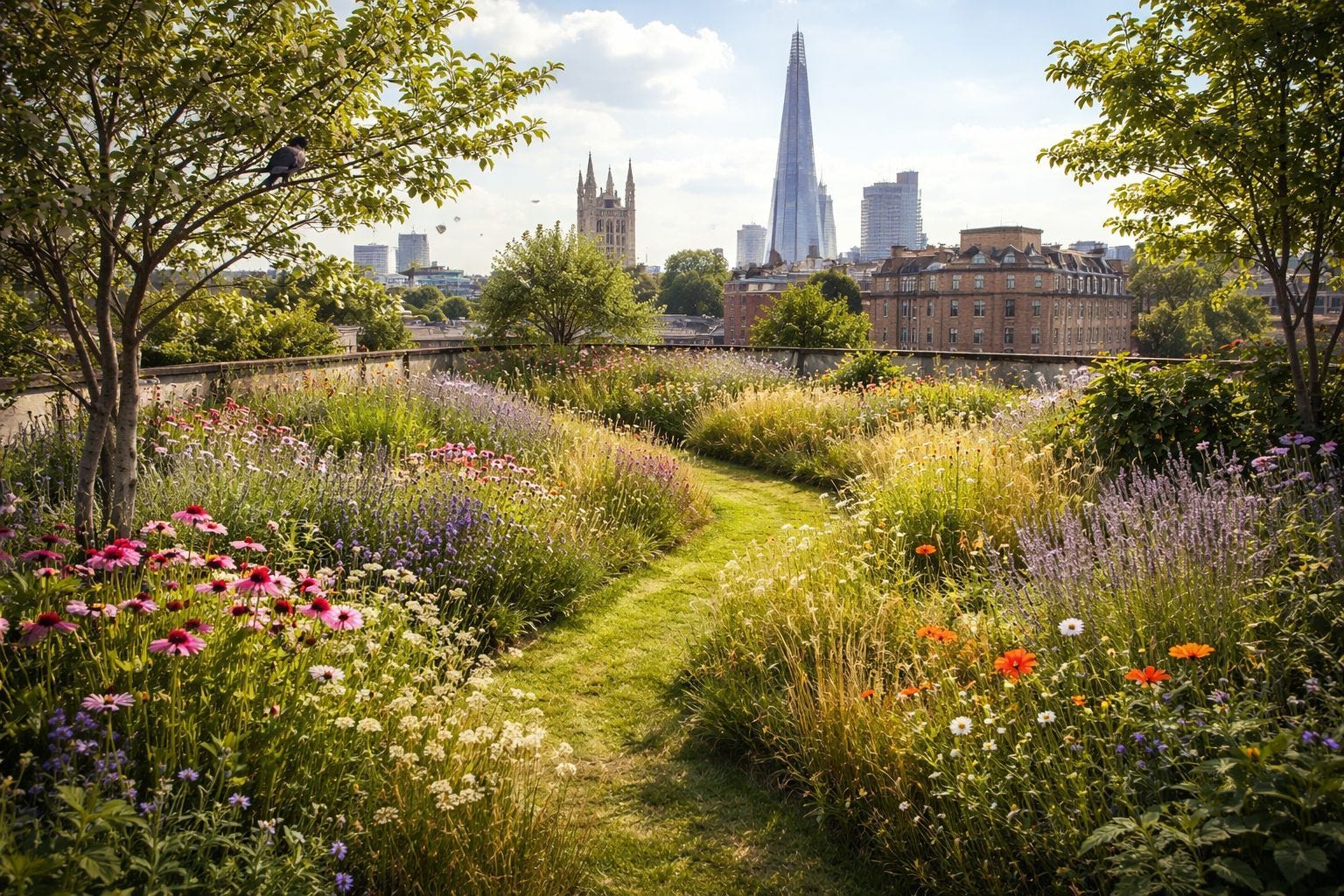
The King’s College Cambridge meadow project is now widely cited as a landmark demonstration of what reduced mowing can achieve. University of Cambridge research reported that the meadow supported three times more species of plants, spiders, and bugs than equivalent lawn, and that bat foraging activity was measurably higher over the meadow than over maintained grass. The project also demonstrated a vital social principle: cut paths through the meadow allowed people to walk through, enjoy, and observe the habitat, showing that human use and ecological value need not conflict. They reinforce each other. The small meadow features perennial flowers such as oxeye daisies, corn chamomile, poppies, cornflowers, and yellow rattle to manage grass growth.
Platforms Like LettsSafari Have Shown The Way and Created Wide Ripple Effects
LettsSafari designed and built their first rewilded garden in New York in 2006. Since then, they have not only defined the garden rewilding playbook and approaches, but with the launch of LettsSafari.com helped make garden rewilding understood, acceptable and today practically mainstream.
Creating a Wildflower Area in Your Safari Garden

Many of you will want to add a mini wildflower meadow to your LettsSafari garden. Wild flower and wild grasses remove carbon, attract wildlife, naturally regenerate and look amazing. Plus, it will bring a bit of the ‘wild’ into your life!
