


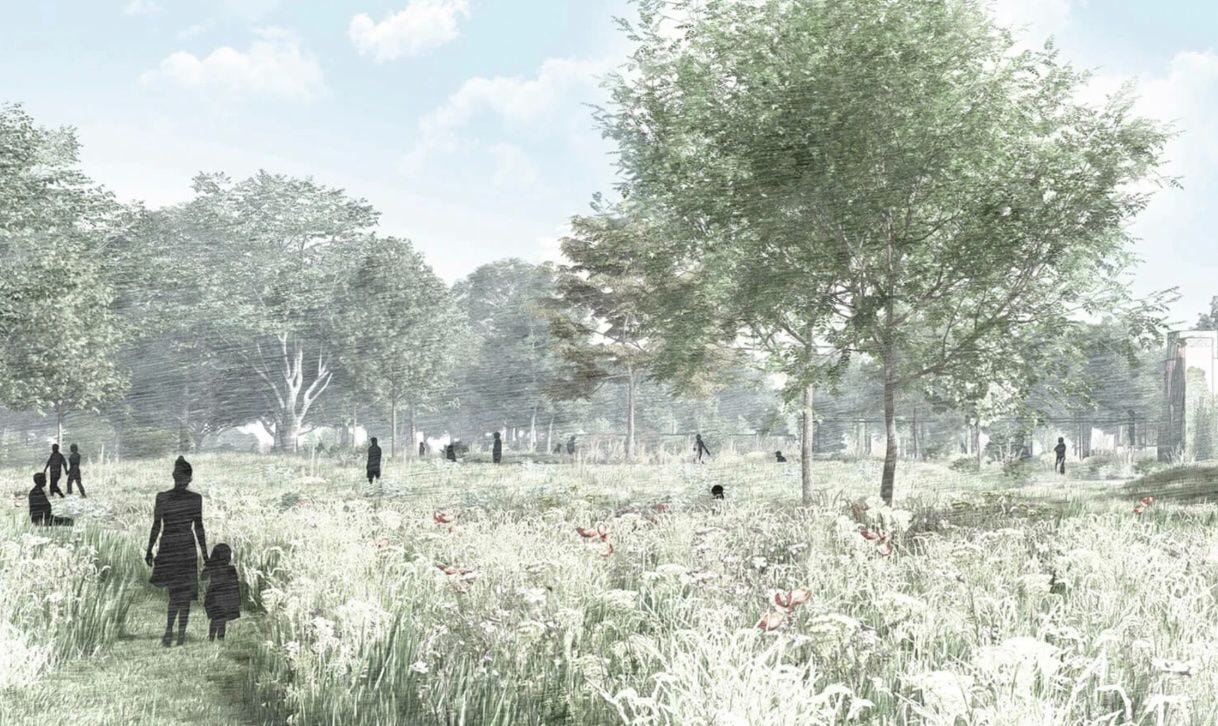
A newly created wildlife garden in Regent’s Park, to mark what would've been the Queen Elizabeth's 100th birthday, is transforming a former brownfield site into a thriving micro-habitat - already home to hedgehogs, newts, pollinators and a growing web of life. Within months, The Queen Elizabeth II Garden, which was once lifeless ground will be buzzing, crawling and reshaping what urban nature can look like.
And here’s the great thing: it’s only a couple of acres!
▲▼
The Big Idea: Nature Loves Complexity (Even in Small Spaces)
The success of this project comes down to one deceptively simple principle: diversity creates life. Instead of a single “nice” garden, the space was designed as a mosaic of habitats, including:
Wildflower meadows for pollinators
Small ponds for amphibians
Hedgerows and scrub for shelter
Native planting for resilience
This layering creates what ecologists call edge effects - where different habitats meet, and biodiversity explodes.
Translation: the messier and more varied your space, the more alive it becomes.
Why Wildlife Arrived So Fast
One of the most striking parts of the story is how quickly animals moved in. Urban areas like London already have fragmented wildlife populations. When you create even a small, suitable habitat, species don’t need an invitation - they’re already nearby, waiting.
This is why:
A pond can attract frogs within weeks
Wildflowers can bring bees within days
Shelter can draw in hedgehogs surprisingly quickly
Nature isn’t gone. It’s just… waiting for better real estate.
The Bigger Shift: Cities as Nature Recovery Engines
This project flips a long-held assumption. Cities aren’t just places where nature survives - they can be places where it recovers. Small, connected habitats across gardens, balconies, parks, and verges can form urban wildlife networks:
Stepping stones for pollinators
Corridors for mammals
Refuges during climate stress
And crucially, they’re scalable - because they rely on people, not policy alone.
Where LettsSafari Comes In
This is exactly the world LettsSafari is helping to build.
Because while flagship projects like Regent’s Park are inspiring…most rewilding actually happens somewhere far less glamorous like your garden, your balcony or your local patch of green.
LettsSafari turns that inspiration into action by helping people:
Start small with simple, high-impact changes
Choose the right plants and habitats for UK conditions
Build layered ecosystems (not just “wild-looking” gardens)
See real results quickly, which keeps momentum going
It’s not about recreating a park. It’s about creating hundreds of thousands of tiny ones.
And when you zoom out, that’s how real change happens.