


A new “Plants for Pollinators” initiative launched in a London borough is transforming local libraries into hubs for nature recovery. By encouraging residents to plant pollinator-friendly species at home and in shared spaces, the programme is tackling a stark reality: the UK has seen a dramatic decline in insect populations over recent decades.
But beyond the statistics, this story reveals something bigger. Rewilding is no longer distant. It’s becoming personal.
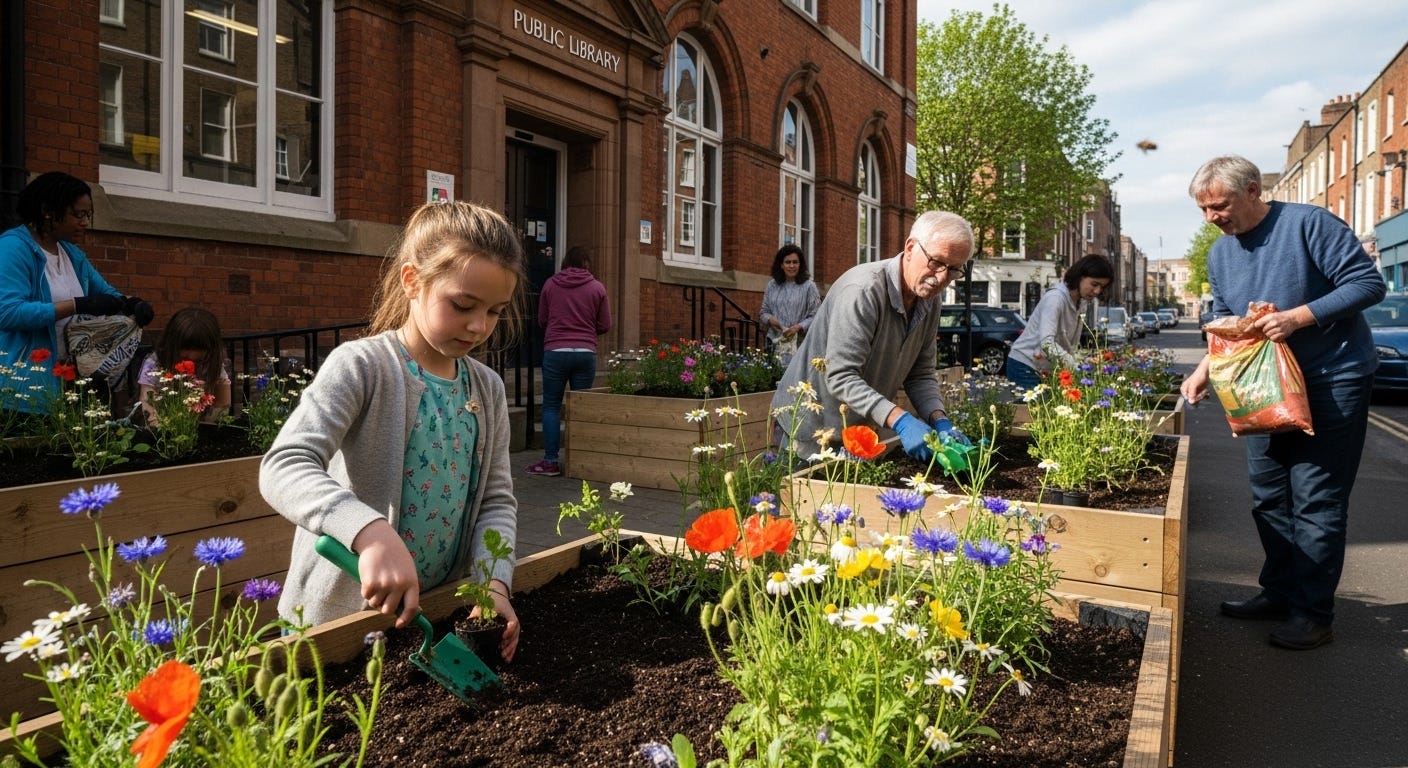
Small actions, big ecological impact
Pollinators (bees, butterflies, hoverflies) are the invisible workforce of our ecosystems. Without them, food systems weaken, plant diversity collapses and entire ecosystems begin to unravel. The brilliance of this initiative lies in its simplicity:
A few pots of nectar-rich flowers
A patch of unmown grass
A window box buzzing with life
Individually, these actions feel small. Collectively, they become a distributed rewilding network, stitched together across cities. This is rewilding at human scale-accessible, practical and immediate.
Rewilding moves into everyday life
What makes this story particularly exciting is where it’s happening. Libraries - traditionally places of knowledge - are becoming gateways to action. They’re not just lending books; they’re seeding ecosystems.
This reflects a broader shift in the UK:
Rewilding is moving from rural to urban
From specialists to citizens
From large-scale projects to everyday participation
And perhaps most importantly, it’s becoming something people can see, feel and be part of.
How LettsSafari turns participation into impact
This is exactly where LettsSafari comes in. Because while enthusiasm for rewilding is growing, people often ask “Where do I start and does my small effort really matter?”
LettsSafari bridges that gap.
By subscribing, people don’t just get inspiration - they become part of a collective rewilding movement:
🌱 Fund real rewilding projects in the UK
🦋 Access practical tips to rewild your own garden or balcony
🌳 See the impact grow, from planting trees to reintroducing wildlife
👀 Get a front-row seat to nature recovery through updates and storytelling
It transforms scattered individual actions into something bigger: A coordinated, measurable force for nature recovery
Because the truth is - rewilding doesn’t scale through a few large projects alone. It scales when thousands of small actions connect.
The future of rewilding is local, visible, and shared
The “Plants for Pollinators” initiative shows us what the future looks like:
Nature recovery embedded in daily life
Communities leading the change
Small spaces delivering meaningful biodiversity gains
And as this movement grows, the question shifts from: “Can rewilding work here?” to “Why aren’t we doing this everywhere?”