


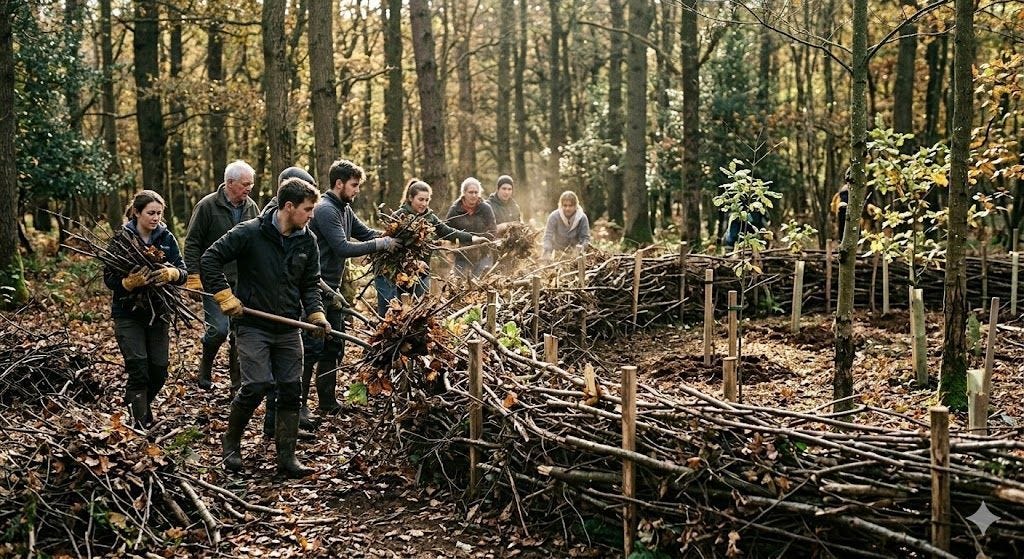
A new initiative around London is demonstrating that nature recovery doesn’t require vast landscapes or large budgets. The London Tree Ring project is bringing together communities, volunteers, and young people to create a network of trees, micro-forests, and wildlife habitats around the capital.
The ambition is simple but powerful: connect fragmented green spaces so wildlife can move more freely through urban environments.
While most of us won’t be planting thousands of trees, the project offers valuable lessons for anyone interested in rewilding their garden, balcony, local park, school, or community space.
At LettsSafari, we believe that successful rewilding starts with the same principle: creating many small habitats that together have a much bigger impact.
Why Connected Habitats Matter
Many urban wildlife populations struggle because habitats have become isolated. A single wildflower patch or pond can help wildlife, but when habitats are linked together, they become far more valuable. Connected habitats allow:
Pollinators to move between food sources
Birds to find shelter and nesting sites
Small mammals to travel safely
Plants to spread naturally
Wildlife populations to become more resilient
The London Tree Ring project is effectively creating a giant wildlife corridor around one of the world’s largest cities. The good news is that the same principle can work on a much smaller scale.
Five Ways to Create Wildlife Connections Near You
1. Think Beyond Your Own Garden
Many people focus only on their own outdoor space. Instead, consider how your garden or balcony connects to surrounding areas. Ask yourself:
Are there nearby trees?
Is there a park within flying distance for pollinators?
Could birds travel between your garden and neighbouring green spaces?
Even small improvements can help create stepping stones for wildlife.
2. Plant Native Trees and Shrubs
Trees provide some of the richest wildlife habitats available. If you have space, consider native species such as:
Hawthorn
Rowan
Silver Birch
Field Maple
Hazel
For smaller gardens, native shrubs can provide similar benefits while taking up less space.
3. Create a Pollinator Corridor
Pollinators often struggle to find continuous food sources through the season. Plant flowers that bloom at different times of the year:
Spring:
Primrose
Cowslip
Bluebell
Summer:
Knapweed
Wild Marjoram
Oxeye Daisy
Autumn:
Ivy
Devil’s-bit Scabious
Michaelmas Daisy
This helps ensure food is available throughout the year.
4. Join Community Rewilding Projects
The success of the London Tree Ring project highlights the importance of collective action. Look for opportunities to:
Join local tree planting schemes
Support community gardens
Volunteer for habitat restoration projects
Participate in wildlife surveys
Working with others often creates a bigger impact than working alone.
5. Leave Space for Nature
One of the simplest actions is often the most effective. Consider leaving parts of your outdoor space slightly wild:
Allow grass to grow longer
Leave seed heads over winter
Create a log pile
Leave fallen leaves in sheltered corners
These small habitat areas provide shelter and food for a wide range of species.
What This Means for LettsSafari Members
The London Tree Ring project demonstrates that nature recovery is most successful when many people contribute small actions. That’s exactly the philosophy behind LettsSafari. Our mission is to help people take practical steps to support wildlife at home while also contributing to larger nature restoration efforts. Whether you have a garden, balcony, allotment, courtyard, or simply an interest in helping nature, small changes can contribute to wider biodiversity gains.
Rewilding Is a Team Sport
One of the most inspiring aspects of the London Tree Ring project is that it brings people together around a shared goal. Nature recovery is not something that happens somewhere else. It happens when neighbours plant trees, when schools create wildlife gardens, when communities restore local habitats, and when individuals decide to make a little more room for nature. The future of rewilding will be built from thousands of small projects connected together. Just like the wildlife habitats they create.