


Our new guide is here!
When people hear the word rewilding, they often imagine huge estates, forests and vast areas of countryside.
But rewilding doesn’t have to happen on a massive scale.
Our new e-book, The Definitive Guide to Smaller-Scale Rewilding, looks at how gardens, parks, farms, community spaces and other smaller areas can all play a part in nature recovery.
We’ve created the guide to make rewilding feel more practical and accessible. You don’t need hundreds of acres or specialist knowledge to start creating better habitats for wildlife. Sometimes, it can be as simple as leaving an area of grass unmown, planting native wildflowers or creating a small pond.
Why we made it
After years of working on our own rewilding projects, we wanted to bring together what we’ve learned and make it useful to people who want to do something themselves.
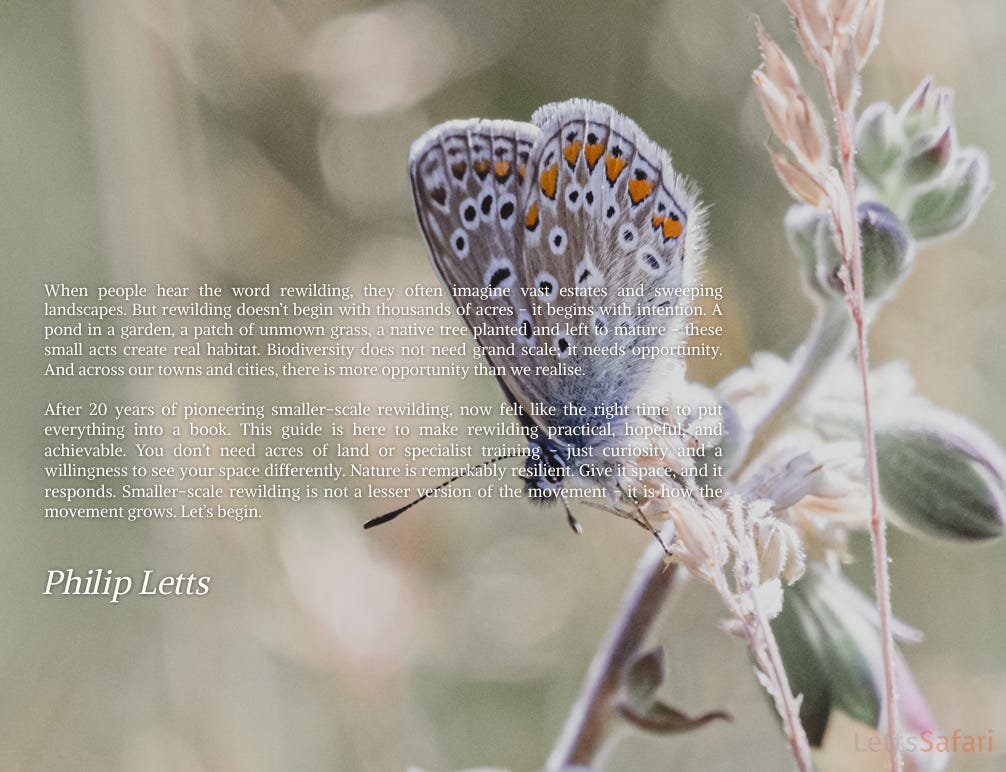
Smaller-scale rewilding can look different everywhere. It might be a community garden, a section of a park, a wildlife-friendly garden or a small piece of farmland.
A sneak peek
One of the sections of the guide looks at creating microhabitats.
A successful rewilding space doesn’t need to be one single type of habitat. Even on a small plot, creating a mix of grassland, scrub, woodland and water can provide different resources for different species.
For example, a small patch of wild grassland can become a mini meadow, providing food and shelter for insects and other wildlife. In some cases, simply reducing how often you mow an existing lawn can allow wildflowers and other plants to appear naturally.
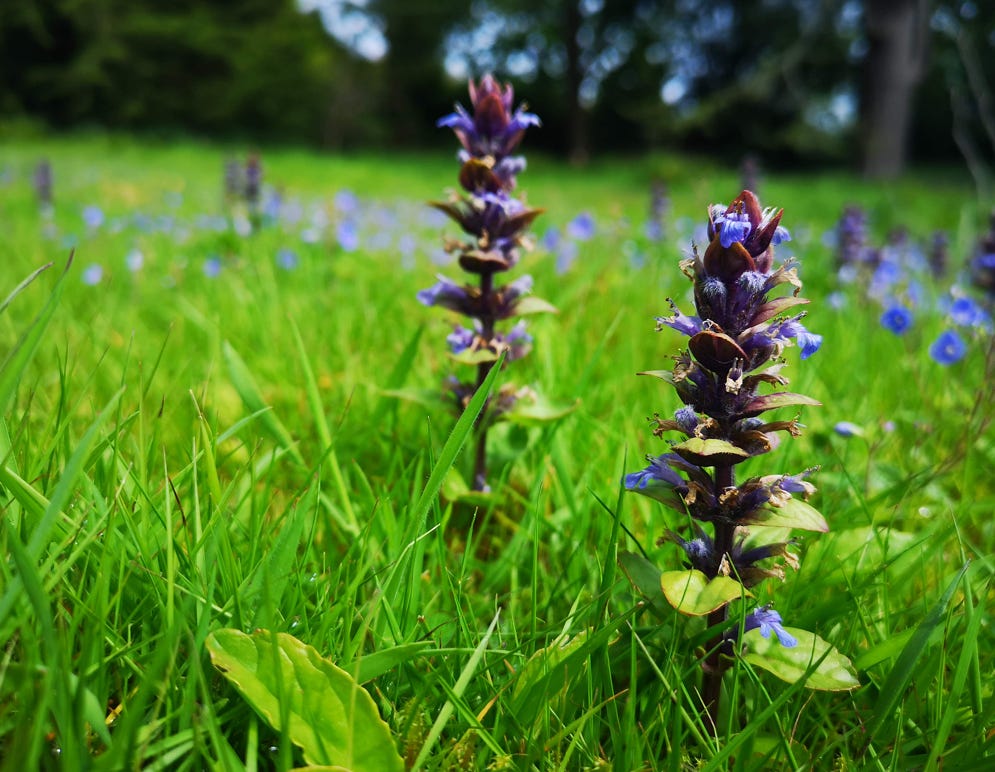
It’s one of the ideas we explore throughout the guide: you don’t always need to add more to a space. Sometimes, giving nature a little more room to do its own thing is enough.
The Definitive Guide to Smaller-Scale Rewilding is available now on e-book for only £9.99!
Keep an eye out for the hardcover coming soon!