


Why a quiet revolution in unmown grass matters more than ever — for the bees, for the bigger beasties, and for our own busy human brains.Today is the day. From May, put the mower away.
Today is the 1st of May. Across the UK, lawnmowers are being wheeled to the back of the shed, garages and balconies are getting a quiet sigh of relief, and several million blades of grass are about to do something they very rarely get to do — grow up.
No-Mow May, Plantlife’s now-famous campaign, is back for 2026 — and it has never been more important. The premise is gloriously simple: from today, just stop mowing. Let your lawn, or even a corner of it, grow into a small, scruffy, buzzing little universe. That’s it. That’s the whole brief.
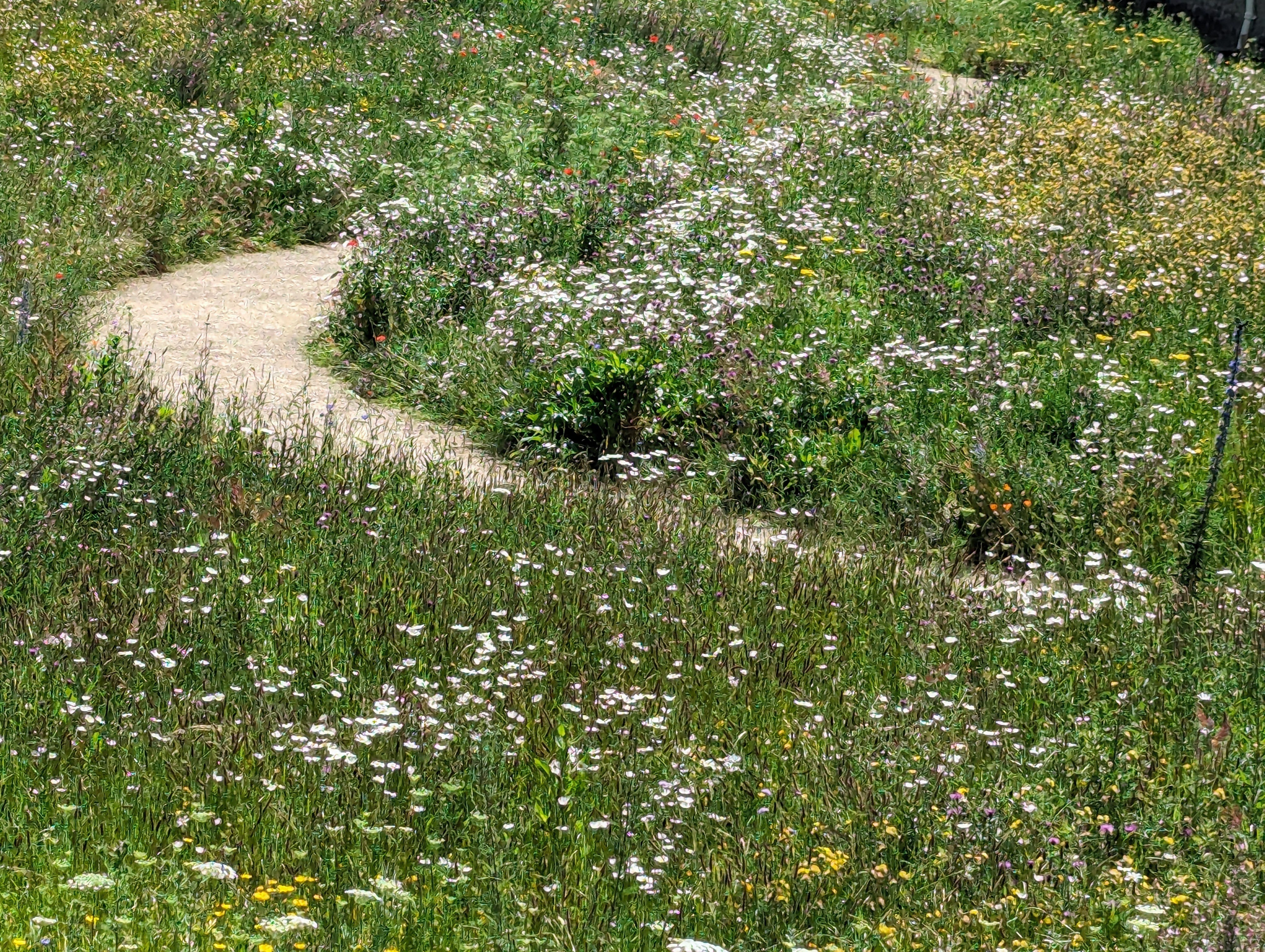
It is, hands down, the easiest piece of rewilding anyone can do. No spade. No seeds. No skills. You just… don’t. And in the doing-nothing, an extraordinary amount happens.
“Do more by doing less.” That’s the unofficial motto of No-Mow May — and it’s a useful one to live by in 2026.
My it matters more in 2026 than ever before.
No-Mow May started as a gentle nudge. It has become a national movement, and it’s arriving at exactly the right moment, because the data on what we’ve quietly been losing is now genuinely alarming.
For wildlife and insects: the silent emergency.
Britain has lost roughly 97% of its wildflower meadows in less than a century. Plants that our grandparents grew up with — ragged robin, field scabious, oxeye daisies in their thousands — are now classed as near threatened in England. They didn’t vanish from cliffs and mountains. They vanished from our verges, our parks, our school playing fields and our gardens.
The fallout has been brutal for insects. The latest Bugs Matter survey from Buglife and Kent Wildlife Trust found that the number of flying insects splatting on UK number plates has fallen by a staggering 59% in just five years — an average decline of around 19% every single year since 2021. England alone is down 62%. Take a moment with that.
No insects means no pollination. No pollination means no fruit, no seeds, no birds, no bats, no hedgehogs, no us. Insects are the absolute foundation of the food web — and our short, tidy lawns are a desert for them.
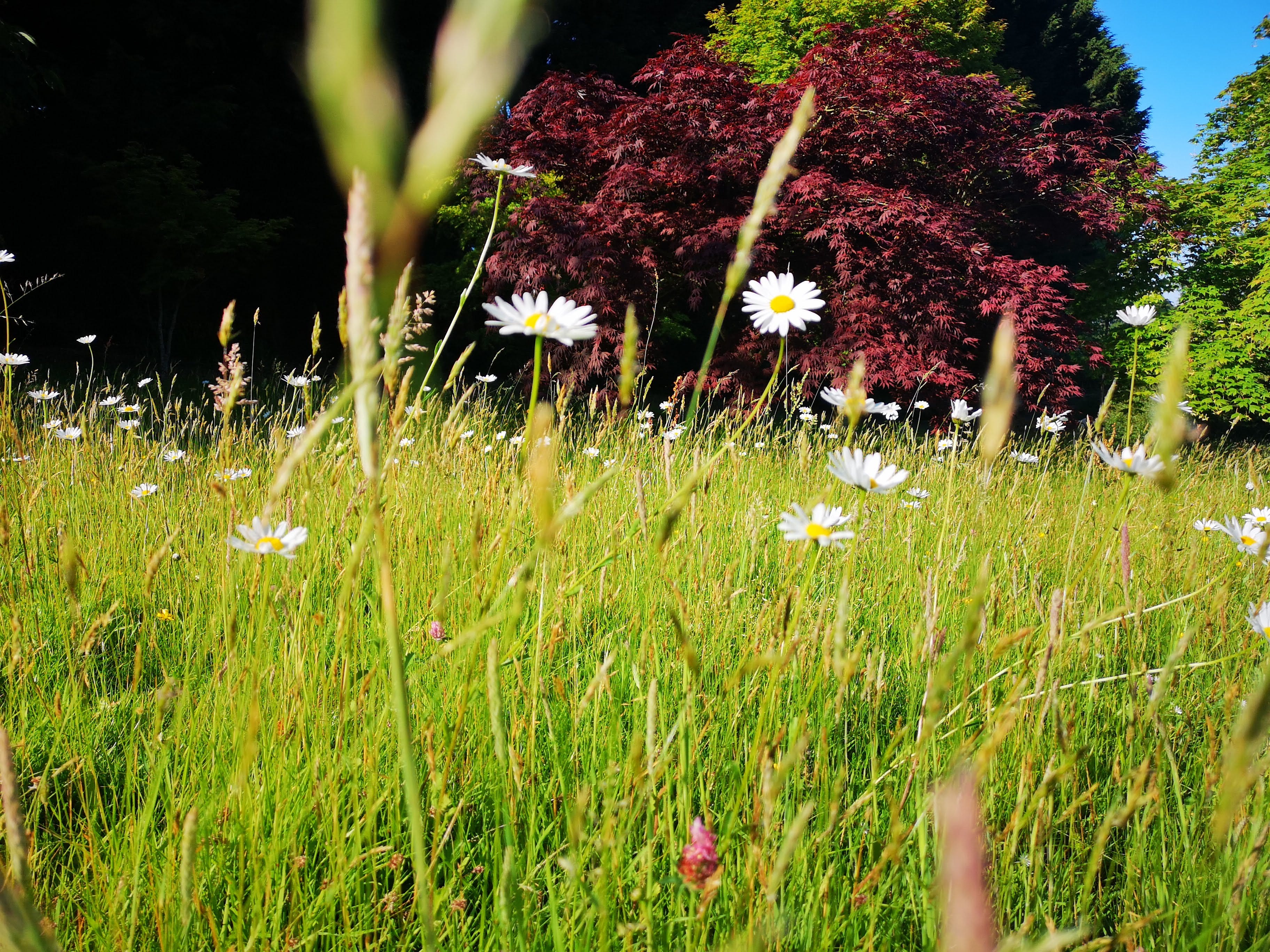
The flip side is the most hopeful bit. A lawn left to grow for just four weeks can support nearly 100 species of pollinators, including 25 types of butterfly and moth and 24 species of bee. Researchers in Massachusetts found 93 species of bees visiting lawn flowers, with the highest diversity on lawns mowed every two or three weeks. Cambridge’s King’s College replaced a portion of its iconic back lawn with a meadow in 2019; within a few years it was supporting three times more plant species, three times more spiders and insects, and three times more bat activity overhead. From one decision. To stop mowing.
For Britain’s back gardens: a hidden national park.
Here’s the bit that genuinely changes the game: there are around 23 million gardens in the UK. Stitched together, they cover an area larger than all our National Nature Reserves combined. If even a fraction of those gardens leave their grass to grow in May, it is, quite literally, the largest single act of habitat restoration this country can do without lifting a spade.
Public bodies are catching on. Councils across Britain are now scaling back their May mowing on roadside verges. The APSE (Association for Public Service Excellence), working with Plantlife, is rolling out an extended programme of trials with UK councils through 2026 to 2028 to keep grass and wildflowers growing well beyond May. Verges are turning into wildflower-rich corridors — narrow strips of land becoming rewilding superhighways for pollinators across whole towns and cities.
Public appetite is clearly there. A recent Plantlife-commissioned poll of 2,001 UK adults found that two-thirds (66%) believe their garden can make a meaningful difference for nature. Almost a third of last year’s No-Mow May participants were doing it for the first time. And six in ten people aged 25 to 34 said they’d be more likely to take part if their neighbours did. Translation: peer pressure is finally working in nature’s favour.
Why long grass matters in the age of AI
Here’s an angle on No-Mow May that gets less airtime — but in 2026, may be the most important one of all.
We are deep into the age of AI. We are scrolling more, on more screens, for more hours, than any generation in human history. The rise of generative AI assistants and AI companions has, for many people, added another always-on conversational presence to a life that was already full of pings, pop-ups and pixels. The screens are brilliant. They are also, quietly, eating our nervous systems.
A growing body of research is now joining the dots. A landmark systematic review of 186 studies on “screen time” and “green time” found that high screen exposure is consistently associated with worse psychological outcomes, while time spent in nature consistently improves them. Even better, green time appears to actively buffer the negative effects of screen time. Nature is, in other words, the antidote we already had.
The numbers are striking. A landmark 2019 study published in Scientific Reports found that just two hours a week in nature is associated with significantly higher self-reported health and wellbeing. Two hours. That’s less than the average daily TikTok session.
A meadow does something a screen cannot: it gives your senses something soft to land on. The hum of a bumblebee. The brush of long grass. The smell of warm seedheads. It is a kind of reset that no app can deliver.
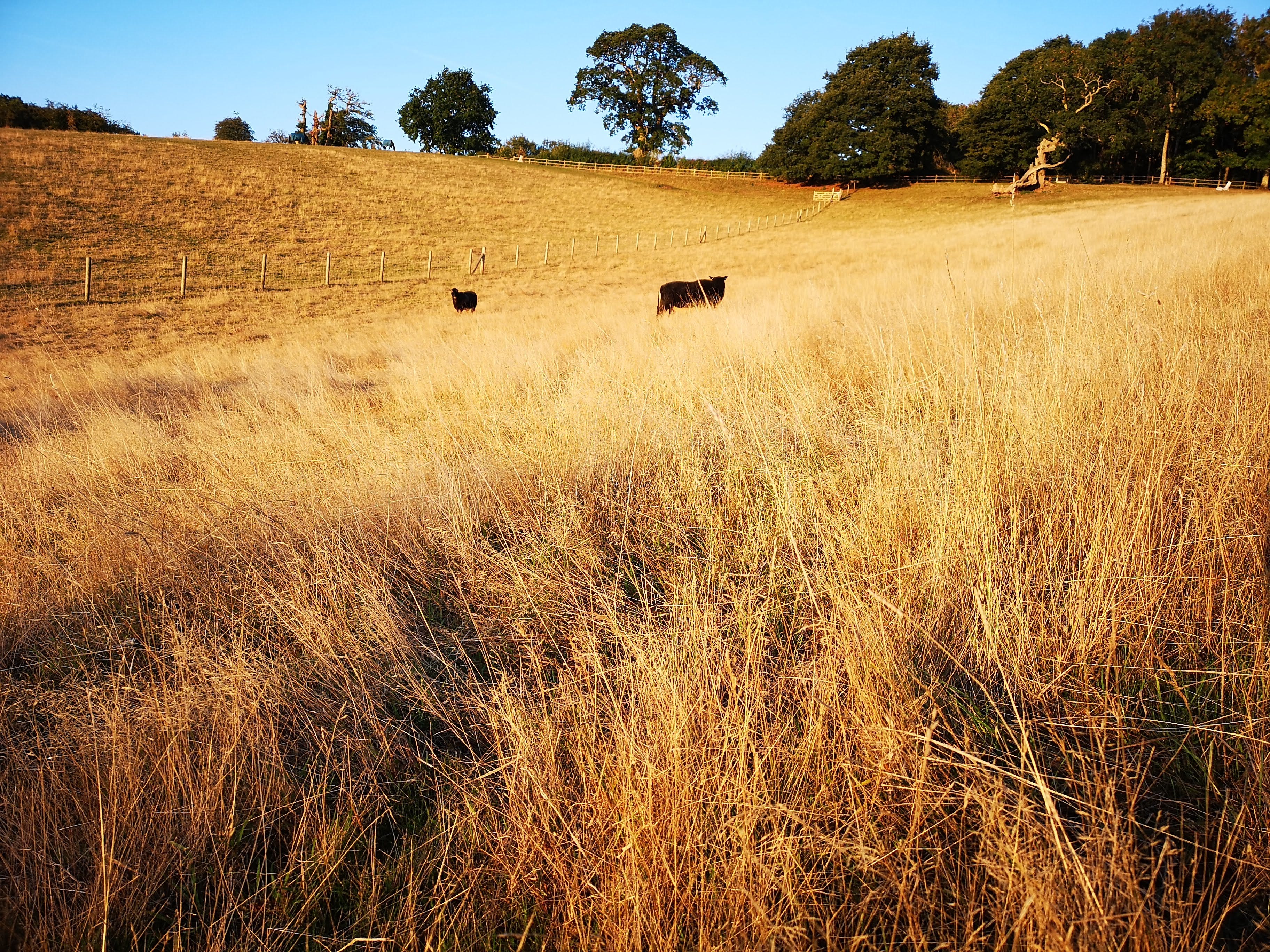
Step into the meadow at insect height.
Try this. Crouch down. Put your phone away. Look at the long grass at the level a bumblebee sees it. What looked, from standing height, like “just grass” is in fact a layered, three-dimensional world: a canopy of grass-flower spikelets, a mid-storey of clovers and trefoils, an understorey of mosses and damp soil, a basement humming with springtails and beetles. There are spiders managing the air-traffic between blades. There are caterpillars about to become moths. There are tiny solitary bees nesting in bare patches of earth — completely invisible from your kitchen window, but there, just feet away.
When you let your lawn grow, you’re not just “not mowing.” You’re building this whole world. And every time you go out and notice it — the way the grass moves, the new flower that’s appeared overnight, a butterfly you don’t know the name of yet — you’re doing something that screens cannot do for you. You’re paying attention to something that is alive and isn’t trying to sell you anything.
For our human wellbeing in the age of AI, this is not a small thing. It might be the most quietly radical act on offer.
Five things you probably didn’t know about long grasses.
Most people picture “wildflowers” when they think of meadows. But the unsung heroes of the No-Mow Movement are the grasses themselves — and they are quietly extraordinary.
1. Their roots are a carbon vault
Native grasses store the vast majority of their biomass below ground. In a mature meadow, root systems can reach two metres deep, locking carbon away in dense, slow-releasing soil organic matter. A 2023 King’s College Cambridge study calculated that converting from short lawn to meadow reduced emissions by around 1.36 tonnes of CO₂ per hectare per year — once you factor in the avoided mowing, fertilising and watering. Your lawnmower doesn’t just make noise. It has a carbon footprint.
2. They build a secret underground city
Below a wild meadow lives a community of bacteria, fungi, mites, nematodes and tiny invertebrates that simply cannot exist under a tightly mown, fertilised lawn. A 2023 study on small-scale suburban meadows found significantly higher microbial diversity — particularly in bacteria and fungi — compared to lawns. These microbes are what build healthy soil, filter water, and keep plants resilient against drought. A wildflower meadow is, in effect, a free water-filtration plant.
3. They hold floodwater — for free
Long grass with deep root systems acts like a sponge. Water soaks down through the soil column rather than running off a hard, compacted lawn into the nearest drain. As UK summers swing harder between drought and flash-flood, this matters. Verges and gardens of long grass are part of how a town survives a heatwave.
4. They feed the things you can’t see (yet)
Wild grasses are the larval food plant for an astonishing number of UK butterflies and moths. Meadow brown, gatekeeper, ringlet, small heath, marbled white, speckled wood — they all need long grass to lay eggs on, and to feed their caterpillars on, before they ever get to the wildflower for nectar. Cut the grass and you’re not just removing a flower; you’re removing the nursery.
5. They are the natural neighbours of bees
There are around 270 species of wild bee in Britain, and many — particularly solitary bees — nest in or under tussocky grass, in bare soil patches, or in old grass-stem cavities. Standard short lawns offer none of this. A few patches of long grass left in May give them somewhere to actually live, not just visit.
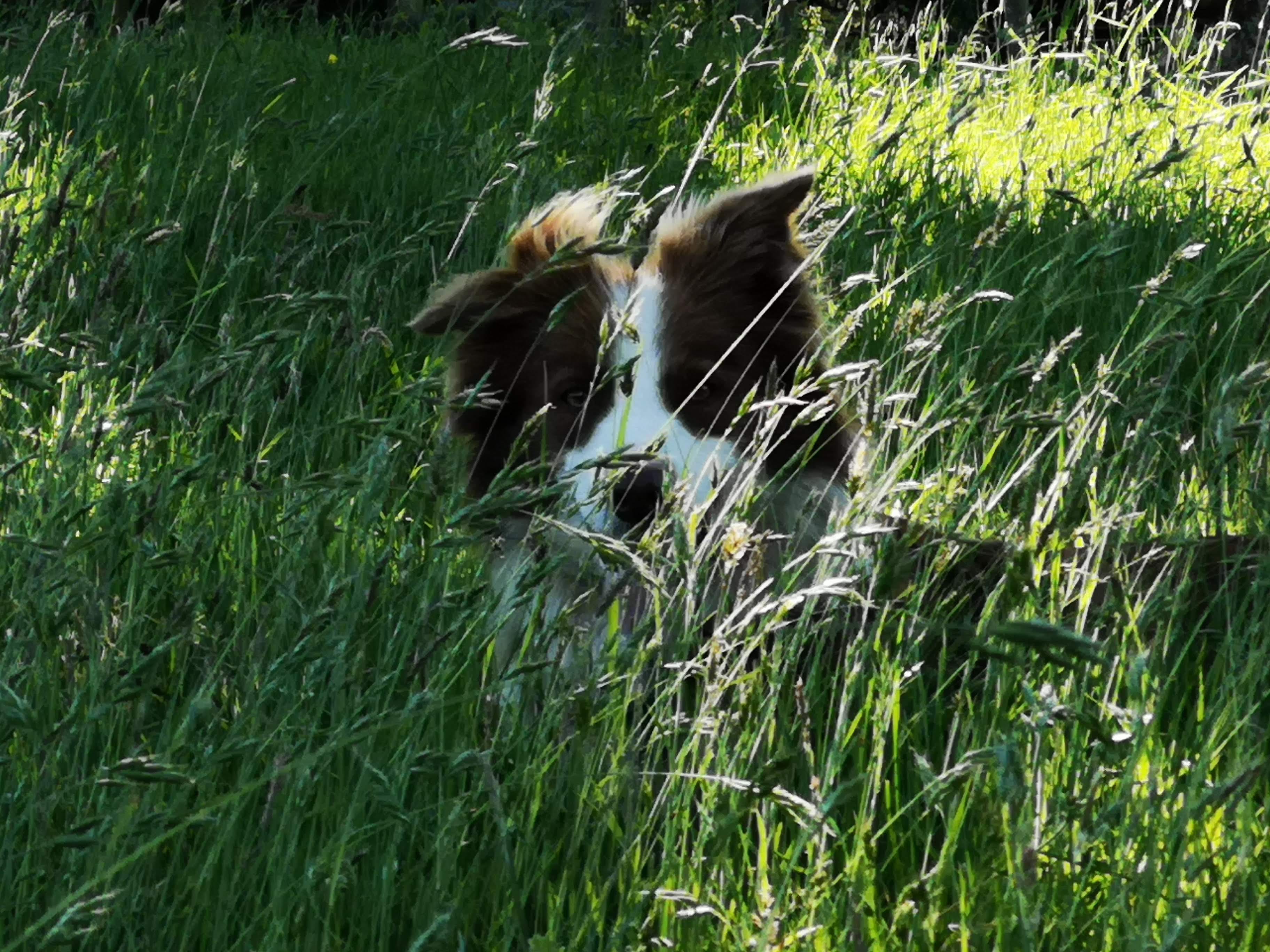
The LettsSafari Example; Small-scale, mass market rewilding.
At LettsSafari, this is the kind of rewilding we’ve been quietly pioneering for years. Across our parks and gardens we’ve shown, again and again, that you don’t need a 2,000-acre estate to bring nature back. You need intention, a willingness to let things grow, and a few simple habits.
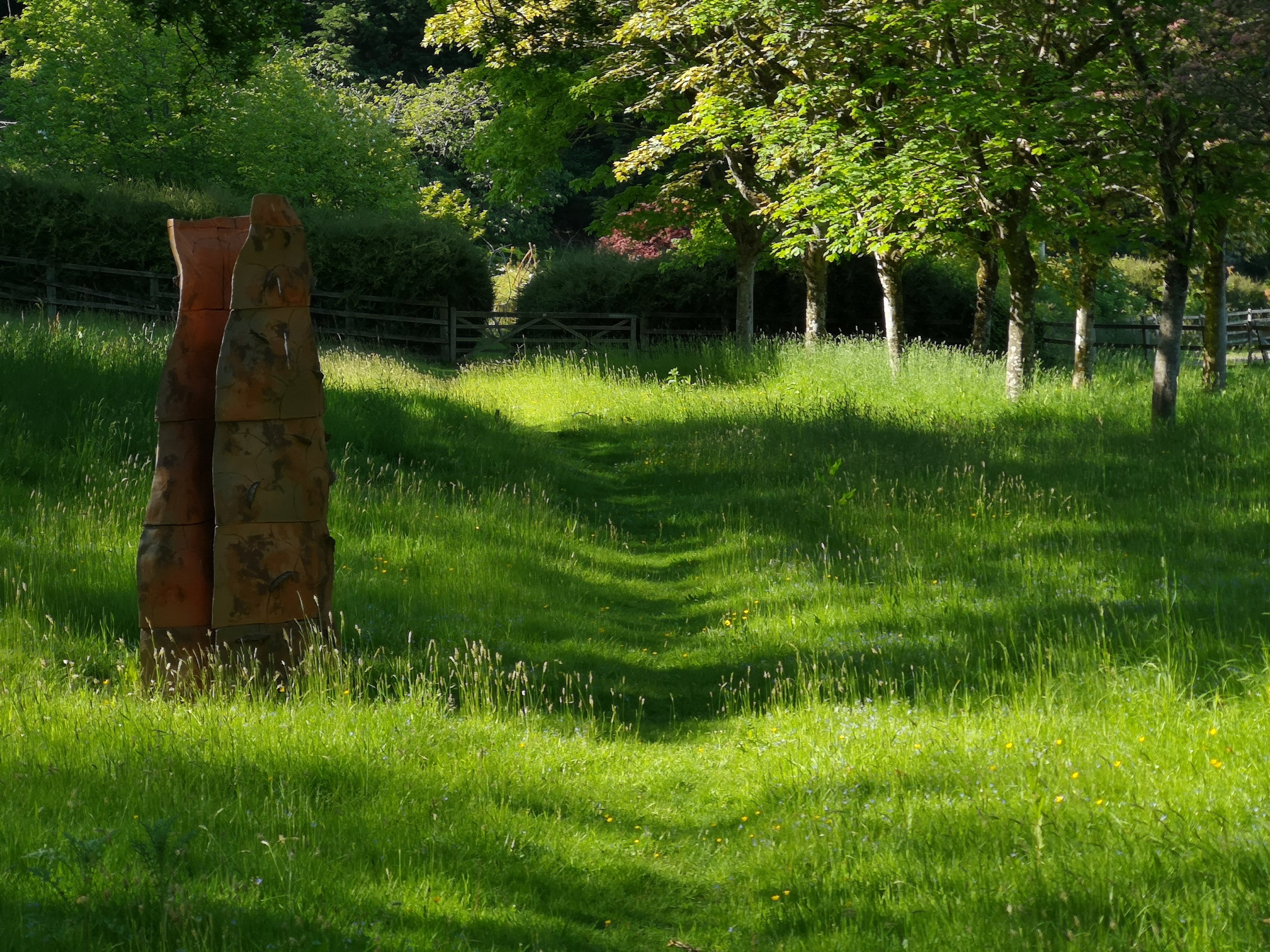
Our rewilding philosophy is built on three ideas:
- Small is mighty. A meadow doesn’t need to be a hectare. A 2-square-metre patch of long grass in a back garden can host bees, beetles, butterflies and breeding birds. The point is not size — it’s connectivity. Lots of small wild patches form stepping stones across a town.
- Designed wild, not abandoned. We mow paths through long grass, not around it. We arrange log piles deliberately. We frame the wild bits with the tidy bits. The result looks intentional — and that’s what gets neighbours, councils and landlords on board. Rewilding only scales if it looks beautiful.
- Mass-market, not boutique. Rewilding has spent years trapped in the language of large estates. The real game is the 23 million UK gardens, the office grounds, the school fields, the verges. That’s where the next great British wildlife recovery actually happens — at the doorstep.
Across LettsSafari’s parks we’ve seen wildflower-rich meadows establish themselves within a couple of seasons of mowing reduction alone — no expensive seed mixes required. We track and share these stories on LettsSafari+, our subscriber platform, with multiple weekly photo and video updates from the parks, so you can see exactly how it unfolds — and copy the bits that fit your space.
How to do No-Mow May (the LettsSafari way).
Here’s your quick-and-dirty playbook. You can do every one of these. You can do just one. There are no rules, no inspectors, no neighbours allowed to tell you off.
The minimum viable meadow
- Put the mower away today, 1st May, and don’t take it out until June.
- If a full month feels like too much — leave a single patch. Even a strip the size of a tea-towel will do real work.
- Don’t fertilise. Don’t spray. Don’t “weed and feed.” Wildflowers want hungry, scruffy soil — fertiliser actively favours the bullies.
Levelling up: the LettsSafari moves
- Mow paths through, not around. A neat path winding through long grass is the single most effective trick for making rewilding look intentional. It tells your eye — and your neighbours — that this is on purpose.
- Leave a “mohican.” If you can’t leave the whole lawn, leave a tall stripe down the middle, or a tussocky island in one corner. Plantlife affectionately call these “mohicans.”
- Add a log pile. Even one. Stack three or four bits of dead wood somewhere shady. You’ve just built a hotel for beetles, fungi, frogs and possibly a hedgehog.
- Build in a bare patch. Solitary bees need bare, sunny soil to nest. A 30 x 30 cm patch of unmown, undisturbed earth is plenty.
- Skip the early-summer cut. After May, don’t race back to the mower. Carry the wild on into Plantlife’s “Let It Bloom June.” Many wildflowers need the second half of spring just to set seed.
Hints, tips and tricks for first-timers
- Take a “before” photo today. The transformation across May is genuinely startling — and it’s much more rewarding when you can see the start point.
- Identify three things in your meadow this month. Not all of them. Just three. Daisy, clover, dandelion is a perfectly respectable trio. Bonus points for a bumblebee species.
- Lie down in it once. We mean it. Five minutes flat on your back at grass-stem height does more for stress than any meditation app.
- Don’t panic about “weeds.” Dandelions are early bee fuel. Buttercups feed hoverflies. “Weeds” is a category invented by lawnmower marketing — meadows don’t recognise it.
- When you do mow again, lift the cuttings. Leaving cuttings dumps nutrients back into the soil and gives aggressive grasses an unfair advantage over wildflowers.
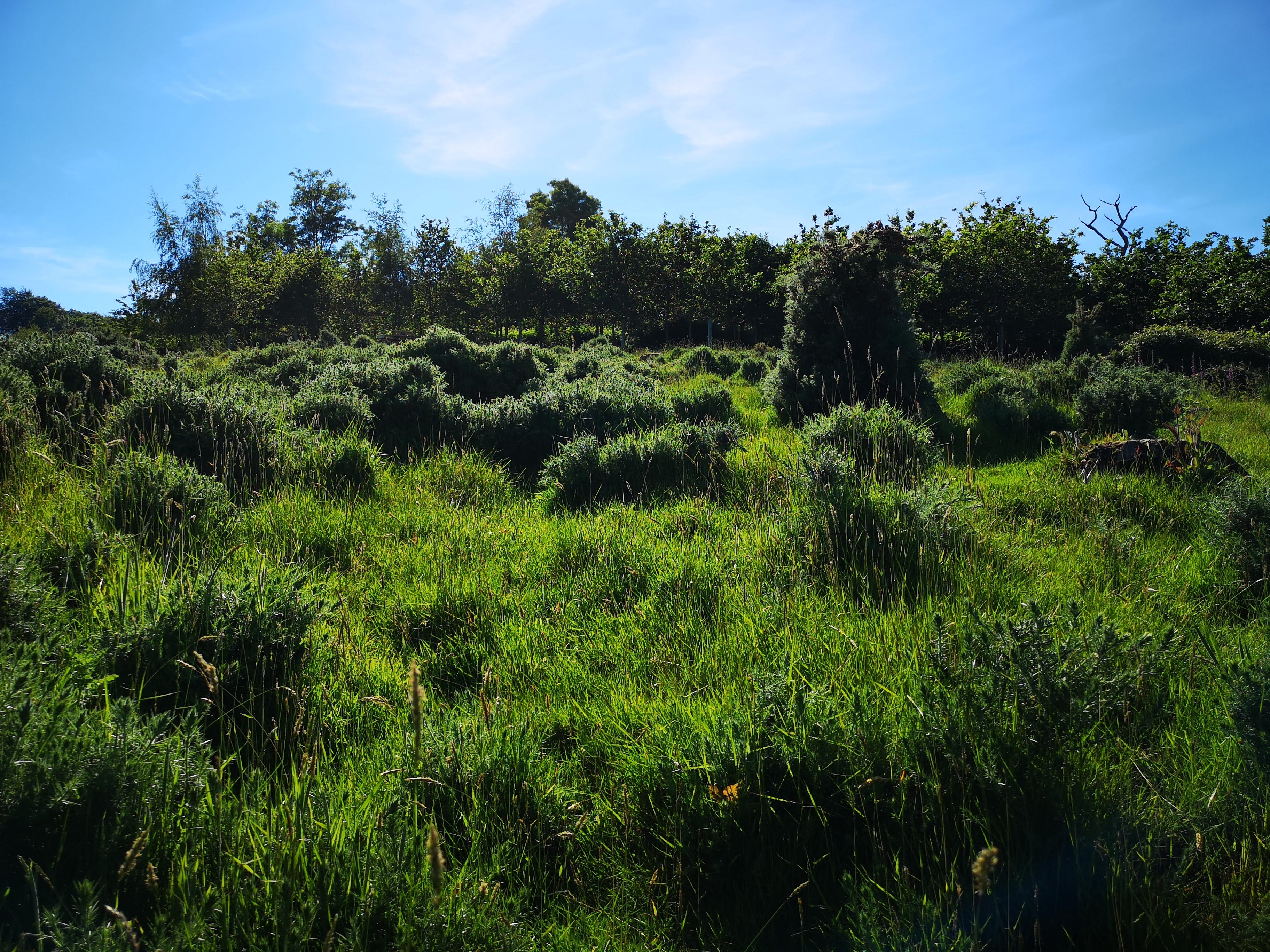
The bigger pictures: A million small meadows.
No-Mow May is not, in the end, about the month of May. It’s about a deeper shift — a country slowly relearning that nature is not somewhere far away that we visit at weekends. It is right here, under our feet, asking very politely if we’d mind not cutting it for a bit.
For wildlife and insects, that month off is a lifeline at the most critical breeding window of the year. For the country’s 23 million gardens stitched together, it is a single, coordinated act of habitat restoration on a scale no government scheme could match. And for us — frazzled, screen-saturated, AI-assisted humans — it’s an invitation to step outside, crouch down, and remember what it feels like to share a patch of earth with several thousand other living things.
At LettsSafari, our parks and gardens are proof that small-scale, mass-market rewilding works — fast. The bumblebee in the photo above isn’t exotic. It’s the one that will turn up in your garden too, the moment you put the mower away.
A million small meadows are easier to grow than one big one. Today is the day they all start. Yours included.
---
Join the LettsSafari rewilding journey.
Subscribe to LettsSafari for exclusive video, photography and step-by-step rewilding guides direct from our parks. For the price of a coffee a month, you support new tree planting, animal releases and entire new rewilding parks — and learn how to do it yourself.
🌱 For every 10 new subscribers we plant a tree a year.
🦔 For every 100, we release an endangered animal.
🌳 For every 10,000, we create a new rewilding safari park a year.
---
Questions members often ask.
Do I need a big garden to take part in No-Mow May?
Not at all. No lawn is too small. A balcony pot of long grass, a 2-square-metre patch in a back garden, or a forgotten corner at the office all count. What matters is the network — millions of small wild patches stitched together.
Won’t my garden look unkempt?
It can look beautifully wild rather than messy — and the trick is structure. Mow neat paths through the long grass, leave defined edges, and add a couple of “intentional” features like a log pile or stone seat. Designed rewilding looks deliberate, and people respond well to it.
Will leaving my lawn long bring rats and ticks?
In a typical garden, no. Rats are drawn to food sources (open bins, bird-feeder spillage), not long grass. Ticks are mainly a concern in dense bracken and woodland edges. A patch of long lawn flowers in May is not a hazard — it’s a habitat.
What happens after May?
You can carry the wild on into “Let It Bloom June” and beyond. Even just mowing every 4 weeks instead of weekly will keep the wildflower benefits going all summer. When you do cut, lift and remove the cuttings to keep the soil hungry — that’s what wildflowers love.
How does LettsSafari help me actually do this?
LettsSafari turns inspiration into specific, doable steps. Through LettsSafari you get regular content from our rewilding parks — what we’re doing, what’s working, what’s flowering — plus practical guides for your own garden, balcony, school grounds, office, allotment or community space - while supporting us planting trees, protecting animals and adding new rewilding habitats. Small-scale rewilding, made simple.
Get more LettsSafari updates and wildlife photos on our twitter/X. And read the latest posts at the LettsSafari + website.