


How to turn “hard edges” in gardens and micro-parks into species-rich transition zones.
At LettsSafari, we have found that ecotone design in nature-rich gardens can truly transform your approach - optimising space and biodiversity with layers of wildlife friendly micro-habitats.
As a result, we are producing a comprehensive and actionable guide to applying ectone design in your garden or small green space. It comes in 3 parts (serialised over the last 3 weeks):
The Ecotone Mindset: 8 rules that make “edge magic” happen
Ecotone design across the core micro-habitats
Practical ecotone “recipes” (plug-and-play for small spaces)
At the core of its definition, ecotone is a transition area between two plant communities (think: grassland → scrub, pond → meadow, hedge → open lawn). It often contains species from both neighbouring habitats plus species that prefer the “in-between”.
Ecotone Design Across The Core Micro-Habitats: Grasses, Meadow, Scrub, Hedge and Pond

How to turn “hard edges” in gardens and micro-parks into species-rich transition zones.
Today, in the last of our 3-part series on ecotone design we examine practical ecotone “recipes”, 3 example layouts and maintenance tips.
Practical ecotone “recipes” (plug-and-play for small spaces)
Recipe A: The “soft lawn fade”
1m mown path
1–2m flower-rich longer grass
1m scrub ribbon (rose + guelder rose + dogwood)
behind: mixed hedge
Recipe B: The “pond peninsula”
pond with one side shallow shelf
marginal plants + sedges
behind it: tall herbs (meadowsweet, knapweed)
then shrub edge (hawthorn/hazel)
Recipe C: The “sunny scallop hedge”
hedge line planted in gentle curves
scallops filled with tall flowers and tussocks
occasional bramble/rose pocket for berries + cover
Recipe D: The “micro-woodland edge”
one birch/rowan
underplant ring gradient
keep a tiny sunny glade next to it
connect to meadow strip
Recipe E: The “paving-to-wild seam” (micro-parks, courtyards)
thin strip of drought-tolerant natives + grasses
a few bare sandy patches (ground-nesting bees)
a small shrub “node” every 5–10m
Three example layouts (small garden, medium garden, micro-park)
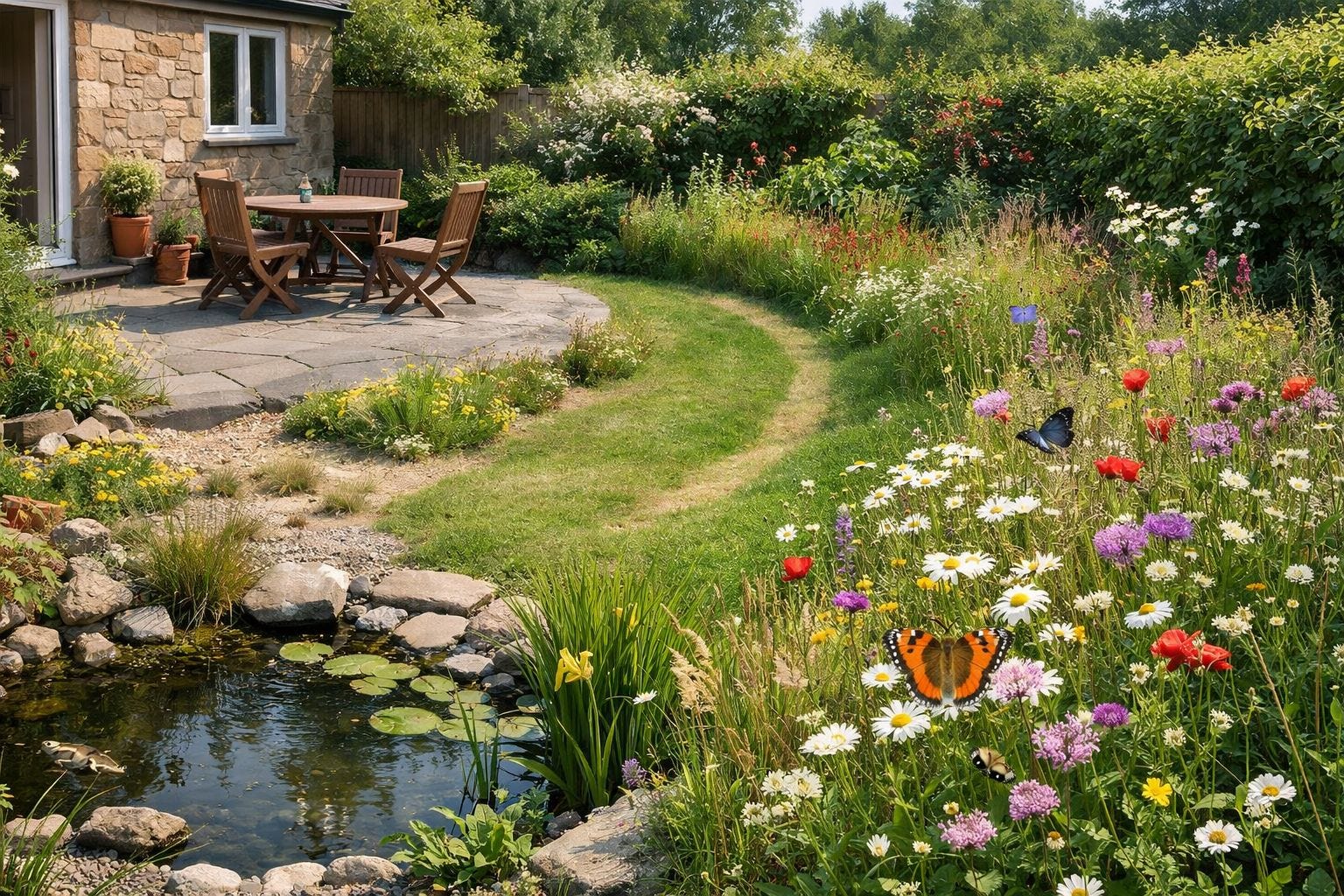
1) Small garden layout (about 6m × 10m)
House → Patio / seating zone
Patio edges soften into a “paving-to-wild seam” (low native flowers + drought-tolerant grasses + a few bare sandy patches for bees).Patio → Mown path (a simple curve)
A clear, neat route that says: “this is intentional”.Mown path ~~~> Mini-meadow (longer grass + wildflowers)
Let the lawn fade into longer grass in a 1–2m band.Mini-meadow ~~~> Scrub ribbon (along the back fence)
A narrow strip of rose / guelder rose / dogwood / bramble pocket for cover, flowers, berries.One corner: Pond
Pond edge blurs into marginals → damp strip → meadow (the richest ecotone in the whole space).Boundary: Mixed native hedge (thick base)
Hedge acts as habitat + corridor; meadow and scrub “feed into it” rather than stopping abruptly.
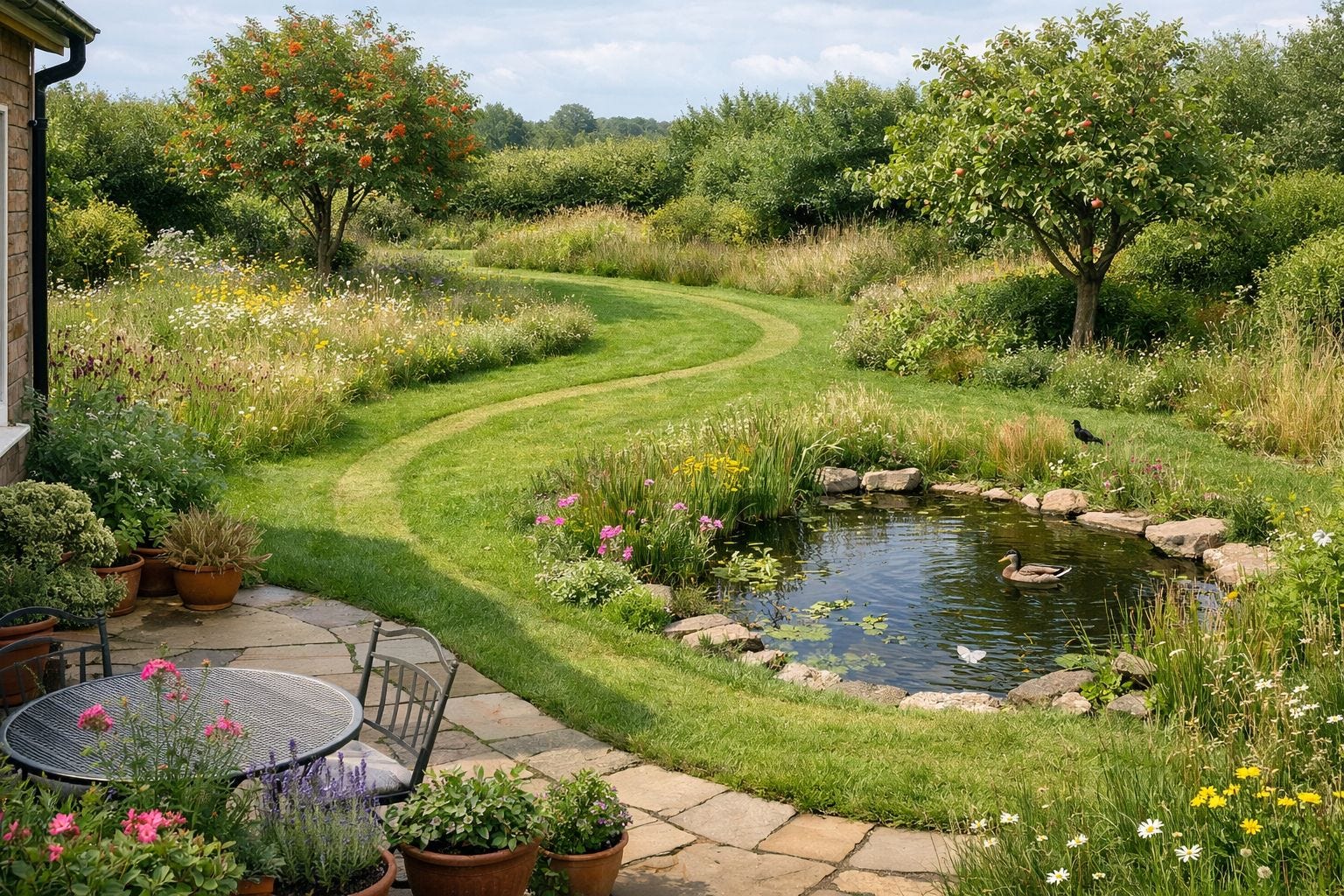
2) Medium garden layout (about 10m × 20m)
House → Patio with a soft border of herbs and nectar plants (not a hard edging).
Central mown loop path
A gentle loop that creates “rooms” and keeps the wild parts legible.One side: Meadow zone
Shorter near the path, then gradually taller toward the boundary:
short grass → longer grass + flowers → tussocks → scrub edgeBack boundary: Scrub + hedge mosaic
Not one uniform line: alternate pockets of scrub clumps with hedge sections, creating scallops and depth.Two small trees placed as “edge makers”
Example: rowan + crab apple (or birch), with a shady under-ring that grades back into meadow.Pond off-centre (not hidden in a corner)
One side shallow + planted, the other side more open — so you get multiple pond-edge ecotones.
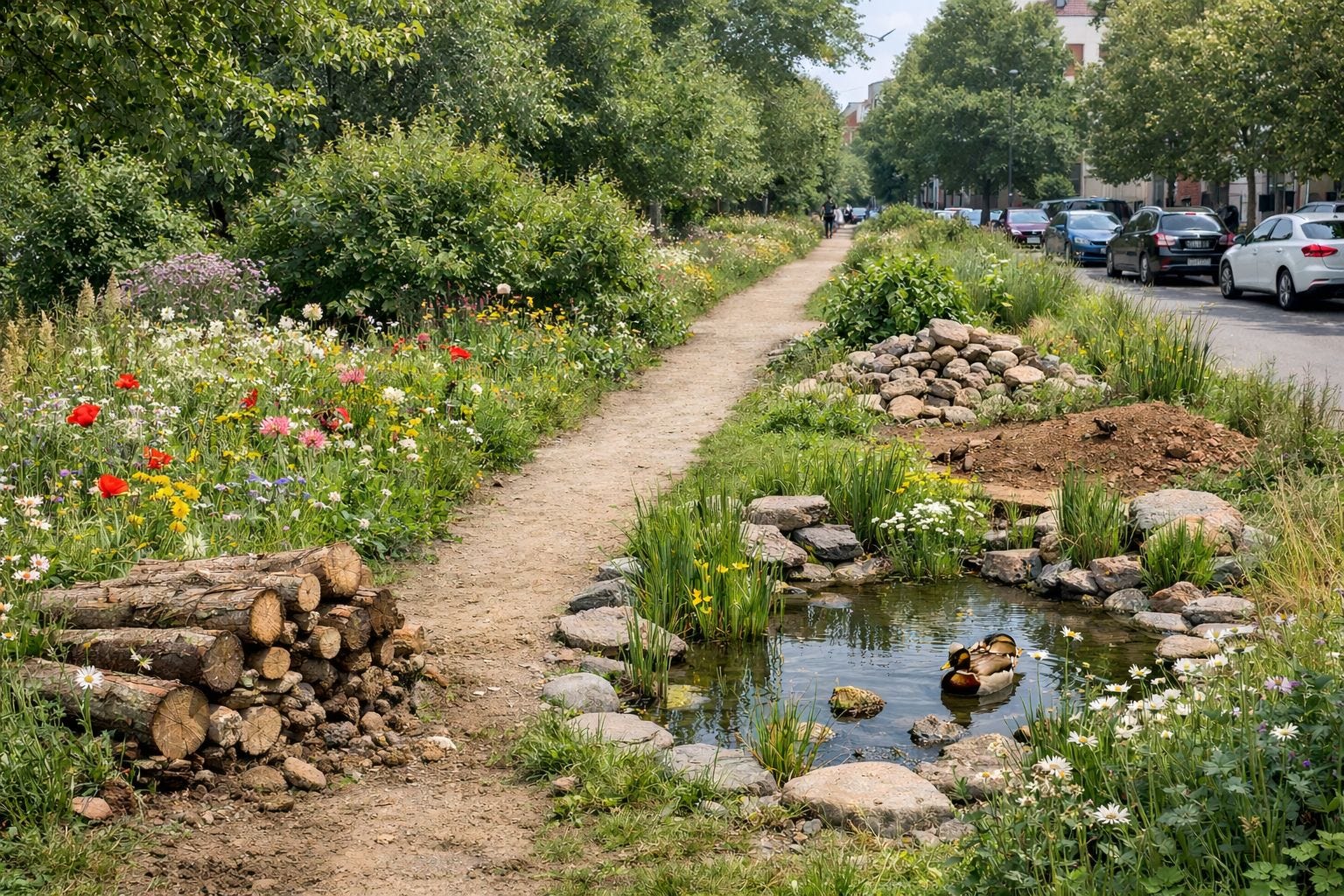
3) Micro urban park strip layout (about 5m × 40m verge)
1.5m mown desire path running the length (people first — it protects the wild bits).
