


Rewilding, But Make It Beautiful
For years, “rewilding your garden” often came with an unspoken trade-off - tidiness versus nature. Long grass, messy corners and piles of logs were great for biodiversity… but not always for neighbours, landlords, or your own sense of calm.
Now, that’s changing.
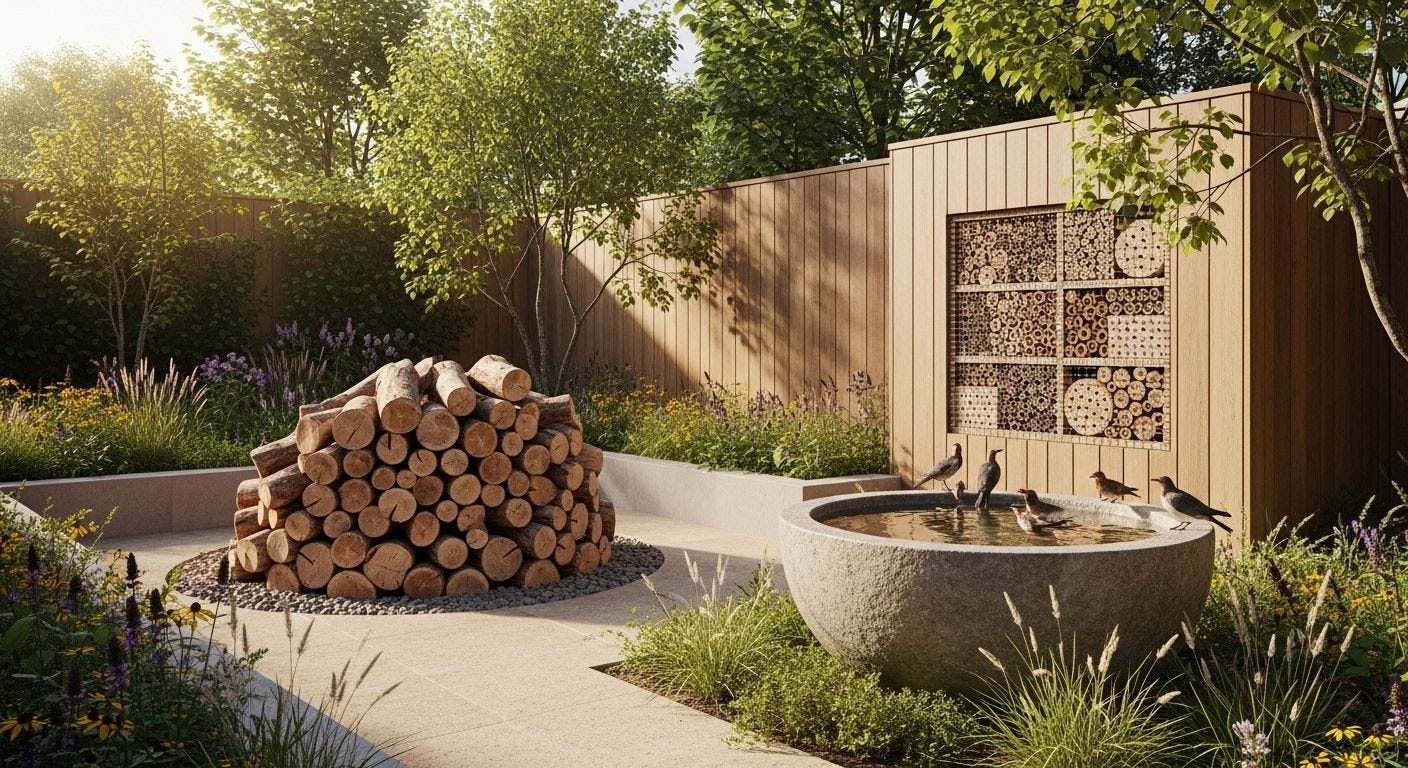
A recent article in The Times highlighted garden designers and homeowners alike are embracing a new idea: rewilding can be intentional, structured, and visually stunning without losing its ecological impact.
The Key Insight: Structure Drives Adoption
The story showcases simple but powerful interventions:
Log piles arranged as sculptural features
Bug hotels integrated into walls and planters
Shallow water features styled with stones
Standing deadwood used as natural art
These aren’t just aesthetic upgrades they’re microhabitats. And that’s the breakthrough, because the biggest barrier to rewilding isn’t knowledge. It’s adoption. People are far more likely to take action when nature fits into their space, rather than taking it over.
Why Small-Scale Rewilding Matters More Than Ever
Across the UK, biodiversity loss isn’t just happening in remote landscapes - it’s happening street by street. Urban areas, especially cities like London, are full of fragmented green spaces: gardens, balconies, courtyards. Individually, they feel small. Collectively, they can become powerful ecological networks. This is what conservationists call “stepping stones” - tiny habitats that allow insects, birds, and other wildlife to move, feed and survive across urban environments.
And here’s the kicker:
👉 You don’t need acres of land to make a difference.
👉 You need intention.
Where LettsSafari Comes In
This is exactly the problem LettsSafari is designed to solve. Of course, we’ve written a book about it “The Nature Reserve Next Door”.
Most people want to help nature but they don’t know where to start, or worry about doing it “wrong.”
LettsSafari bridges that gap by:
Breaking rewilding down into simple, achievable actions
Showing how to create high-impact microhabitats in small spaces
Sharing real-world examples from UK rewilding projects
Helping you balance nature, design, and practicality
It’s not about turning your garden into a jungle overnight.
It’s about making small, intentional changes that add up.
A log pile here.
A water dish there.
A patch left to grow, on purpose.
The most exciting part of this trend isn’t the design - it’s what it unlocks. Rewilding is no longer niche. It’s becoming mainstream behaviour. Because once it looks good, feels manageable, and fits into everyday life… people actually do it. And when thousands of people take small actions? That’s when real ecological change begins.