


There’s a moment each autumn when Britain’s woodlands and open moorlands transform into ancient amphitheatres. The air grows crisp, leaves surrender their summer green, and across the landscape rises a sound that has echoed through these islands for millennia: the bellowing of stags. It’s a noise that stops you in your tracks, primal and haunting, speaking to something deep in our evolutionary memory.
The Call of the Wild
The bellowing you hear from September through November isn’t random vocalisation. It’s the sound of the rut, the annual breeding season when male deer compete for the right to mate with females. For stags, this period represents the culmination of an entire year’s worth of energy investment. They’ve grown their antlers, built their body condition, and now they must prove their worth in one of nature’s most demanding contests.
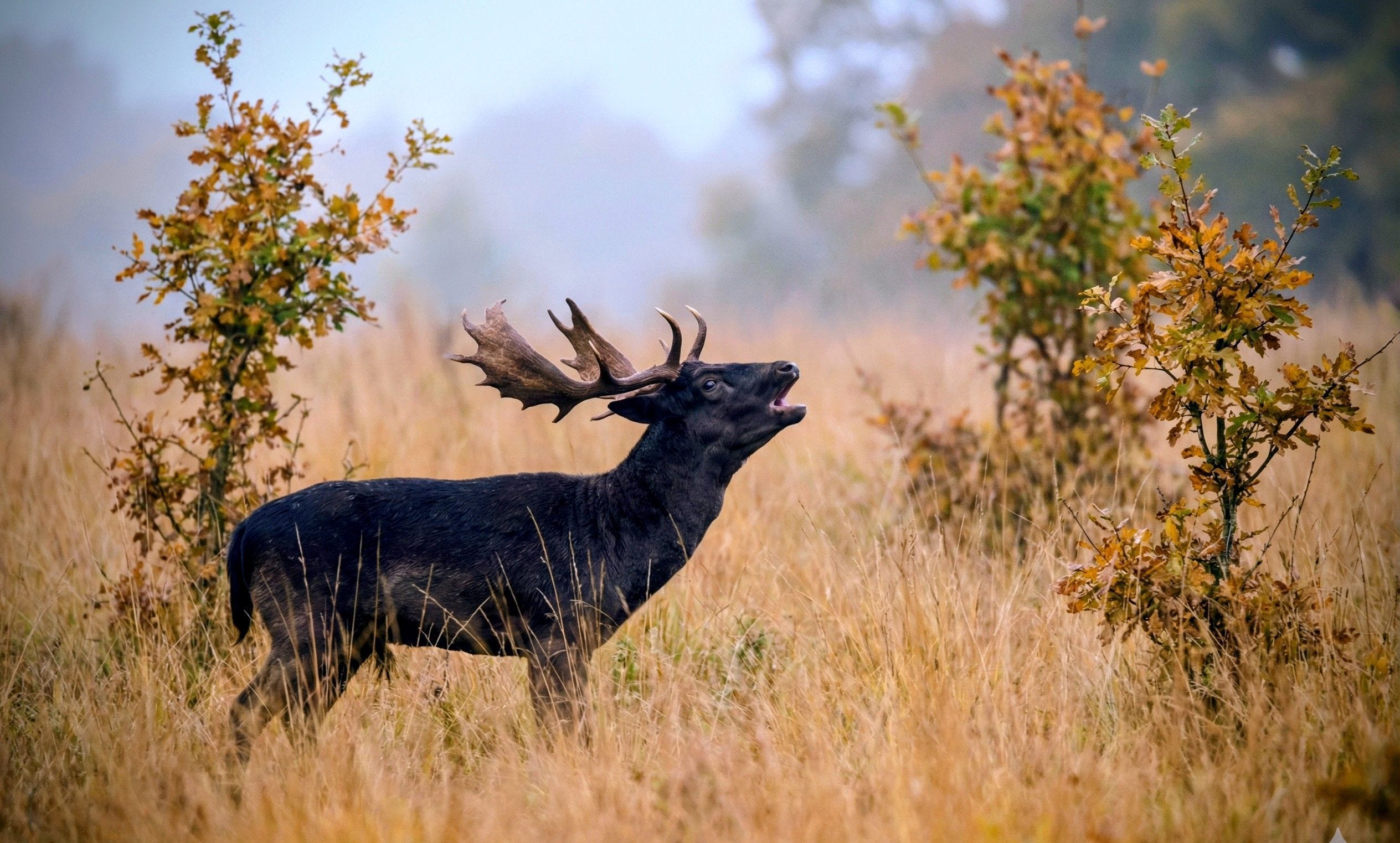
Stand in the position of a red deer stag for a moment. You’ve barely eaten in weeks, your testosterone levels are surging, and you’re surrounded by rivals. Your throat vibrates as you throw back your head and release a roar that carries across the glen, a declaration that reverberates through your entire body. This isn’t just noise, it’s a complex communication tool that tells other males about your size, strength, and determination, while simultaneously advertising your genetic quality to watching hinds.
Two Voices, One Purpose
Britain is fortunate to host two main species of bellowing deer, and their vocal performances are remarkably different. The red deer, our largest native land mammal, produces a deep, guttural roar that can carry for over a mile across open terrain. It’s a bass note that seems to emerge from the earth itself, often developing into a series of roars that increase in intensity as rival stags approach one another.
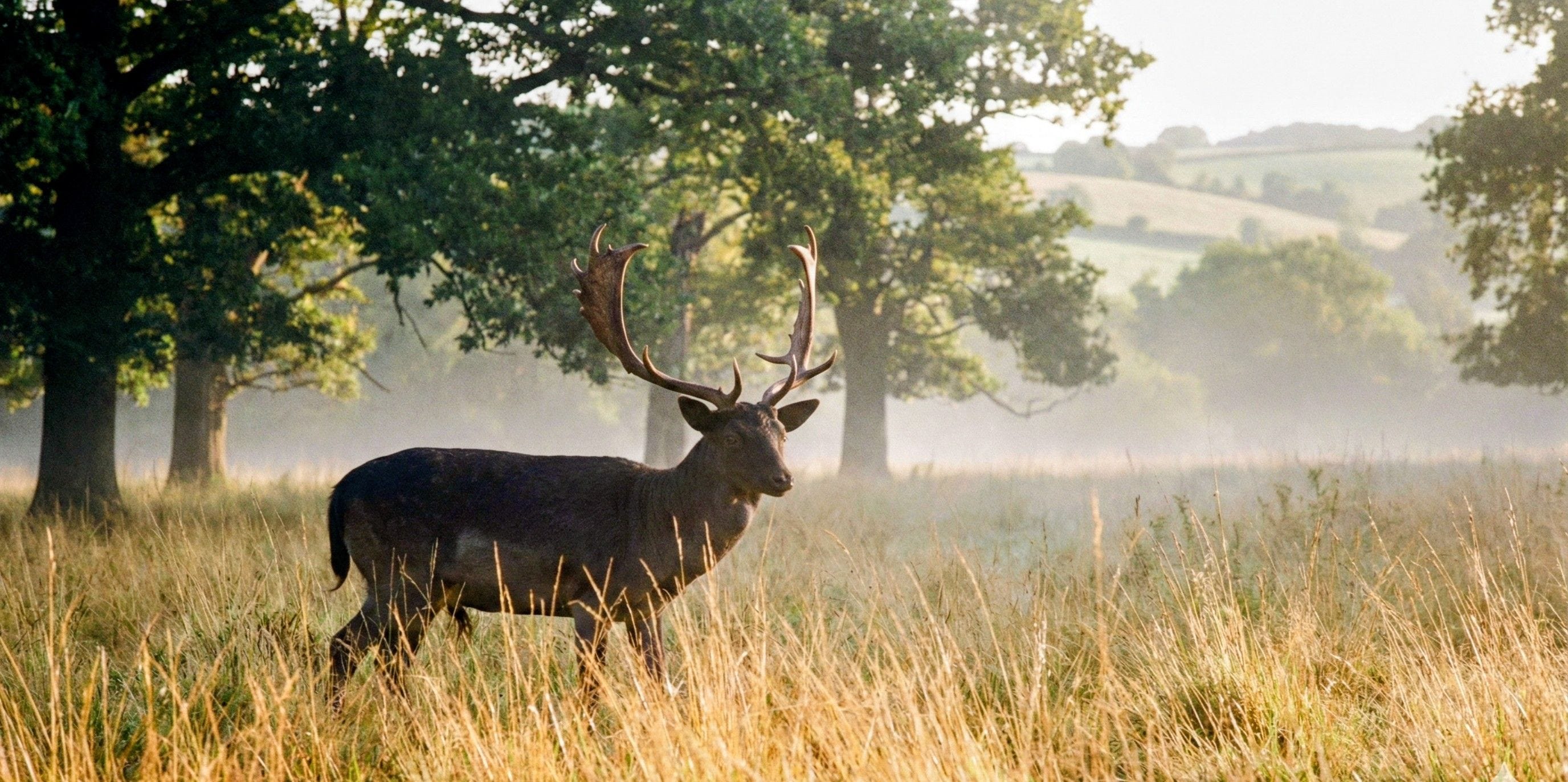
The fallow deer’s contribution to autumn’s chorus is altogether different. Their groaning belch might lack the majesty of the red deer’s roar, but it’s equally effective. Listen carefully and you’ll hear a rhythmic, rasping sound, almost mechanical, like an old gate creaking in the wind. Fallow bucks produce this during their slightly later rut, which peaks in late October. The sound is lower in pitch than you might expect from a smaller deer, created by air passing through the larynx in a controlled, repetitive pattern. LettsSafari parks support a number of black fallow deer, and their Autumn and winter antics are a sight to see.
Return of Black Fallow Deer at LettsSafari's Dawlish Park

At LettsSafari’s Dawlish Park a multi-year rewilding project to return the black fallow deer started just a few years ago. Historically black fallow have been in the Haldon Hills on the southern edge of Exeter City, and a few miles from the edges of Dartmoor, for hundreds of years. But, thanks to logging, deforestation, increased human activity and incr…
These autumn symphonies represent more than just breeding behaviour. They’re indicators of ecosystem health and the success of rewilding efforts across Britain. In areas where deer populations are managed thoughtfully, as part of broader landscape restoration projects, the rut becomes a spectacular example of natural processes reasserting themselves.
LettsSafari parks demonstrate how fallow deer, allowed to behave naturally within a rewilded landscape, create structural diversity in vegetation through their rutting territories. The constant movement and selective grazing of hinds following successful bucks creates a mosaic of habitats that benefits countless other species.
Inside the Arena
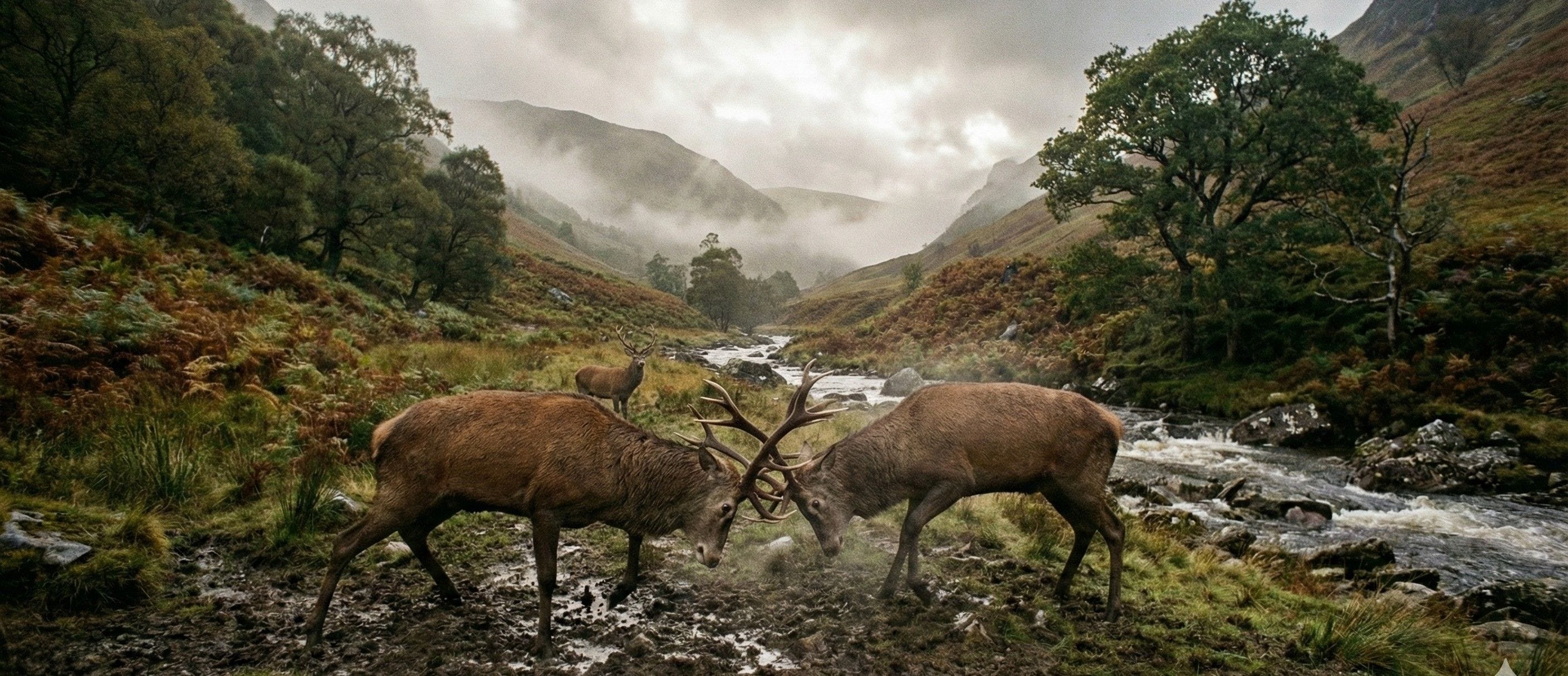
Imagine yourself as a subordinate red deer stag, perhaps six years old, watching a mature twelve-year-old master stag patrol his harem. He roars approximately once every minute during peak activity, his breath condensing in the cold morning air, each bellow requiring significant energy expenditure. You edge closer, testing his resolve. His roar changes, becoming more aggressive, shorter, more frequent. His head lowers, antlers pointing toward you. The message is unmistakable.
Here’s something most people don’t realise: the bellowing actually escalates through distinct phases before stags resort to physical fighting. It’s an energy-conservation strategy evolved over millions of years. Most contests are resolved through this vocal sparring, with the weaker or less committed animal withdrawing before antlers clash. When fights do occur, they’re brief but intense, and the roaring continues throughout, each stag attempting to literally push the other backward while maintaining their vocal display. They lock horns to attempt to wrestle the opponent to the ground - not to stab them.
