


Prague is best known for its historic streets, remarkable architecture and busy city centre. Visitors come for the medieval Old Town, the bridges crossing the Vltava and the extraordinary skyline of spires and rooftops.
But spend a little longer walking around the city and something else becomes noticeable: nature is never very far away.
Prague offers an interesting example of how green and blue spaces can become part of the everyday fabric of a city. Rather than nature existing only in designated parks or on the outskirts, trees, gardens, riverbanks and hillside landscapes weave their way through the urban environment.
For anyone interested in urban rewilding, there are lessons here. Prague shows how even a busy, historic European capital can make space for nature alongside the needs of residents, businesses and millions of visitors.
The Vltava: A Blue-Green Corridor Through the City
The Vltava River is one of Prague’s defining features.
It runs directly through the heart of the city, passing some of its most famous landmarks and dividing neighbourhoods that are connected by a series of bridges. But the river is much more than a scenic backdrop.
Along significant stretches of the Vltava, the river creates valuable open space.
People walk, run and cycle beside the water. Others simply sit on the banks or stop to enjoy the view. Trees and grassy areas soften the edges between the built environment and the river, while riverside paths provide an alternative to navigating the city’s busier streets.
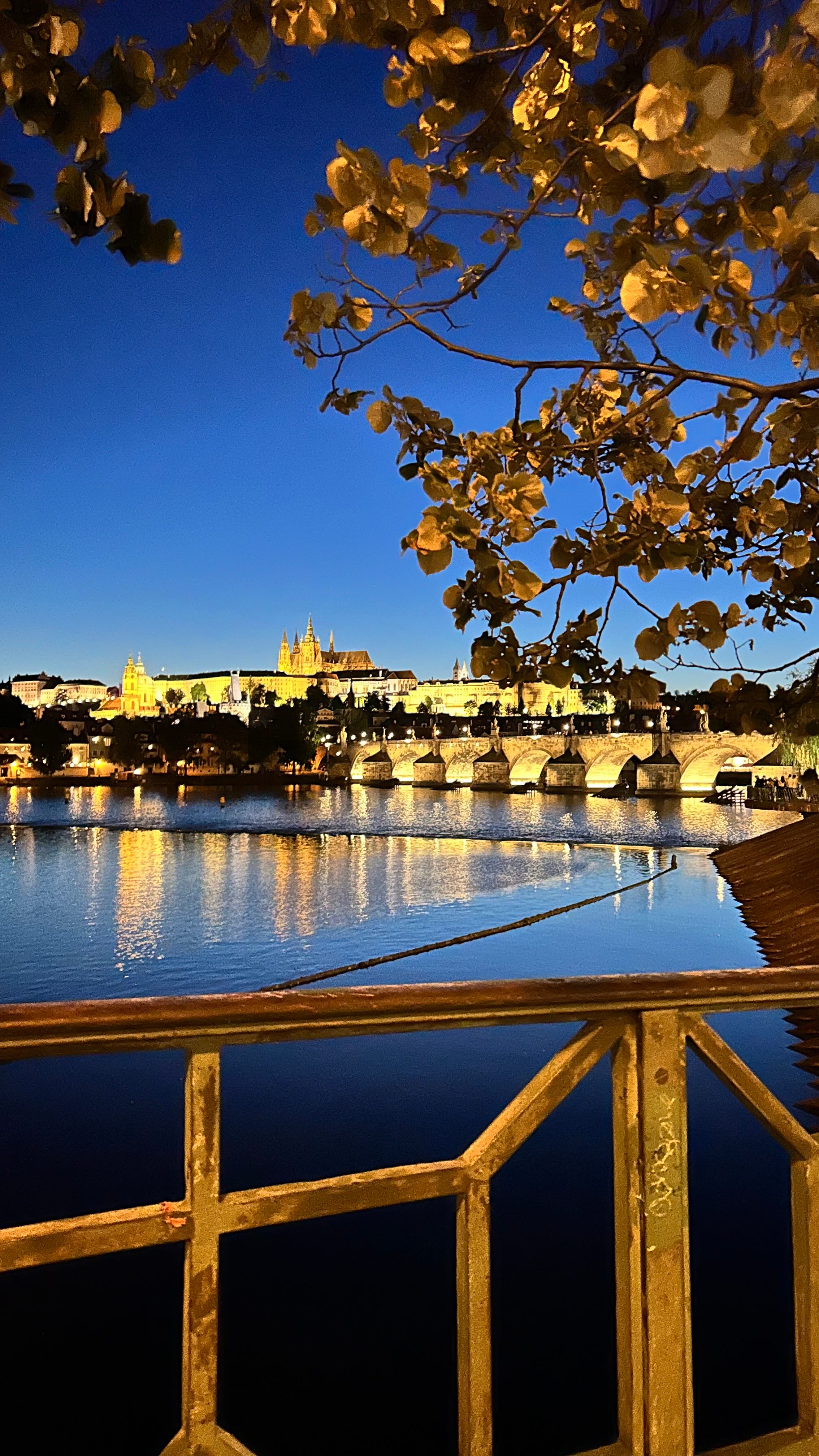
From an urban nature perspective, rivers can play an enormously important role.
They create natural corridors through otherwise densely developed landscapes. Riverbanks and connected green spaces can provide habitats and movement routes for birds, insects and other wildlife, while also helping people feel more connected to the natural environment.
There is something psychologically different about walking beside water, too. The city suddenly feels less enclosed. The skyline opens up, traffic feels more distant and the pace of life seems to slow.
In Prague, the Vltava demonstrates the potential of “blue infrastructure” — using rivers, canals, ponds and other bodies of water as an integral part of how cities function and how people experience them.
A City Shaped by Hills
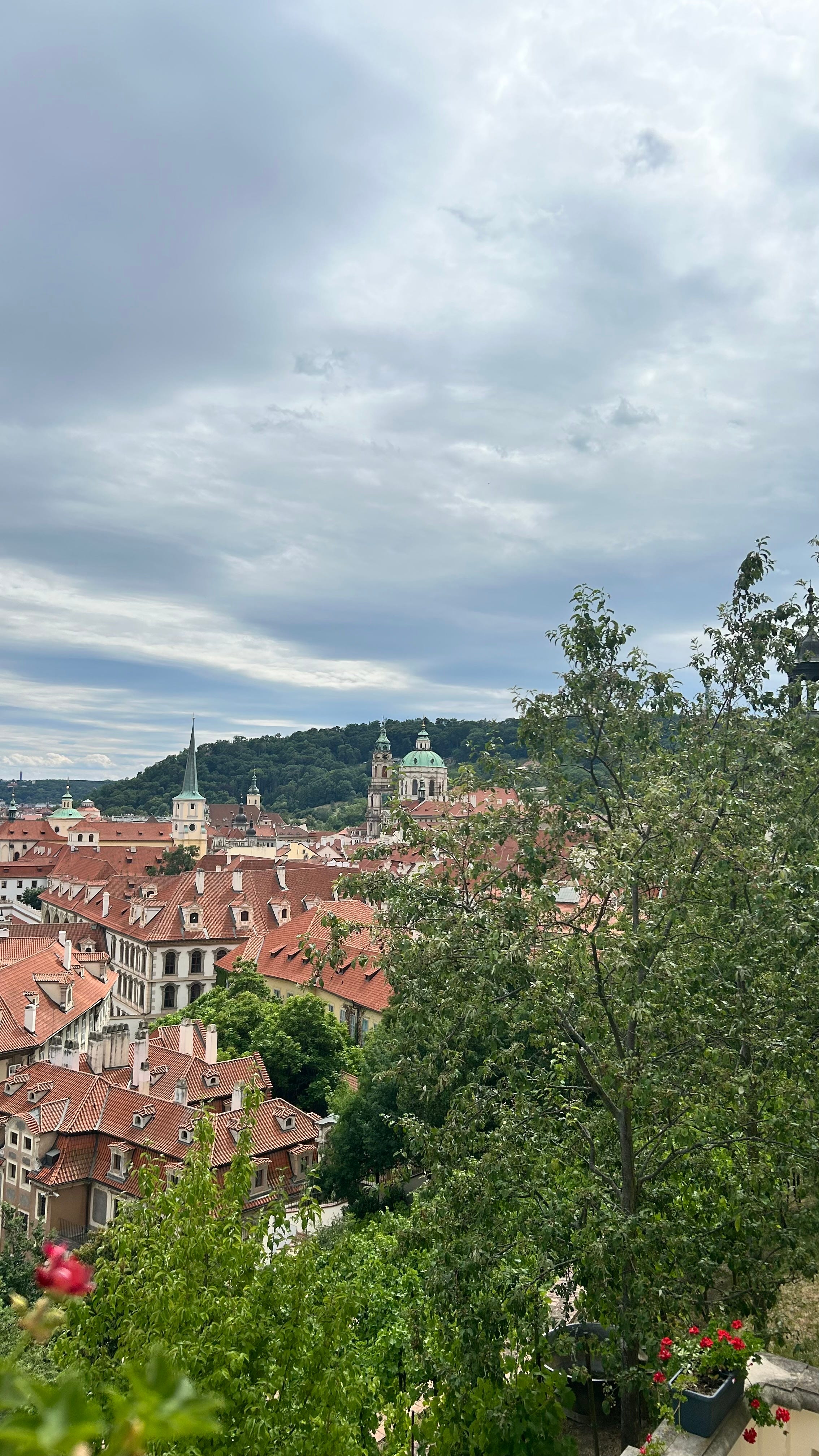
Prague’s geography also contributes to its distinctive relationship with nature.
Unlike flatter cities, Prague’s hills create different layers of green space. Parks, gardens and wooded areas often sit above the city, providing walking routes, shade and spectacular views across the rooftops and river.
The change in elevation also creates variety.
One moment you can be walking through busy historic streets surrounded by buildings, cafés and tourists. Not long afterwards, you can find yourself climbing through a park or garden where the sounds of the city begin to fade.
These spaces provide something that urban nature does particularly well: contrast.
Nature does not have to dominate a city to have an impact. Sometimes its greatest value comes from creating small moments of escape — a shaded path, a group of mature trees, a patch of grass or a viewpoint surrounded by vegetation.
These moments give people somewhere to pause and provide wildlife with small pockets of habitat.
Nature Along the Everyday Route
One thing I have noticed while spending time in Central and Eastern European cities is that there often seems to be a stronger presence of urban nature in everyday surroundings.
This is not necessarily about having more spectacular parks.
Instead, greenery often feels more closely integrated into ordinary streets, residential areas and public spaces.
Prague reflects this well.
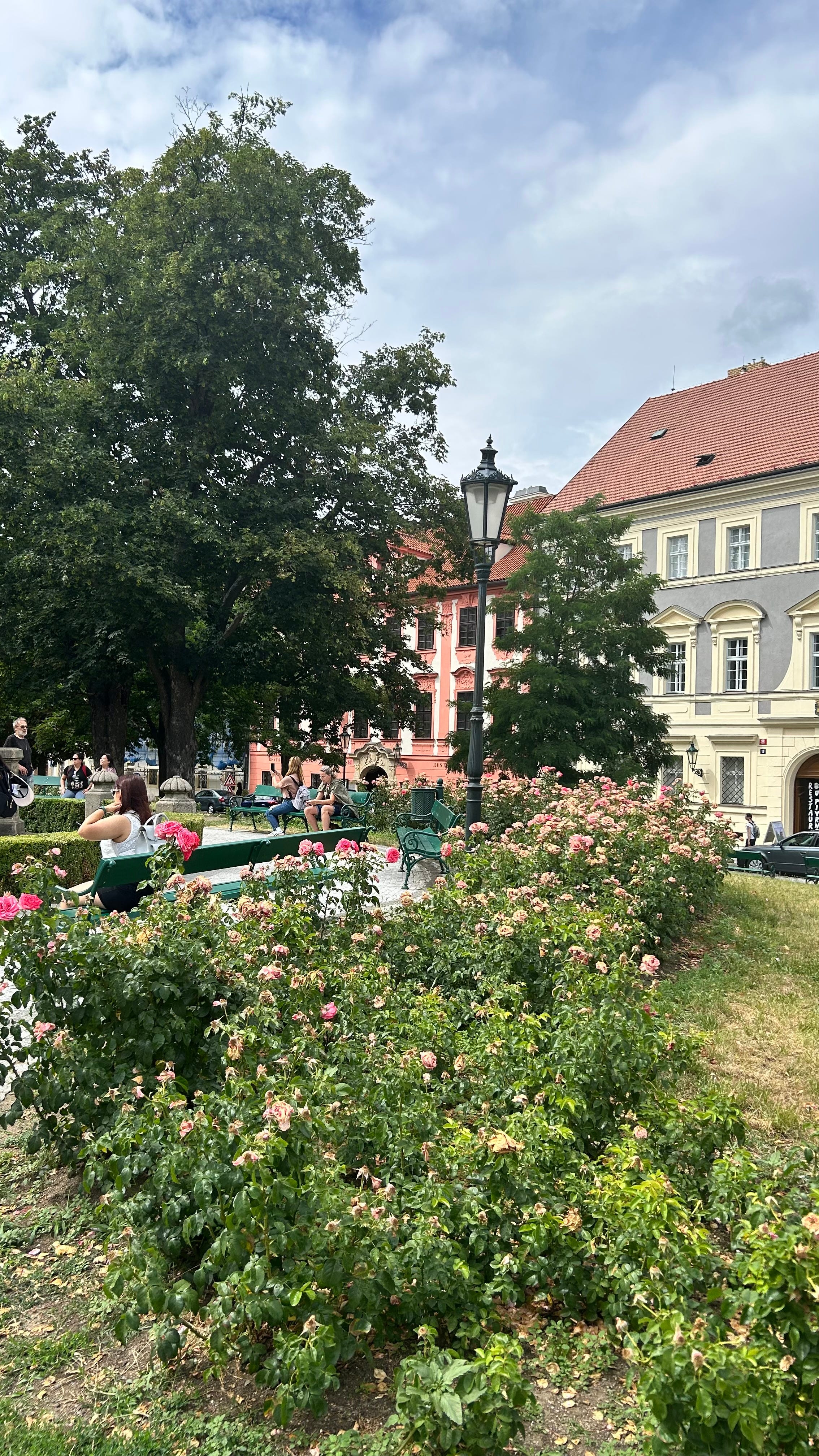
Trees appear between historic buildings. Planted areas soften roads and squares. Green spaces sit alongside transport routes. The river creates a continuous natural feature through the centre of the city.
The result is that nature does not always feel like somewhere you have to make a special journey to visit.
It is simply there.
You encounter it while walking to a restaurant, crossing the city, travelling to work or exploring a neighbourhood.
This is an important principle for urban rewilding.
Large parks and nature reserves are incredibly valuable, but the future of urban biodiversity cannot depend entirely on isolated green spaces. Cities also need networks of smaller habitats that connect those larger areas.
A street tree. A planted verge. A green courtyard. A pocket park. A balcony filled with pollinator-friendly plants. A riverbank allowed to grow a little wilder.
Individually, these spaces may seem insignificant. Together, they can begin to form a living network through the city.
Prague and London: Two Different Experiences of Urban Greenery
London is, of course, an exceptionally green city in many respects. Its large parks, commons, wetlands and nature reserves provide important habitats and give millions of people access to nature.
But the experience of greenery can sometimes feel different.
In parts of London, green space can feel concentrated in particular destinations. You walk through dense streets and then arrive at a park, common or garden.
In Prague, by contrast, greenery can often feel more present along the journey itself.
This is not a scientific comparison of the amount of green space in each city. It is simply an observation about how urban nature is experienced when moving through them.
And that distinction is interesting.
Perhaps the goal for greener cities should not simply be to create more parks. It should also be to make nature more visible and accessible throughout everyday life.
Imagine if every walk to the shops passed more trees.
If every residential street contained small areas planted for pollinators.
If balconies, rooftops and courtyards became miniature habitats.
If rivers and canals were treated as wildlife corridors as well as recreational spaces.
If the gaps between our major parks became greener and more connected.
That is where small-scale urban rewilding becomes particularly powerful.
What Can We Learn from Prague?
Prague is not a wilderness, nor is it trying to be. It is a busy European capital with roads, buildings, tourism and all the pressures that come with urban life. But it demonstrates how nature can coexist with those things.
The lesson is not that every city should try to copy Prague. Every city has its own geography, history and environmental challenges. The broader lesson is that urban nature works best when it becomes part of the infrastructure of everyday life.
Rivers can become ecological corridors.
Streets can become greener.
Small spaces can become habitats.
Parks can connect with surrounding neighbourhoods.
Gardens, balconies and courtyards can become stepping stones for wildlife.
And collectively, these small interventions can make cities feel very different.
And perhaps the most important lesson from Prague is a simple one: urban nature is at its most powerful when you don’t have to go looking for it.