


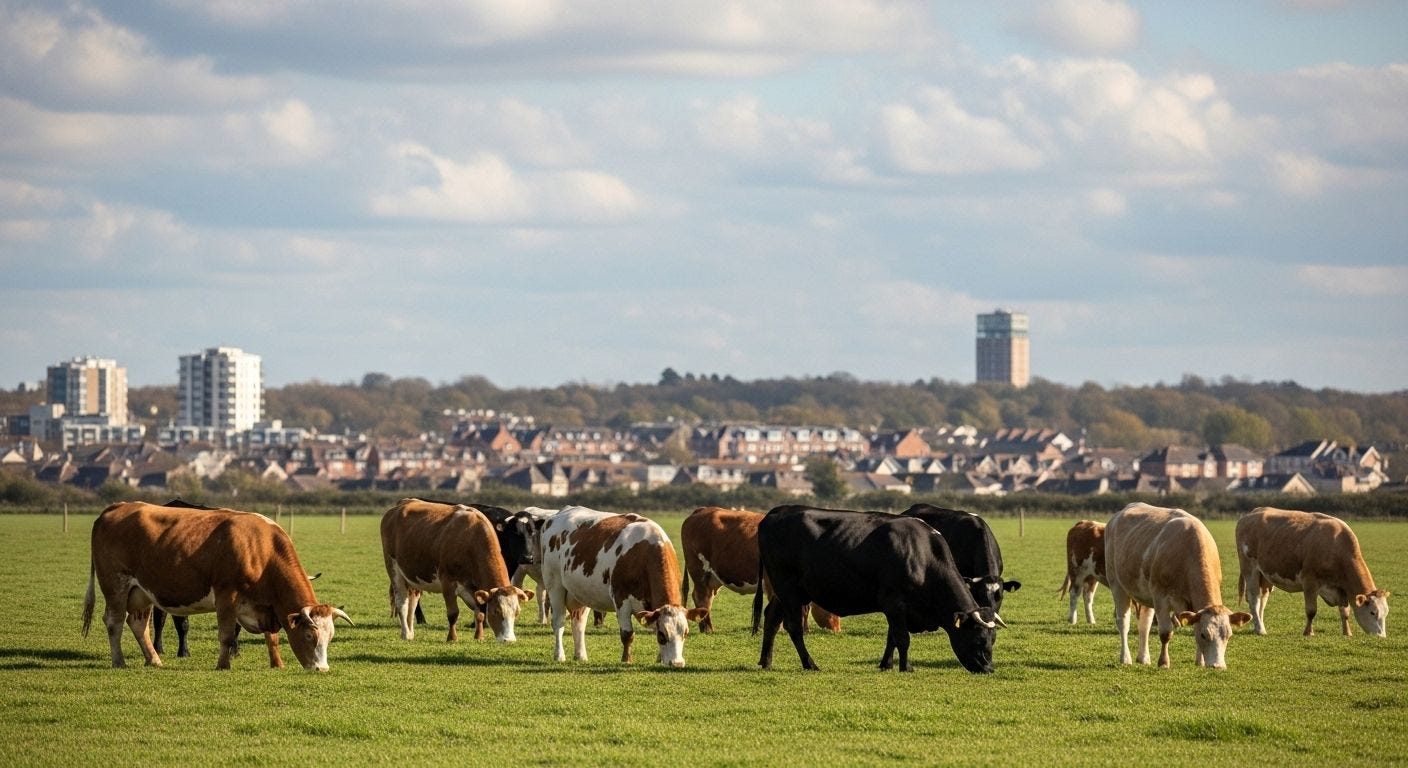
The recent expansion of the Wild Tolworth project in South West London - introducing more Sussex cattle to graze the land - is a powerful signal of where UK conservation is heading.
Rather than controlling nature, this project lets natural processes take the lead. And it shows you don’t need thousands of acres, just the right approach.
What This Means for Everyday Rewilding
Tolworth may span 42 hectares but the principles behind it scale down beautifully.
You don’t need cattle (your neighbours might object!).
You don’t need a nature reserve.
You just need to think differently about land - even if it’s a garden, balcony, or shared green space.
Urban rewilding is really about one shift: from control → to collaboration with nature
That might look like:
Letting grass grow longer
Creating mini “wild patches” instead of uniform lawns
Introducing native plants
Allowing natural cycles (decay, regrowth, seasonal change)
Small changes. Big ecological impact.
Where LettsSafari Comes In
This is exactly the gap LettsSafari was built to fill. Projects like Wild Tolworth are inspiring but they can feel distant or hard to replicate. LettsSafari brings those principles down to a scale anyone can act on.
Here’s how LettsSafari turns inspiration into action:
1. Makes rewilding accessible
Instead of needing expertise or land, you get simple, practical guidance tailored for small spaces.
2. Helps you create your own “micro-reserve”
From pollinator patches to mini woodlands, LettsSafari shows how to recreate biodiversity, just on a smaller canvas.
3. Connects you to real rewilding impact
Your subscription doesn’t just give advice - it funds real rewilding projects across the UK.
4. Gives you a front-row seat
Follow real projects as they evolve - watching nature return, species reappear, and ecosystems rebuild.
The Bigger Shift: Rewilding as a Movement
What’s happening in Tolworth isn’t just a project - it’s a mindset shift. For decades, we’ve treated nature as something to tidy, trim and manage. Now, we’re starting to realise that nature works better when we step back.
And when thousands of people start doing that - even in small ways - the impact compounds fast.
Your garden becomes a habitat.
Your balcony becomes a feeding station.
Your local park becomes an ecosystem.
That’s how rewilding scales.