


It's been a difficult summer. Not just for us but for every bird, bee, hedgehog and butterfly trying to get through the heat in a city that wasn't built with them in mind.
London has always had warm summers, but what's happened this year has been something else. In May, temperatures hit 35.1°C at Kew Gardens, breaking the record for the hottest May day in UK history. July brought another wave, and with it came burst pipes and supply disruptions that left thousands of homes in east and north west London without running water at the height of the heat.
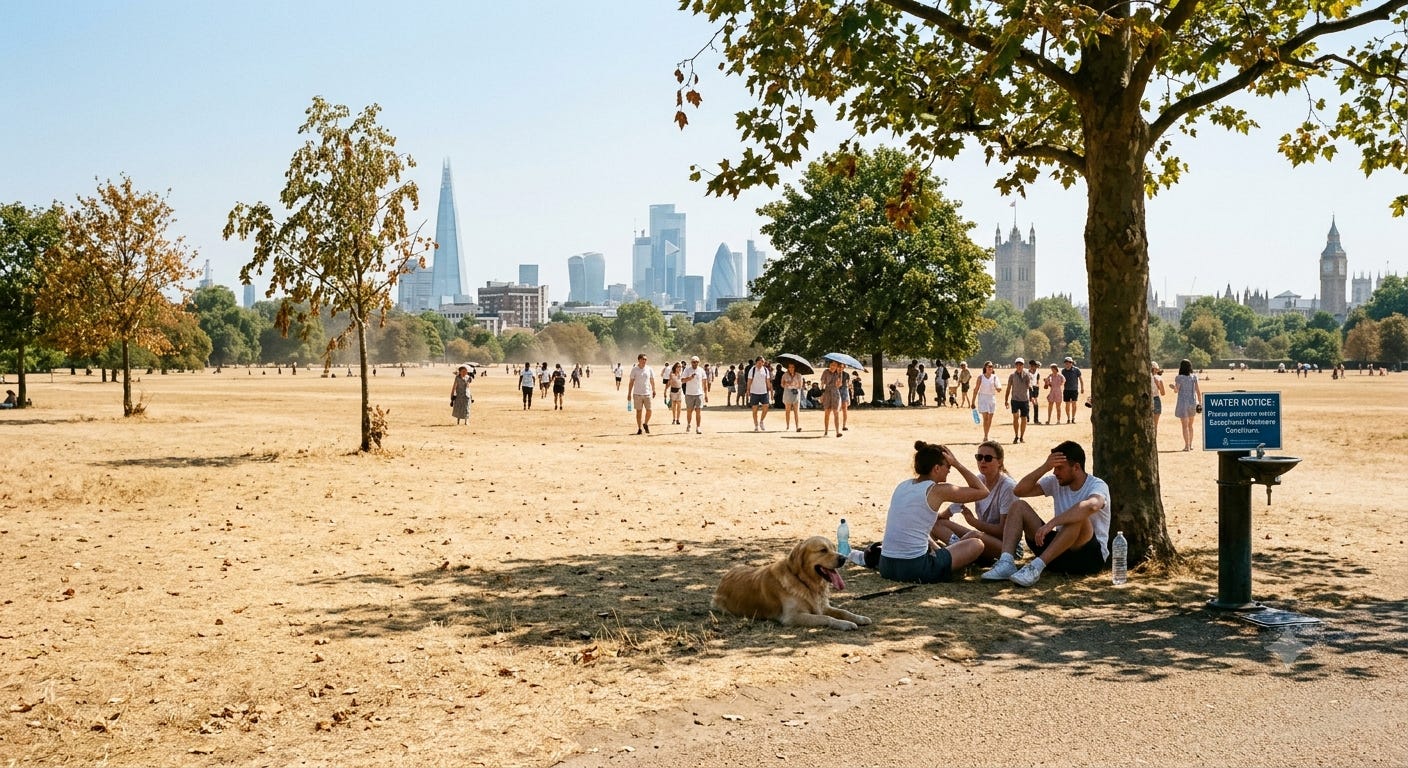
It's a lot. And it's easy, when you're personally struggling through it, to lose sight of the fact that the wildlife around you is going through exactly the same thing, with far fewer options for relief.
35.1°C - UK's hottest ever May day, Kew Gardens, 26 May 2026.
20,000+ - Households across SE England left without water at the peak.
550 - Estimated excess deaths during the May heatwave alone.
What the heat actually does to urban wildlife
It's worth pausing on this, because it's not dramatic or obvious, it's quiet, gradual, and largely invisible unless you know what to look for.
Birds don't have sweat glands. When it gets this hot, you might notice them sitting with their beaks open, that's panting, their only way of trying to lose heat. They still lose water through their droppings and respiration, and when the puddles and ponds they rely on dry up, there's nowhere for them to rehydrate or keep their feathers in condition.
Bumblebees overheat quickly and struggle to fly far enough to find nectar. Butterfly caterpillars can die during prolonged heat. The soil bakes solid, which means blackbirds and other ground-foraging birds lose access to the worms and insects they feed on. Wild fruits and nuts ripen too early, creating food shortages later in the year just when animals are trying to build up reserves for winter.
Every patch of shade, every dish of water, every overgrown corner becomes genuinely vital when a city gets this hot.
This is the hidden side of a heatwave, the slow disruption running through every food chain, every life cycle, every creature trying to navigate a concrete city with nowhere to cool down.
The good news
Unlike the water infrastructure crisis, or the broader climate picture, this is something we can actually do something about with very little. You don't need a garden. A balcony, a windowsill, a doorstep. Any outdoor space at all.
🌿 SMALL THINGS THAT MAKE A REAL DIFFERENCE
💧Put out a shallow dish of water and refresh it daily. Add a few pebbles or stones so insects and bees can perch safely while they drink, and so hedgehogs and frogs can climb in and out without getting stuck. Ceramic or plastic, not metal, it gets too hot in direct sun.
🌿 Leave things a little wild. Resist the urge to cut everything back right now. Unpruned hedges, leaf piles and log piles create damp, shady pockets that invertebrates rely on in this kind of heat.
🦔 If you have hedgehogs visiting and you're seeing them out during the day, that's a sign they're struggling. Wet cat food and a bowl of water left out in the evening goes a long way. No mealworms though, they do more harm than good!
🐸 Top up any pond you have with stored rainwater where possible. Even a washing-up bowl sunk into the soil counts as a refuge for frogs and newts when natural water sources dry up.
🌸 If you can, plant something nectar-rich in a shadier spot. Bees find it hard to forage when it's this hot, and flowers in partial shade stay cooler and more accessible than those in full sun.
This is what community rewilding actually looks like
We talk a lot about rewilding at a landscape scale, and that matters enormously. But the truth is, when a heatwave hits a city, the most immediate ecological safety net is the one made up of thousands of individual people making small, quiet choices in their own outdoor spaces.
A dish of water on a doorstep. A balcony left a bit overgrown. A garden corner that doesn't get tidied until September. None of it sounds significant on its own. Collectively, it forms a network of refuge across the city that can genuinely help wildlife survive summers like this one.
Urban nature is resilient, but it needs us to meet it halfway. Especially now.