


How to turn “hard edges” in gardens and micro-parks into species-rich transition zones.
At LettsSafari, we have found that ecotone design in nature rich gardens can truly transform your approach - optimising space and biodiversity with layers of wildlife friendly micro-habitaits. As a result, we are producing a comprehensive and actionable guide to applying ectone design in your garden or small green space. It comes in 3 parts (serialised over the next 3 weeks):
The Ecotone Mindset: 8 rules that make “edge magic” happen
Ecotone design across the core micro-habitats
Practical ecotone “recipes” (plug-and-play for small spaces)
LettsSafari Guide to Ecotone Design for Nature-Rich Gardens - in 3 Parts

At LettsSafari, we have found that ecotone design in nature rich gardens can truly transform your approach and the overall environment - optimising space and biodiversity with layers of wildlife friendly micro-habitats. As a result, we are producing a comprehensive and actionable guide to applying ectone design in your garden or small green space. It comes in 3 parts (serialised over the next 3 weeks):
At the core of its definition, ecotone is a transition area between two plant communities (think: grassland → scrub, pond → meadow, hedge → open lawn). It often contains species from both neighbouring habitats plus species that prefer the “in-between”.
Today we examine ecotone design across the core micro-habitats focusing on Britain first; with temperate Europe and North America swaps included later.

1) Lawn → Long grass → Wildflower mini-meadow
This is the most common “hidden ecotone” in domestic gardens.
How to build it
Keep a mown path (people need permission to love “wild”)
Let the path edge feather into:
a short flower-rich lawn zone
then taller grass + flowers
then tussocks and seed heads toward shrubs/hedge
Practical mowing approach (RHS-style)
For a flower-rich lawn/mini-meadow: mow short mainly outside spring to summer flowering, and if you only cut once in summer, do it late summer after most flowers set seed.
For newly sown perennial/mixed meadows: the first year often needs regular cuts to help perennials establish strong roots.
Plant palette (UK-friendly, small space)
Choose a mix that matches your soil (don’t worry about perfection — start with 6–10 species):
Bird’s-foot trefoil (Lotus corniculatus) – bee magnet; butterfly associations
Knapweed (Centaurea nigra) – late-season nectar powerhouse
Oxeye daisy (Leucanthemum vulgare)
Selfheal (Prunella vulgaris)
Yarrow (Achillea millefolium)
Red/white clover (Trifolium pratense / repens)
Common sorrel (Rumex acetosa) for structure
Grasses: sweet vernal grass, fescues, crested dog’s-tail (meadow feel)
Who you’ll attract
Bumblebees & solitary bees (longer flowering season = more colonies supported)
Hoverflies (pollination + aphid control)
Butterflies in sunny gardens (e.g., meadow species, small skippers depending on plants)
Seed-eating birds later in the year (finches)
Overwintering insects in tussocks and thatch
Ecotone upgrade: add a few 30–60cm “no-cut islands” near hedge bases. Those tussocks are mini wildlife apartment blocks.
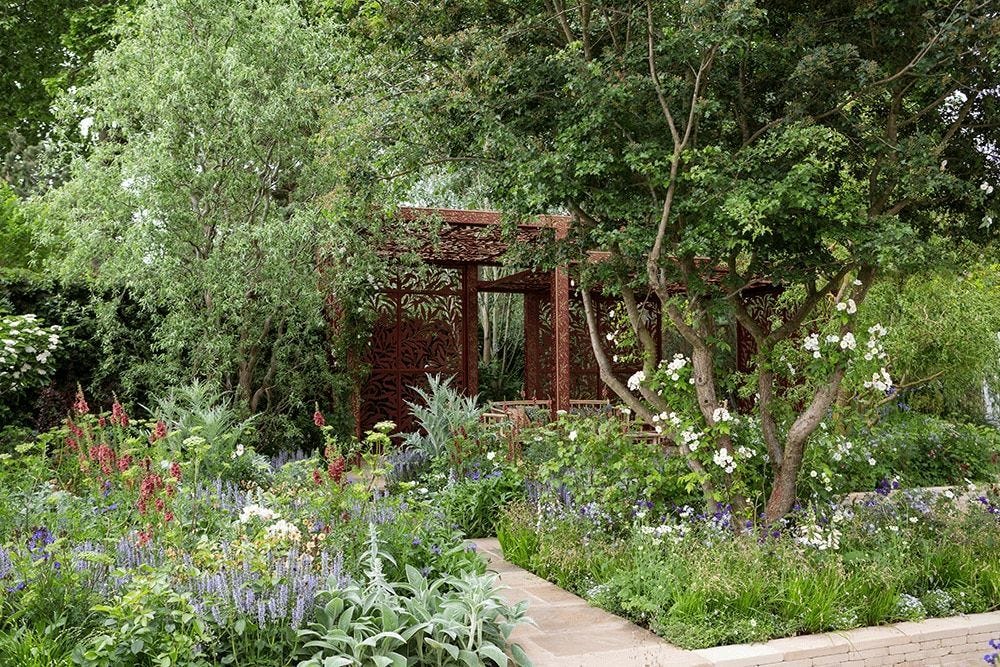
2) Meadow / tall herbs → Scrub (the “wild pantry” edge)
Scrub is where gardens get serious about biodiversity: providing cover + flowers + berries + nesting.
How to build it (small gardens)
Create a scrub ribbon (1–2m deep) along a fence or back boundary:
front edge: tall herbs + grasses
middle: bramble/rose/honeysuckle patches (yes, really — in moderation)
back: mixed shrubs and small trees
Key scrub species (UK)
Bramble (Rubus fruticosus agg.) – exceptional nectar + autumn berries
Dog rose (Rosa canina) – flowers + hips
Guelder rose (Viburnum opulus) – flowers + berries
Spindle (Euonymus europaeus) – structure + berries
Dogwood (Cornus sanguinea) – shelter + stems
Broom (Cytisus scoparius) on lighter/acid soils
Wildlife you’ll notice
Songbirds using dense cover (dunnock, wrens; other species depending on context)
Hedgehogs using scrubby margins as safe commuting cover
Beetles, spiders, lacewings (predators that keep pests in check)
A “spillover” effect: meadow insects feeding in flowers then sheltering in scrub
Ecotone upgrade: make the scrub edge scalloped, not straight. Curves create more edge length (more niches) without needing more land.
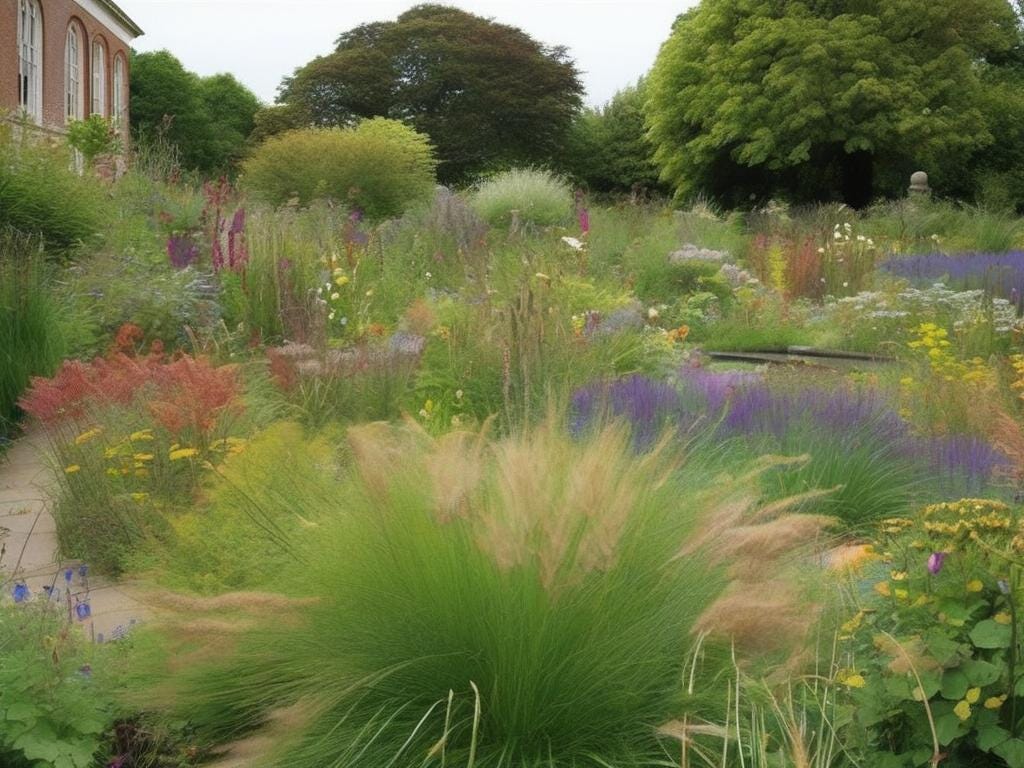
3) Shrub / scrub → Mixed native hedge (the corridor edge)
A hedge is both habitat and highway — especially in fragmented urban areas. The Woodland Trust notes hedgerows are essential refuges and provide wider benefits like carbon capture and flood reduction too.
What makes a hedge an ecotone (not just a green wall)
The best wildlife hedges are:
thick
broad at the bottom
mixed species
with climbers and bramble threaded through (where safe/acceptable)
The Wildlife Trusts explicitly recommends thick, broad-based hedges with a range of woody species (hawthorn, blackthorn, field maple, hazel, spindle, etc.) and often bramble/rose plus climbers like honeysuckle and clematis. Suffolk Wildlife Trust gives a very practical starter mix: hawthorn, blackthorn, hazel plus field maple, holly, wild privet, dog rose, buckthorn for variety.
Go-to hedge mix for small/medium UK gardens
Pick 4–7 species (you don’t need 20!):
Hawthorn (Crataegus monogyna) – blossom + haws
Blackthorn (Prunus spinosa) – very early blossom; sloes; dense nesting
Hazel (Corylus avellana) – catkins; nuts; coppiceable
Field maple (Acer campestre) – structure; autumn colour
Holly (Ilex aquifolium) – winter shelter + berries (female plants berry)
Dog rose (Rosa canina) – threading + hips
Alder buckthorn (Frangula alnus) if you have damp soil
The RSPB also promotes hedges as excellent wildlife food + shelter and provides practical guidance for planting wildlife-friendly hedges.
