


At LettsSafari, we have found that ecotone design in nature rich gardens can truly transform your approach and the overall environment - optimising space and biodiversity with layers of wildlife friendly micro-habitats. As a result, we are producing a comprehensive and actionable guide to applying ectone design in your garden or small green space. It comes in 3 parts (serialised over the next 3 weeks):
The Ecotone Mindset: 8 rules that make “edge magic” happen (below)
Ecotone design across the core micro-habitats
Practical ecotone “recipes” (plug-and-play for small spaces)
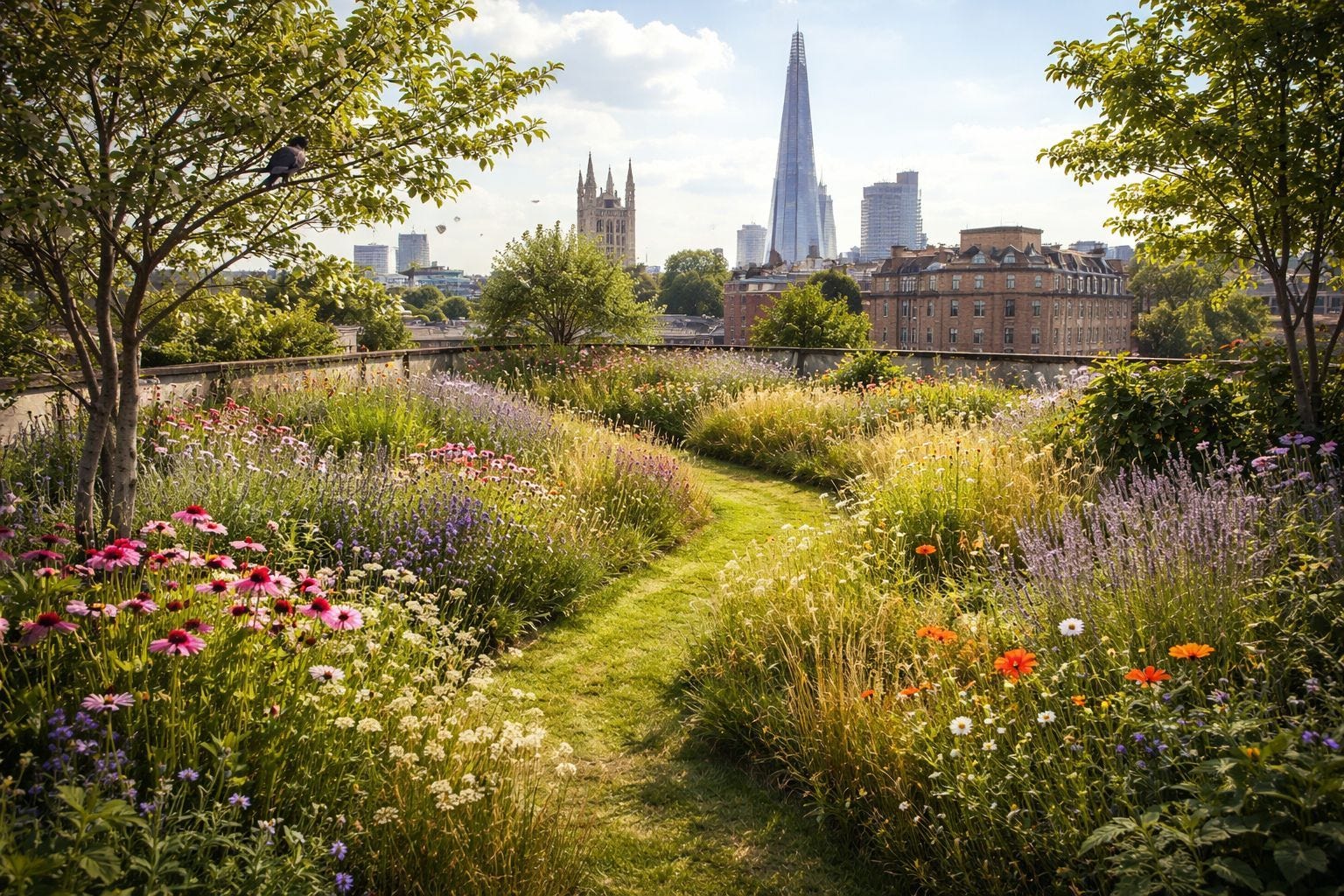
What you’re building (in plain English)
At the core of its definition, ecotone is a transition area between two plant communities (think: grassland → scrub, pond → meadow, hedge → open lawn or prairie). It often contains species from both neighbouring habitats plus species that prefer the “in-between”.
When an edge is designed as a gradient (not a hard border), you get:
more microclimates (sunny, sheltered, damp, dry)
more structure (short/tall, sparse/dense, open/covered)
more resources across seasons (flowers, seeds, berries, decaying wood, water)
more niches — which can increase species richness at edges in many situations
An important nuance (worth knowing): edge effects aren’t magically positive everywhere. Some sharp, human-maintained edges can favour generalists, invasives, or predators, and reduce specialists. What tends to work best is what you’re aiming for : naturalistic, structurally diverse, gradually changing edges .
That’s basically LettsSafari in a nutshell: take the smaller green spaces we already have (gardens, verges, tiny parks), and make them behave more like living landscapes — layered, porous, messy-in-a-good-way .
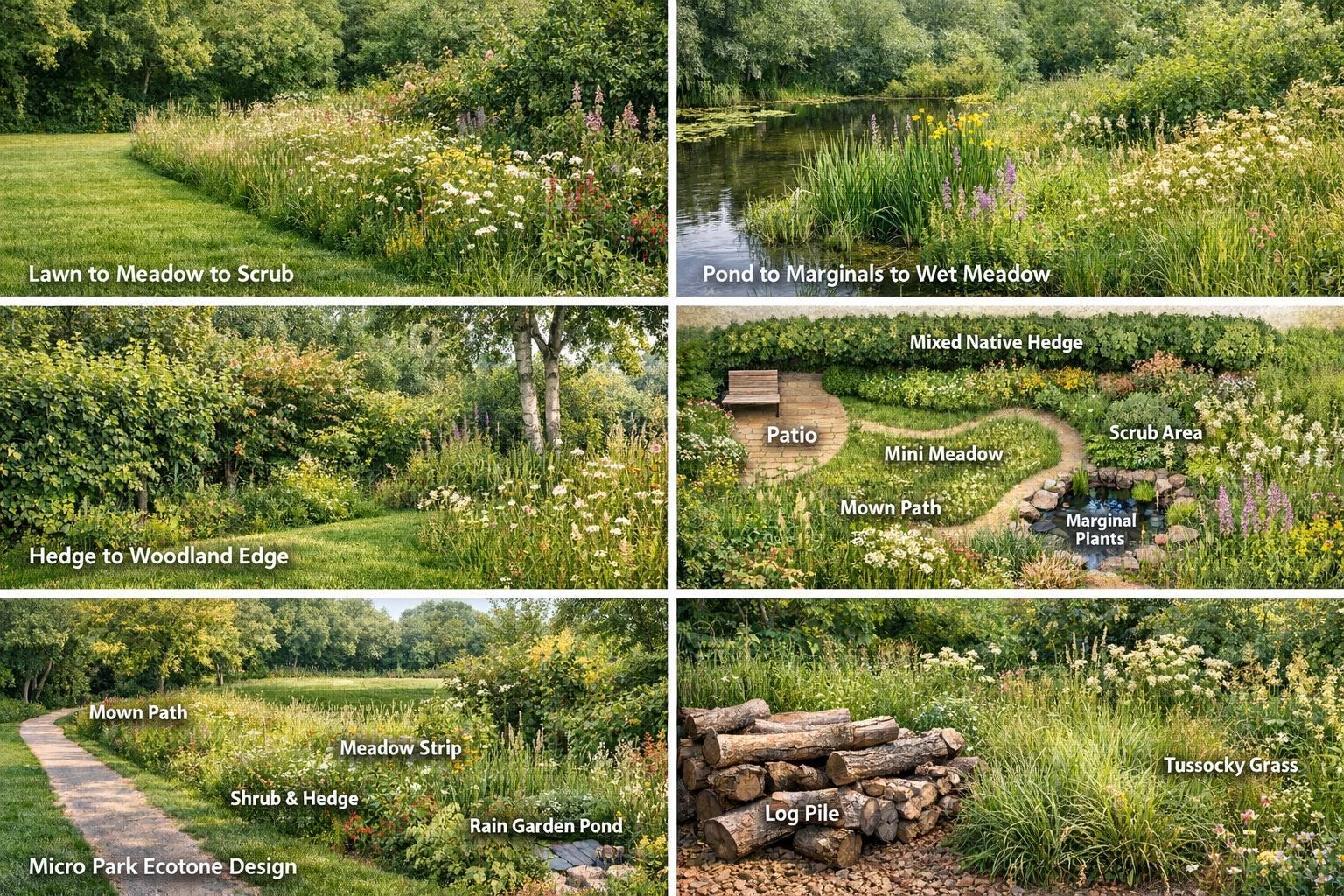
The Ecotone Mindset: 8 rules that make “edge magic” happen
1) Replace lines with bands
Instead of “lawn stops here”, create a 1–3m band where height and species mix changes gradually.
2) Build vertical layers, not flat planting
Aim for a mini “woodland edge” stack which includes:
ground layer: leaf litter, bare soil patches, moss, logs
herb layer: wildflowers, grasses, ferns
shrub layer: thorny + berry shrubs (cover + food)
small trees: blossom + fruit + caterpillars
canopy (where space allows): one or two wildlife trees
Forestry Commission woodland edge guidance calls out that graduated edges (smaller species and lower density outward from canopy) create structural and ecological diversity . It includes a few valuable insights.
Recreating Ancient Woodland in Your Garden: The Magic of Transitional Gardening

Imagine transforming your garden into a miniature ancient woodland, a place where butterflies dance along sunny edges, birds flit between layered branches, and biodiversity thrives in every corner. It sounds ambitious, but the secret lies not in size, but in something far more elegant:
3) Design for “flow” of moisture and shade
Let wet areas grade into damp planting; let sun grade into dappled shade. Don’t fight it — use it.
4) Add “edge features” deliberately
Edges get supercharged by:
log piles / deadwood
brash piles (branches and twigs)
stone / rubble pile (warmth + crevices)
scrapes / bare soil (ground-nesting bees)
tussocks (overwintering insects)
